The very embodiment of '70s Hollywood genre revisionism, Robert Altman's film of The Long Goodbye stands as one of his most accessible, wittily misanthropic films, and probably the finest performance of Elliot Gould's career to date.
A warning for Raymond Chandler purists: you probably won't like this film. Altman and screenwriter Leigh Brackett had quite a task in adapting Chandler's second-last novel to the screen, for in it the 'knight errant' Phillip Marlowe comes over more like a prudish sap. Altman and Brackett have streamlined the narrative, removed peripheral characters, and crucially transformed Marlowe into a murkier, more comically ambiguous protagonist.
In Altman's and Gould's hands, Marlowe is laconically relaxed, murmuring, alternately amused and annoyed at the world. Like Chandler's hero, he is an outsider, a spectator, everywhere he goes. Unlike the literary Marlowe, Gould's character seems washed up on the shores of an unfamiliar land, his nobility as crumpled and stale as his suit.
Along for the ride are the archetypal Chandler villains and victims: self-hating celebrities, young wives trapped in loveless marriages, crooked doctors, low-rent psychopathic gangsters, bored cops, flunkies lost out of time. Typically, the milieux Marlowe moves in range from the affluence of the Malibu Colony to the cells of the County Jail. Altman, however, wishes to make a film in and about 1973; the film is shot through with the psychic reverberations of the end of hippiedom and the remoteness of the 'Me Generation'.
Another Altman touch is his openly expressed contempt for Hollywood and its conventions. As if to acknowledge the artificiality of a private detective story in the midst of 1970s Los Angeles, the film is suffused with jokey references to cinema. Bookended with 'Hooray for Hollywood', the film shows gatekeepers impersonating movie stars, characters changing their names for added class, hoods enacting movie clichés simply because that's where they learnt to behave. Even Marlowe himself refers to the artifice when talking to the cops: 'Is this where I'm supposed to say 'What's all this about?' and he says 'Shut up, I ask the questions' ?'
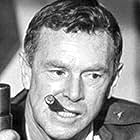
As for the supporting cast, Sterling Hayden shines out as the beleaguered novelist Roger Wade. There is more than a touch of Hemingway in Hayden's bluff, blustering, vulnerable old hack. Baseball champ and sportscaster Jim Bouton is casually mysterious as Marlowe's friend Terry Lennox, Laugh-In alumnus Henry Gibson is suitably greasy as Dr Verringer, actor/director Mark Rydell (best known for 'On Golden Pond') is convincingly chilling as gangster Marty Augustine, and Nina van Pallandt lends a dignified, defiant pathos to her role as Eileen Wade.
Special note must be made of Vilmos Zsigmond's tremendous photography, employing his early 'flashing' style of exposure to lend Los Angeles a suitably sultry, bleached-out aura. Also deserving attention is John Williams' ingeniously minimalist score. Comprised solely of pseudo-source music, the score is a myriad of variations on a single song, appearing here as supermarket muzak, there as a party singalong, elsewhere as a late night radio tune.
The film's controversial ending is utterly antithetical to Chandler's vision. The message from Altman, however, is loud and clear: Chandler's world no longer exists if indeed it ever did.