Keep track of everything you watch; tell your friends.
If your account is linked with Facebook and you have turned on sharing, this will show up in your activity feed. If not, you can turn on sharing
here
.
He's got it all: a loving wife, good friends, a successful career, a great home...what could possibly go wrong for Larry David? Seinfeld co-creator Larry David stars as himself in this ... See full summary »
Level-headed son Michael Bluth takes over family affairs after his father is imprisoned. But the rest of his spoiled, dysfunctional family are making his job unbearable.
Stars:
Portia de Rossi,
Jason Bateman,
Michael Cera
A smarmy lawyer, whose education is deemed void by the bar, is forced to attend a local community college with an extremely eclectic staff and student body.
Liz Lemon, head writer of the sketch comedy show "TGS with Tracy Jordan", must deal with an arrogant new boss and a crazy new star, all while trying to run a successful TV show without losing her mind.
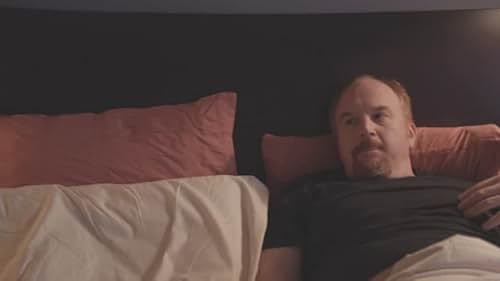
Louie is a stand-up comedian and divorced father of two girls. This series follows him through his everyday life, as he meets various characters, struggles with his love life and pursues humor. Written by
Anonymous
Seinfeld revolved around a stand-up comedian constantly sabotaged by the catastrophic social faux pas of himself and the people inextricably involved in his life, intercut with performance sets by the actual comic. So is Louie. But where Seinfeld was purportedly "a show about nothing," Louie is a show in which from moment to moment, you can safely expect nothing. Not only does Louis C.K. straddle the gaps in social protocol and everyday confrontations we all understand, but also the extremes of comedy and tragedy. It's a gallows comedy, in which we can find ourselves laughing in elation at the both wry and surreal absurdity of one moment, then clenching our chair arms in both tension and incredulity at moments of agonizing pain and even at times a true sense of impending brutality.
There is no continuity from one episode to the next, or even from one vignette to the next. Each episode is comprised of usually two scenarios book-ended by stand-up sets by Louie, which may or may not turn out to be part of one of the scenes. It's the direct inversion by an observant everyman's misanthrope of the TV sitcom. Whereas every sitcom we've ever seen has one essential soundstage, an ongoing play-like farce that runs before two cameras, all the same characters show up and everything not only works out but is just the same as before by the end, each week Louie will give a stream of consciousness an unsystematic narrative silhouette almost invariably a sequence of encounters with characters who enter and exit, yet very few ever return. Some actors and actresses return in different roles. Louie's mother is at one point played by an old woman as an appalling malignant narcissist and in another episode a humble, warm-hearted young working-class woman.
The show is written, directed and edited by its star, and he creates a visually realistic look and atmosphere for his small stories, captured quite cinematically. In the God episode, arguably the boldest, most powerful episode, he injects solemn amber tones, almost I dare say comparable to Gordon Willis' work on the Godfather films. There is a considerable proliferation of long takes in which two characters will share dialogue that sounds and feels no less real than that which we'll share with someone tomorrow. Sometimes, he's bold enough to prolong a single, stationary take in which nothing is being said on-camera, but all the action that affects the character in the shot is occurring off-camera, and in that very single take, we're carried seamlessly and steadily from deadpan absurdity to genuine terror. Then comes the cut: Life goes on; nothing's really that big of a deal. Simply put, each week, C.K. delivers one or two of the most powerful and memorable short films you may ever see.
39 of 44 people found this review helpful.
Was this review helpful to you?
Seinfeld revolved around a stand-up comedian constantly sabotaged by the catastrophic social faux pas of himself and the people inextricably involved in his life, intercut with performance sets by the actual comic. So is Louie. But where Seinfeld was purportedly "a show about nothing," Louie is a show in which from moment to moment, you can safely expect nothing. Not only does Louis C.K. straddle the gaps in social protocol and everyday confrontations we all understand, but also the extremes of comedy and tragedy. It's a gallows comedy, in which we can find ourselves laughing in elation at the both wry and surreal absurdity of one moment, then clenching our chair arms in both tension and incredulity at moments of agonizing pain and even at times a true sense of impending brutality.
There is no continuity from one episode to the next, or even from one vignette to the next. Each episode is comprised of usually two scenarios book-ended by stand-up sets by Louie, which may or may not turn out to be part of one of the scenes. It's the direct inversion by an observant everyman's misanthrope of the TV sitcom. Whereas every sitcom we've ever seen has one essential soundstage, an ongoing play-like farce that runs before two cameras, all the same characters show up and everything not only works out but is just the same as before by the end, each week Louie will give a stream of consciousness an unsystematic narrative silhouette almost invariably a sequence of encounters with characters who enter and exit, yet very few ever return. Some actors and actresses return in different roles. Louie's mother is at one point played by an old woman as an appalling malignant narcissist and in another episode a humble, warm-hearted young working-class woman.
The show is written, directed and edited by its star, and he creates a visually realistic look and atmosphere for his small stories, captured quite cinematically. In the God episode, arguably the boldest, most powerful episode, he injects solemn amber tones, almost I dare say comparable to Gordon Willis' work on the Godfather films. There is a considerable proliferation of long takes in which two characters will share dialogue that sounds and feels no less real than that which we'll share with someone tomorrow. Sometimes, he's bold enough to prolong a single, stationary take in which nothing is being said on-camera, but all the action that affects the character in the shot is occurring off-camera, and in that very single take, we're carried seamlessly and steadily from deadpan absurdity to genuine terror. Then comes the cut: Life goes on; nothing's really that big of a deal. Simply put, each week, C.K. delivers one or two of the most powerful and memorable short films you may ever see.