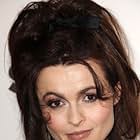
This is a remarkable achievement in television film-making for the BBC. Helena Bonham Carter delivers yet another stunningly brilliant performance, which quite takes one's breath away. She truly 'becomes' the children's' writer Enid Blyton to a degree which even has one worried, as can she really turn back into Helena Bonham Carter again, after all that? As an actress generally, she just gets better and better (see my previous reviews of her films of recent years), and soon she may explode and become a kind of super-nova perhaps, scattering the screen with particles of light and stray atoms, building blocks of a future galaxy. (In any case, she is a star, whether she explodes or not. And she can certainly be seen at a distance of several light-years, even in her present state, without causing undue alarm to all those extraterrestrial observers who must be peering at her through their telescopes.) The director, James Hawes, who comes of the unlikely pedigree of some Dr. Who episodes and does not have a heavy-weight drama CV, turns out to be a serious quality drama director of immense skill and sensitivity. So well done Hawes, and may you let 'er rip as often as possible in that vein, which is clearly your true metier, as we can all now see. Wonderful performances are delivered by Matthew Macfadyen as Blyton's first husband and Denis Lawson as her second. It cannot be stressed strongly enough how easy it would have been for this biopic to go disastrously wrong. Everything depended on subtlety and impeccable judgement, all of which the director, the two writers, and the actors uniformly delivered to absolute perfection. Even the children in the film were superb, lacking all the annoying qualities of so many children in films and television these days. This film really does deserve several awards. It is so much better, for instance, than the over-rated feature films about Iris Murdoch which came out a few years ago, as well as the over-hyped '84 Charing Cross Road' of many years before, and several other similar attempts at films about authors. This film is simply sensational in its high level of achievement. As for the subject matter, it could not be more horrifying, but accurate, a portrayal of a famous children's' writer. Enid Blyton was an absolute monster of a human being, a hypocrite of cosmic proportions, and totally vile and disgusting as a person. (How could either of her husbands stand her even for a day? The first one clearly could not, which is why he turned to drink and stood looking stupefied at her, as if he were staring at an anaconda, which in fact he was, albeit one with a woman's face.) It is difficult to think of anyone other than Helena Bonham Carter who could have pulled this off with such sensitivity and delicacy, as this was a highly specialised assignment, playing Enid Blyton, and not to be undertaken lightly, or by anyone hackneyed and overly 'actor-ish'. The whole film and all the performances exude a powerful honesty, authenticity, and balance which are so difficult to achieve with an ensemble of people ranging from director to writers to performers and cameraman. It just all works so well. But why, oh why, did this appear on the tiny minority channel of BBC-Four, as if the idiots and morons who run BBC were ashamed of something of such high quality? They of course prefer such loathsome persons as Russell Brand and the unspeakably disgusting (pardon me while I am sick) Jonathan Ross. A change of government in Britain cannot come quickly enough, so that the BBC can be brought to its senses, its executives who lack any semblance of ability or competence can stop being paid more than hedge fund managers for doing nothing of any worth, and some kind of appreciation of public service broadcasting can be brought back again whereby magnificent films like this one will be given their due prominence on a main channel at peak time viewing. It gives one hope that there is still anyone out there capable of making a decent television film in Britain at the present time, other than Stephen Poliakoff of course, when the Philistines are so rampant and are in control of every inch of the high ground, and with culture on the run, harried by unrestrained and in-your-face mediocrity, idiocy, lack of taste, and vacuity, which are the hallmarks of the BBC in this year 2009. Hawes, Bonham Carter, and co. have taken a stand. We should drown them in little statues to go on their mantelpieces, to testify to how we appreciate what they have done. If only!