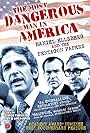
"The Most Dangerous Man in America" is the story of what happens when a former Pentagon insider, armed only with his conscience, steadfast determination, and a file cabinet full of ... See full summary »
Keep track of everything you watch; tell your friends.
If your account is linked with Facebook and you have turned on sharing, this will show up in your activity feed. If not, you can turn on sharing
here
.
Using state-of-the-art equipment, a group of activists, led by renowned dolphin trainer Ric O'Barry, infiltrate a cove near Taijii, Japan to expose both a shocking instance of animal abuse and a serious threat to human health.
Director:
Louie Psihoyos
Stars:
Richard O'Barry,
Louie Psihoyos,
Hardy Jones
It is happening all across America-rural landowners wake up one day to find a lucrative offer from an energy company wanting to lease their property. Reason? The company hopes to tap into a... See full summary »
Capitalism: A Love Story examines the impact of corporate dominance on the everyday lives of Americans (and by default, the rest of the world). The film moves from Middle America, to the ... See full summary »
Pat Tillman never thought of himself as a hero. His choice to leave a multimillion-dollar football contract and join the military wasn't done for any reason other than he felt it was the ... See full summary »
A documentary on Michael Ruppert, a police officer turned independent reporter who predicted the current financial crisis in his self-published newsletter, From the Wilderness.
An uplifting feature documentary highlighting the transformative power of art and the beauty of the human spirit. Top-selling contemporary artist Vik Muniz takes us on an emotional journey ... See full summary »
"The Most Dangerous Man in America" is the story of what happens when a former Pentagon insider, armed only with his conscience, steadfast determination, and a file cabinet full of classified documents, decides to challenge an "Imperial" Presidency-answerable to neither Congress, the press, nor the people-in order to help end the Vietnam War. In 1971, Daniel Ellsberg shook America to its foundations when he smuggled a top-secret Pentagon study to the New York Times that showed how five Presidents consistently lied to the American people about the Vietnam War that was killing millions and tearing America apart. President Nixon's National Security Advisor Henry Kissinger called Ellsberg "the most dangerous man in America," who "had to be stopped at all costs." But Ellsberg wasn't stopped. Facing 115 years in prison on espionage and conspiracy charges, he fought back. Ensuing events surrounding the so-called Pentagon Papers led directly to Watergate and the downfall of President Nixon, ... Written by
Anonymous
(at around 1h 19 mins) Three Black Hawk helicopters are shown disembarking combat-equipped soldiers, ostensibly in Viet Nam. While the first YUH-60 did in fact fly before the fall of Saigon, it was 1976 before three of them had been produced. Production aircraft were not delivered until 1978. See more »
In the movie The Most Dangerous Man in America, we see what distinguishes very clearly a man like Daniel Ellsberg from a man like Richard Nixon. Ellsberg, when first presented with the position by the President, Lyndon Johnson, that America had to go into war in Vietnam (and a long-term one of course, despite what Johnson said to the media) he knew it was a lie but one he had to work in. He even got into the swing of things early on to give the first report of a heinous act done on an American soldier to McNamara, which was "just what he wanted to see". But it wasn't long after that, while still being a 'hawk' for the side of the Pentagon and the Rand corporation, that he gripped with what he knew from the start: what he was doing was wrong, and he was helping perpetuate a wrong going back to Truman through Nixon. There's a revelation that comes to Ellsberg, and it's there in the film as well
in order to do the right thing, sometimes, one may have to be
prepared (and practically be happy) to go got prison for a just cause.
Nixon, of course, never felt this way about his ties to the Vietnam war, and if anything, as heard in those oh-so cheerful tapes recorded with him and Kissinger, he wanted to go all out and bomb the "SOB's" into oblivion, to "think big" as it were. He didn't have a conscience about it, plain and simple, and it's this that we see makes out the hero/villain in this story in the film. Ellsberg was a key whistleblower of the 20th century, this despite the media latching more onto the persona of Ellsberg as opposed to the full-blown-holy-s*** content of the Pentagon Papers themselves. Nixon saw Ellsberg as a key threat - not ironically perhaps the reason why his administration tumbled down, this almost in spite of his landslide victory in 1972. I had almost forgotten until the film reminded me of a startling fact: the Watergate break-in was not just for the purposes of helping to sway the election, but to find any dirt at all in Ellsberg's psychiatrist's folders. That's just... mean.
Then again, Nixon doesn't become the antagonist in the film until after the halfway point. For the filmmakers, their documentary is poised on Dr. Ellsberg, a very intelligent man who rose up the ranks to become a key player in the Rand Corporation (a place for "free thinkers" to come up with "big ideas" as a think tank), and then into the Pentagon. But we also see how his level of trust and intuition with authority came into large question in his youth, when his father, whom he always trusted as an authority, was behind the wheel in a horrible accident that killed his mother and sister. We don't see how this tragedy of losing those closest to him changed him, per-say (I wondered for a while after the movie ended why this was, until later), but it does serve to show how his bond with his father was broken, how that coupled with the atom bomb drops a year before this left him disillusioned.
And if anything is the focus of this movie, aside of course from its protagonist, its about the way in which a person, in a society such as America's in the late 60s and wasn't 100% corrupted, could make a difference when nudged just a little. What not only Ellsberg but the New York Times and the press did gives us lessons today: sometimes a person who knows right and wrong, and knows the consequences both professional and personal (we see the latter especially in Ellsberg's friendship with his boss, the President of Rand, and a colleague who refused to testify at a grand jury trial), has to stand up and do something to break the mold. It's a stirring documentary, informative and full of sobering moments, seeming longer (in a good way) than 90 minutes. The only downside being a few cheesy 're-enactment' flash-animated scenes of some of the nefarious acts being done like photocopying and meetings at night.
28 of 34 people found this review helpful.
Was this review helpful to you?
In the movie The Most Dangerous Man in America, we see what distinguishes very clearly a man like Daniel Ellsberg from a man like Richard Nixon. Ellsberg, when first presented with the position by the President, Lyndon Johnson, that America had to go into war in Vietnam (and a long-term one of course, despite what Johnson said to the media) he knew it was a lie but one he had to work in. He even got into the swing of things early on to give the first report of a heinous act done on an American soldier to McNamara, which was "just what he wanted to see". But it wasn't long after that, while still being a 'hawk' for the side of the Pentagon and the Rand corporation, that he gripped with what he knew from the start: what he was doing was wrong, and he was helping perpetuate a wrong going back to Truman through Nixon. There's a revelation that comes to Ellsberg, and it's there in the film as well
- in order to do the right thing, sometimes, one may have to be
prepared (and practically be happy) to go got prison for a just cause.Nixon, of course, never felt this way about his ties to the Vietnam war, and if anything, as heard in those oh-so cheerful tapes recorded with him and Kissinger, he wanted to go all out and bomb the "SOB's" into oblivion, to "think big" as it were. He didn't have a conscience about it, plain and simple, and it's this that we see makes out the hero/villain in this story in the film. Ellsberg was a key whistleblower of the 20th century, this despite the media latching more onto the persona of Ellsberg as opposed to the full-blown-holy-s*** content of the Pentagon Papers themselves. Nixon saw Ellsberg as a key threat - not ironically perhaps the reason why his administration tumbled down, this almost in spite of his landslide victory in 1972. I had almost forgotten until the film reminded me of a startling fact: the Watergate break-in was not just for the purposes of helping to sway the election, but to find any dirt at all in Ellsberg's psychiatrist's folders. That's just... mean.
Then again, Nixon doesn't become the antagonist in the film until after the halfway point. For the filmmakers, their documentary is poised on Dr. Ellsberg, a very intelligent man who rose up the ranks to become a key player in the Rand Corporation (a place for "free thinkers" to come up with "big ideas" as a think tank), and then into the Pentagon. But we also see how his level of trust and intuition with authority came into large question in his youth, when his father, whom he always trusted as an authority, was behind the wheel in a horrible accident that killed his mother and sister. We don't see how this tragedy of losing those closest to him changed him, per-say (I wondered for a while after the movie ended why this was, until later), but it does serve to show how his bond with his father was broken, how that coupled with the atom bomb drops a year before this left him disillusioned.
And if anything is the focus of this movie, aside of course from its protagonist, its about the way in which a person, in a society such as America's in the late 60s and wasn't 100% corrupted, could make a difference when nudged just a little. What not only Ellsberg but the New York Times and the press did gives us lessons today: sometimes a person who knows right and wrong, and knows the consequences both professional and personal (we see the latter especially in Ellsberg's friendship with his boss, the President of Rand, and a colleague who refused to testify at a grand jury trial), has to stand up and do something to break the mold. It's a stirring documentary, informative and full of sobering moments, seeming longer (in a good way) than 90 minutes. The only downside being a few cheesy 're-enactment' flash-animated scenes of some of the nefarious acts being done like photocopying and meetings at night.