IMDb >
Examined Life (2008)
Quicklinks
Top Links
trailers and videosfull cast and crewtriviaofficial sitesmemorable quotesOverview
main detailscombined detailsfull cast and crewcompany creditstv scheduleAwards & Reviews
user commentsexternal reviewsnewsgroup reviewsawardsuser ratingsparents guiderecommendationsmessage boardPlot & Quotes
plot summarysynopsisplot keywordsAmazon.com summarymemorable quotesFun Stuff
triviagoofssoundtrack listingcrazy creditsalternate versionsmovie connectionsFAQOther Info
merchandising linksbox office/businessrelease datesfilming locationstechnical specslaserdisc detailsDVD detailsliterature listingsNewsDeskPromotional
taglines trailers and videos posters photo galleryExternal Links
showtimesofficial sitesmiscellaneousphotographssound clipsvideo clipsExamined Life (2008) More at IMDbPro »
| Photos (see all 8 | slideshow) | Videos |
Overview
User Rating:
Director:
Writer:
Astra Taylor (written by)
Release Date:
20 November 2009 (UK)
more
Genre:
Tagline:
Philosophy is in the streets.
Plot:
Examined Life pulls philosophy out of academic journals and classrooms, and puts it back on the streets...
more
| add synopsis
NewsDesk:
(13 articles)
Film Weekly on Bunny and the Bull and Examined Life
(From The Guardian - Film News. 26 November 2009, 3:02 AM, PST)
Brain food: philosophy hits the big screen
(From The Guardian - Film News. 24 November 2009, 12:34 AM, PST)
(From The Guardian - Film News. 26 November 2009, 3:02 AM, PST)
Brain food: philosophy hits the big screen
(From The Guardian - Film News. 24 November 2009, 12:34 AM, PST)
User Comments:
Talking, walking, and thinking at the same time. Is it possible?
more (4 total)
Cast
(Credited cast)| K. Anthony Appiah | ... | Himself | |
| Judith Butler | ... | Herself | |
| Michael Hardt | ... | Himself | |
| Martha Nussbaum | ... | Herself | |
| Avital Ronell | ... | Herself | |
| Peter Singer | ... | Himself | |
| Sunaura Taylor | ... | Herself | |
| Cornel West | ... | Himself | |
| Slavoj Zizek | ... | Himself |
Additional Details
Parents Guide:
Runtime:
87 min
Country:
Language:
Color:
Sound Mix:
Certification:
Filming Locations:
Company:
FAQ
This FAQ is empty. Add the first question.more (4 total)
Message Boards
Discuss this movie with other users on IMDb message board for Examined Life (2008)Recommendations
If you enjoyed this title, our database also recommends:
Show more recommendations
|
|
|
|
|
| The End of Suburbia: Oil Depletion and the Collapse of the American Dream | Fierce People | Kosovo: Can You Imagine? | Edvard Munch | Third Ward TX |
|
IMDb User Rating:
|
IMDb User Rating:
|
IMDb User Rating:
|
IMDb User Rating:
|
IMDb User Rating:
|
Related Links
| Full cast and crew | Company credits | External reviews |
| News articles | IMDb Documentary section | IMDb Canada section |
| Add this title to MyMovies |


'Examined Life' introduces what may be a whole new sub-genre: the philosophical chat documentary. The title's an obvious allusion to Socrates' famous statement, 'The unexamined life is not worth living.' The film's eight philosophers are peripatetic, though Taylor doesn't claim this alludes to Aristotle, who, they say, walked around while lecturing. The philosopher of running, Dr. George Sheehan, liked to quote Thoreau: "Trust no thought arrived at sitting down." If that's true, maybe we'll have to distrust two of the speakers, because one is in a car and another is rowing a boat on a lake.
It's good if you can lure the public to watch a documentary film that provides a taste of what philosophical thinking is like. Unfortunately the talkers, Cornel West, Avita Ronell, Peter Singer, Kwame Anthony Appiah, Martha Nussbaum, Michael Hardt, Judith Butler, and Savoj Zizek, aren't really making philosophy as they go along, the way Wittgenstein and G.E. Moore did, as well as their followers A.J. Ayer and Gilbert Ryle. Instead, they're just summarizing some of their main ideas or repeating riffs they've done before or answering questions from Taylor as they're being filmed walking, rowing, riding, or, in the case Zizek, fidgeting around in front of some piles of rubbish at a London dump. (Taylor previously made a film about the showy, provocative Slovenian.)
While each of us asks about the meaning of life at some point or another, it's not a sure thing that philosophy is of any use, even to itself, in answering that question. Wittgenstein famously said that of what matters most to us we can say nothing. After a pungent name-dropping riff by West sitting in the back of Taylor's car, Ronell, a "deconstructionist," begins her sequence, pacing a Central Park sidewalk, with a strong dose of skepticism, not to say metaphysical and moral angst. "If you have a good conscience, then you're worthless," she opines. Disdainfully asserting that though ten minutes to speak may be fine for the others, it's ridiculous for herself, she haughtily makes a point of distinguishing between philosophy and thinking. So there's some question whether anything said by these eight people is of any use, or whether presenting them sequentially (with Cornell West injected at three points as a sort of unifying voice) makes any logical sense. But it does, because philosophers do get back to basics, and all of them are talking in one way or another about how to live.
In his 'Village Voice' review of 'Examined Life' J. Hoberman falls into the inevitable trap of rating the speakers one by one. He finds Singer smug and obvious and says his "neo-Kantian platitude" about "commitment to the common good" "stops the conversation" and illustrates that distinction between philosophy and thinking. Actually Singer's stroll down Fifth Avenue while advocating vegetarianism and suggesting it's better to donate a thousand dollars to charity than to spend it on an elegant suit seemed effective and thought-provoking to me; and Singer had the best command of everyday, unpretentious language.
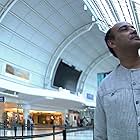
Singer's position coheres with those of Nussbaum and Butler, both of whom speak of the need to act democratically. The image of a Bushian un-compassionate conservatism hovers behind their assertion of our collective obligation to provide for and protect those who are different, or poor, or handicapped. Nussbaum points out that everyone is "handicapped" in infancy and old age, so the need for help is universal. Butler explores a San Francisco second-hand clothing store with a wheelchair-bound friend, Sunaura Taylor, discussing accessibility and gender issues. All of this adds up to the need for a more liberal and humane society. Appiah adds another consideration: culture. As he walks through the international wing of a airport, en route to somewhere, he talks about growing up in a shack and having a Ghanan mother and English father and describes cosmopolitanism--and distinguishes it from cultural relativity. It's important to realize that people can live well (be good), he says, while following different values.
One may be a cosmopolite like Appiah, but it may be better to stay at home. So you might conclude from the words of Michael Hardt, co-author of the book 'Empire.' In his youth he and others went to Latin America to engage in revolution, but they were advised to go back and make their revolution here. As he rows around the lake and runs aground looking at big turtles, he may seem ineffectual. There is the danger in this medium of peppy visuals and extended sound bites that these important thinkers and writers may wind up over-simplifying or parodying themselves.
Zizek, like Jean Baudrillard, delivers provocative pronouncements that seem to defy common sense. It may simply be that while he can devastate you in the sound bites, with a kind of hit-and-run effect, he can't ever be properly understood in such small chunks. His primary point this time is that "shit" doesn't go away as we imagine, when we flush. We need to as it were "embrace" our mountains of waste, forget about living in nature, and accept being more artificial. But since he acknowledges that global warming is a real problem, why does he insist that "ecology" is the comforting new orthodoxy, like "religion" to Marx? What are we to do with this information, if it be true?
And it's hard to see what to do with Cornell West's dazzling high culture jive talk about history, jazz, blues, slavery, courage, and much else. The thing about West is that, like Zizek, you may come away only with questions, but you may also, especially if you're young, come away thinking you want to be able to talk like that and think like that and have all that stuff in your head. Somewhere out of this you may get the urge to think or act in new ways. And in that sense this philosophers' sampler will have justified its existence.