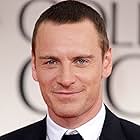
I've added Angel in my watch list about a month ago, after studying -quite a few- of Romola Garai's and Michael Fassbender's performances. Some of the films i've watched with Garai were: Inside I'm Dancing (2004), Mary Bryant (2005), Atonement (2007) and The Other Man (2008). She was brilliant in all of them. So she was in this film.
This is a fiction story based on a novel/screenplay by Elizabeth Taylor. It's kind of a biography of a young writer (Angel) with a not wealthy background that manages to finally publish her rich -in imagination- novels. What do you think, passionate love wouldn't knock on her door when she starts being famous? This is where Fassbender's role (Esme) comes in. Another artist, an underestimated painter who doesn't feel confident enough about his work and who also keeps some skeletons in his closet that will -later in the film- (much later) finally be revealed. Fassbender is a great performer but he doesn't get to shine here. Sam Neil plays the part of the overwhelmed publisher and Lucy Russell does a great supporting work as Esme's sister.
As i'm still new in screen writing and film structure, i found myself a bit worried about the way this movie was unfolded. Everything seemed so magical and dreamy and the drama was almost out of the plot for much longer than i expected. It had to make a turn! And it did and it was sudden, maybe a bit frustrating at some point, but you'll have your turning point eventually.
Since i've realized that there where practically two acts in this film i recalled the atmosphere, the costumes, the music and the colors that went along with the change. In the beginning everything was so bright and cheerful, then all turned pale and gloomy to show the depression, which you can clearly notice even in the clothes of the protagonist. There where only a few outdoor special effects that looked really out of date and weird for a 2007 production. I laughed and quickly forgot about them.
In a nutshell, it was a decent film -with a small cast- describing the intense, disturbed and not very long life of a young female writer in the early 20s, but nothing more to get excited about.