Keep track of everything you watch; tell your friends.
If your account is linked with Facebook and you have turned on sharing, this will show up in your activity feed. If not, you can turn on sharing
here
.
Young Augusten Burroughs absorbs experiences that could make for a shocking memoir: the son of an alcoholic father and an unstable mother, he's handed off to his mother's therapist, Dr. Finch, and spends his adolescent years as a member of Finch's bizarre extended family.
A dealer in "outsider" art travels from Chicago to North Carolina to meet her new in-laws, challenging the equilibrium of this middle class Southern home.
Director:
Phil Morrison
Stars:
Embeth Davidtz,
David Kuhn,
Alessandro Nivola
Based on the true childhood experiences of Noah Baumbach and his brother, The Squid and the Whale tells the touching story of two young boys dealing with their parents' divorce in Brooklyn in the 1980s.
Starting from childhood attempts at illustration, the protagonist pursues his true obsession to art school. But as he learns how the art world really works, he finds that he must adapt his vision to the reality that confronts him.
Director:
Terry Zwigoff
Stars:
Max Minghella,
Sophia Myles,
John Malkovich
Satirical comedy follows the machinations of Big Tobacco's chief spokesman, Nick Naylor, who spins on behalf of cigarettes while trying to remain a role model for his twelve-year-old son.
A young Jewish American man endeavors to find the woman who saved his grandfather during World War II in a Ukrainian village, that was ultimately razed by the Nazis, with the help of an eccentric local.
Director:
Liev Schreiber
Stars:
Eugene Hutz,
Elijah Wood,
Jonathan Safran Foer
When his only friend dies, a man born with dwarfism moves to rural New Jersey to live a life of solitude, only to meet a chatty hot dog vendor and a woman dealing with her own personal loss.
Director:
Thomas McCarthy
Stars:
Peter Dinklage,
Paul Benjamin,
Bobby Cannavale
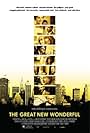
Avinash alias Avi and his partner Satish are Manhattan-based Security guards, hired in the wake of the September 11, 2001, terrorist attacks in New York. They have now been assigned to ensure the protection of a visiting Indian General, Ganjee. While Avi is a flirt, and of a cheerful disposition, Satish is quite grouchy, wrestling with personal and family problems. During their time together Avi will confess to Satish of his having sex with another woman and the consequences he must face. Emme Keeler caters to the rich and wealthy by making cakes and desserts, she must face up to facts especially when her closest competitor, Safarah Polsky, is on the verge of suicide; Judy Hillerman lives a routine and mundane life with her husband, Henry, and does feel like throttling him and tossing him over their 10th floor balcony; David and Burbage and his wife, Allison, must now accept that their overweight son, David, does have issues that need to be addressed, that is if they ever find time ... Written by
rAjOo (gunwanti@hotmail.com)
Avi says that the Mall of America in Minneapolis is the largest mall in the world. Actually, at the time of the store, CentralWorld Mall in Thailand is larger, opening in 1990. See more »
Quotes
David:
[discussing his son]
I mean, deep down he's a good kid.
Allison:
He's actually a great kid.
Mr. Peersall:
No, he's actually a selfish, incorrigible monster with a heart made out of shit and splinters.
See more »
"The Great New Wonderful" marks the lead-up to a nervous anniversary I vividly remember - September 2002 -- so it is difficult to separate out my own recall of feelings of unease and dread in comparison to the film's portrayal of how a somewhat disparate group of New Yorkers experienced the same month or to evaluate it as a film on its own.
It certainly will have more resonance to New Yorkers than to others, even as TV's "Rescue Me has" already sneered at such feelings of those like most of the characters in the film who didn't directly lose a loved one or colleague on 9/11. But the documentaries and TV shows have focused on survivors and first-responders so that this attempt to capture every day New Yorkers, albeit mostly neurotic middle-class white ones, provides fresh insight.
The film well captures the malaise that seemed to infect us all, powerfully enough that I cried just before the climax, though to me it's like commemorating a yahrzheit, an anniversary of a death. When three-quarters through the film a plane traverses the screen, I gasped, just as I did at noisy planes throughout that month. While it took me over a year until I could even walk by Ground Zero, and then only by looking away from that hole in the ground, the repeating panning to the new skyline has already gotten too familiar to us and no longer has the shock of the gaping hole in the sky, or maybe the golden-tinged panorama is more of midtown with the Empire State Building restored as our icon than of lower Manhattan.
Directed in an European-feeling style by Danny Leiner, like an inter-edited take on the 2002 collection of 11 minute thematically-linked films by 11 international directors "11'09''01 - September 11", the mordant script by debut screenwriter Sam Catlin emphasizes festering explosions of repressed violence in various forms, mocking New Yorkers' contentions that 9/11 would somehow change us forever to be more serious and to appreciate life and despite what we read in the wedding stories in The New York Times for a year or two afterwards.
Sharply edited through leisurely short stories that gradually ratchet up in pacing, the characters do not have coincidental mutual impact as in "Amores Perros" and even fewer interrelations than the characters in "Nine Lives" except for occasional propinquity that has a frisson of 9/11 jitters.
The five boroughs are represented, with an age range from senior citizens (a terrific Olympia Dukakis' restless Jewish wife in Brooklyn) to a frazzled couple (Thomas McCarthy and Judy Greer) coping with their creepy child who is manifesting more symptoms of an incipient serial killer than the teens in the Columbine-inspired "Elephant", to service workers of the rich-- an ambitious pastry chef (Maggie Gyllenhaal as the skinniest baker in the world) and her circle very amusingly prepare for a "My Super Sweet 16" on MTV-like party in a satire of "let them eat cake" as she unironically offers a fancy dessert called "The Ophelia"; a meek cubicle denizen (Jim Gaffigan) who apparently was in the Twin Towers that day so is in mandated counseling with therapist Tony Shalhoub that is surely inspired by similar scenes from "Miracle on 34th Street"; and a pair of Indian security guards (Naseeruddin Shah and Sharat Saxena). I kept expecting the last set to have perceived some increased tensions for being South Asian, but instead the two are coping in divergent ways.
What all the characters share is no control over their lives and dependence on other people's decisions. Each does takes an unpredictable step-- climaxes and catharses (whether violent, sexual or artistic) that vary in their credibility within the film. For most of the characters we see the build-up of their frustration and its aftermath but not their existential act-- like looking at that skyline before and after.
Some secondary characters work better than others. The only character at peace has Alzheimers and wonders how World War II will end. Edie Falco's business lunch with Gyllenhaal is a masterpiece of understated bitchy competition in its timing and politesse, but Will Arnett as the slacker husband does not add anything. Stephen Colbert, as always, is the master of the unctuous, here as the odd student's private school principal. Seth Gilliam is the opposite of his macho cop in "The Wire".
The film is full of very New York touches -- we see playwright Tony Kushner backstage at a Kevin Kline performance at The Public Theater, the residences reflect different neighborhoods, and there's lovely scenes of bedraggled Coney Island with a yet still beautiful Atlantic Ocean. Visual juxtapositions abound, such as a very effective scene as the camera backs up to gradually revealed to be taking place on Liberty Island.
The cinematography by Harlan Bosmajian is very washed out. One scene brightened up and I at first thought there was some symbolic importance about characters' growing emotional clarity towards the end, but then it seemed more of a brief accident.
While the score by Brett Boyett and John Swihart is effectively understated and helps to connect the segments, the pop song choices were just plain odd, with zero connection to New York, from Bob Seger singing about L.A., to a karaoke of Canadian Sarah McLaughlin's ode to ice cream, to New Zealand's Neil Finn over the credits.
4 of 5 people found this review helpful.
Was this review helpful to you?
"The Great New Wonderful" marks the lead-up to a nervous anniversary I vividly remember - September 2002 -- so it is difficult to separate out my own recall of feelings of unease and dread in comparison to the film's portrayal of how a somewhat disparate group of New Yorkers experienced the same month or to evaluate it as a film on its own.
It certainly will have more resonance to New Yorkers than to others, even as TV's "Rescue Me has" already sneered at such feelings of those like most of the characters in the film who didn't directly lose a loved one or colleague on 9/11. But the documentaries and TV shows have focused on survivors and first-responders so that this attempt to capture every day New Yorkers, albeit mostly neurotic middle-class white ones, provides fresh insight.
The film well captures the malaise that seemed to infect us all, powerfully enough that I cried just before the climax, though to me it's like commemorating a yahrzheit, an anniversary of a death. When three-quarters through the film a plane traverses the screen, I gasped, just as I did at noisy planes throughout that month. While it took me over a year until I could even walk by Ground Zero, and then only by looking away from that hole in the ground, the repeating panning to the new skyline has already gotten too familiar to us and no longer has the shock of the gaping hole in the sky, or maybe the golden-tinged panorama is more of midtown with the Empire State Building restored as our icon than of lower Manhattan.
Directed in an European-feeling style by Danny Leiner, like an inter-edited take on the 2002 collection of 11 minute thematically-linked films by 11 international directors "11'09''01 - September 11", the mordant script by debut screenwriter Sam Catlin emphasizes festering explosions of repressed violence in various forms, mocking New Yorkers' contentions that 9/11 would somehow change us forever to be more serious and to appreciate life and despite what we read in the wedding stories in The New York Times for a year or two afterwards.
Sharply edited through leisurely short stories that gradually ratchet up in pacing, the characters do not have coincidental mutual impact as in "Amores Perros" and even fewer interrelations than the characters in "Nine Lives" except for occasional propinquity that has a frisson of 9/11 jitters.
The five boroughs are represented, with an age range from senior citizens (a terrific Olympia Dukakis' restless Jewish wife in Brooklyn) to a frazzled couple (Thomas McCarthy and Judy Greer) coping with their creepy child who is manifesting more symptoms of an incipient serial killer than the teens in the Columbine-inspired "Elephant", to service workers of the rich-- an ambitious pastry chef (Maggie Gyllenhaal as the skinniest baker in the world) and her circle very amusingly prepare for a "My Super Sweet 16" on MTV-like party in a satire of "let them eat cake" as she unironically offers a fancy dessert called "The Ophelia"; a meek cubicle denizen (Jim Gaffigan) who apparently was in the Twin Towers that day so is in mandated counseling with therapist Tony Shalhoub that is surely inspired by similar scenes from "Miracle on 34th Street"; and a pair of Indian security guards (Naseeruddin Shah and Sharat Saxena). I kept expecting the last set to have perceived some increased tensions for being South Asian, but instead the two are coping in divergent ways.
What all the characters share is no control over their lives and dependence on other people's decisions. Each does takes an unpredictable step-- climaxes and catharses (whether violent, sexual or artistic) that vary in their credibility within the film. For most of the characters we see the build-up of their frustration and its aftermath but not their existential act-- like looking at that skyline before and after.
Some secondary characters work better than others. The only character at peace has Alzheimers and wonders how World War II will end. Edie Falco's business lunch with Gyllenhaal is a masterpiece of understated bitchy competition in its timing and politesse, but Will Arnett as the slacker husband does not add anything. Stephen Colbert, as always, is the master of the unctuous, here as the odd student's private school principal. Seth Gilliam is the opposite of his macho cop in "The Wire".
The film is full of very New York touches -- we see playwright Tony Kushner backstage at a Kevin Kline performance at The Public Theater, the residences reflect different neighborhoods, and there's lovely scenes of bedraggled Coney Island with a yet still beautiful Atlantic Ocean. Visual juxtapositions abound, such as a very effective scene as the camera backs up to gradually revealed to be taking place on Liberty Island.
The cinematography by Harlan Bosmajian is very washed out. One scene brightened up and I at first thought there was some symbolic importance about characters' growing emotional clarity towards the end, but then it seemed more of a brief accident.
While the score by Brett Boyett and John Swihart is effectively understated and helps to connect the segments, the pop song choices were just plain odd, with zero connection to New York, from Bob Seger singing about L.A., to a karaoke of Canadian Sarah McLaughlin's ode to ice cream, to New Zealand's Neil Finn over the credits.