Keep track of everything you watch; tell your friends.
If your account is linked with Facebook and you have turned on sharing, this will show up in your activity feed. If not, you can turn on sharing
here
.
An aspiring author during the civil rights movement of the 1960s decides to write a book detailing the African-American maids' point of view on the white families for which they work, and the hardships they go through on a daily basis.
Director:
Tate Taylor
Stars:
Emma Stone,
Viola Davis,
Bryce Dallas Howard
A mentally retarded man fights for custody of his 7-year-old daughter, and in the process teaches his cold-hearted lawyer the value of love and family.
Director:
Jessie Nelson
Stars:
Sean Penn,
Michelle Pfeiffer,
Dakota Fanning
A female theatre dresser creates a stir and sparks a revolution in seventeenth century London theatre by playing Desedmona in Othello. But what will become of the male actor she once worked for and eventually replaced?
Director:
Richard Eyre
Stars:
Derek Hutchinson,
Claire Danes,
Billy Crudup
The daughter of a brilliant but mentally disturbed mathematician, recently deceased, tries to come to grips with her possible inheritance: his insanity. Complicating matters are one of her father's ex-students who wants to search through his papers and her estranged sister who shows up to help settle his affairs.
Director:
John Madden
Stars:
Gwyneth Paltrow,
Anthony Hopkins,
Jake Gyllenhaal
The story of how the novel "Mrs. Dalloway" affects three generations of women, all of whom, in one way or another, have had to deal with suicide in their lives.
Young Nicholas and his family enjoy a comfortable life, until Nicholas' father dies and the family is left penniless. Nicholas, his sister and mother venture to London to seek help from their Uncle Ralph, but Ralph's only intentions are to separate the family and exploit them. Nicholas is sent to a school run by the cruel, abusive and horridly entertaining Wackford Squeers. Eventually, Nicholas runs away with schoolmate Smike, and the two set off to reunite the Nickleby family. Written by
Anonymous
The words and music of the hymn "God is working His purpose out" date from 1894, long after the period of the movie. See more »
Quotes
[first lines]
Vincent Crummles:
What happens when the light first pierces the dark dampness in which we have waited? We are slapped and cut loose. If we are lucky, someone is there to catch us and persuade us that we are safe. But are we safe? What happens if, too early, we lose a parent? That party on whom we rely for only everything? Why, we are cut loose again and we wonder, even dread whose hands will catch us now? There once lived a man named Nicholas Nickleby...
See more »
"On Ilkla Moor Baht 'at"
(uncredited)
Traditional Yorkshire folk song; sung to the Methodist hymnal tune "Cranbrook" (1805) (uncredited), written by 'Thomas Clark'
Performed by Kevin McKidd (uncredited), Helen Coker (uncredited), and Jim Broadbent (uncredited)
Sung by John Browdie and Tilda while on their honeymoon in a London public house, accompanied by Mr. Wackford Squeers See more »
With his complex plots and casts of (often literally) hundreds of characters, Charles Dickens might not seem the most cinema-friendly of novelists, but as of January 2007 no fewer than 235 works are credited on the IMDb as being based on his works, all the way back to "The Death of Nancy Sykes" in 1897. In recent years, however, most of these have been multi-part series made for television, a medium which often seems better equipped to deal with Dickens's complexities than does the cinema. The most popular of his works in the cinema has been "A Christmas Carol", which is a novella rather than a novel, followed by "Oliver Twist" and "Great Expectations", both of which are among his shorter novels, and which are often simplified for the screen. Roman Polanski's recent "Oliver Twist", for example, omitted many of Dickens's details and sub-plots in order to concentrate on the essence of the story.
"Nicholas Nickleby", by contrast, is one of Dickens's lengthier novels, so it was perhaps a brave move to adapt it for the screen. The title character is the son of an impoverished country gentleman. When his father dies heavily in debt, young Nicholas sets out for London with his mother and sister Kate, hoping that his wealthy uncle Ralph will be able to help them. Ralph, however, proves to be arrogant, cold-hearted and avaricious. He takes Kate into his home, motivated not by kindness but by the hope that he might be able to marry her off to his business associate, Sir Mulberry Hawke. He sends Nicholas to Yorkshire to work as an assistant teacher in a run-down boys' boarding school, run by a sadistic headmaster named Wackford Squeers. Nicholas is appalled not only by Squeers's ignorance but also by his neglect of and cruelty towards the boys in his care; he is eventually forced to leave the school after intervening to prevent Squeers beating a crippled boy named Smike, who will play an important role in future plot developments. After a brief interval as an actor, Nicholas returns to London to be reunited with his family.
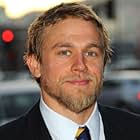
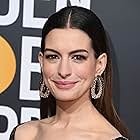
Dickens's villains are generally more memorable than his heroes (and even more so than his heroines, who are often rather colourless), and that is reflected in this film. Even an actress as lovely as Anne Hathaway tends to fade into the background as the saintly Madeline, Nicholas's love-interest. Romola Garai is rather livelier as the spirited Kate, and Charlie Hunnam makes her brother an honourable and brave, if headstrong, hero. The performances that stand out, however, are from Jim Broadbent as the vicious Squeers, Juliet Stephenson as his equally unpleasant wife, Edward Fox as the dissipated lecher Sir Mulberry (who turns his attentions to Madeline when he realises that Kate is not for him) and Christopher Plummer as Ralph, outwardly calm and rational but inwardly cold and stony-hearted, a man who cares for nobody except himself and for nothing except his bank balance. It is noteworthy that Ralph's luxurious house is filled with stuffed animals and birds, presumably intended to symbolise his cruelty and sadism. The one piece of casting I didn't like was that of "Dame Edna Everage" (a creation of the Australian comedian Barry Humphries) as Mrs Crummles; the idea of a fictitious female character being played by another fictitious character, who is herself being played by a male actor, is a bizarre, almost surreal, one. The only place for a pantomime dame is in a pantomime.
There have been complaints on this board that some reviewers' favourite characters or episodes from the novel have been omitted from the film, but such simplification is inevitable if a nine hundred page novel is to be adapted into a feature film with a running time of just over two hours. What matters is that the feel of the film is authentically Dickensian, and this is achieved here, not only through the recreation, in best "heritage cinema" style, of the England of the 1840s, but also through the steadily growing sense that good will triumph over evil, that the heroes will be vindicated and that the villains will receive their just deserts. This is a very good Dickens adaptation, on a par with Polanski's film and much better than Alfonso Cuaron's eccentric "Great Expectations". 8/10
9 of 10 people found this review helpful.
Was this review helpful to you?
With his complex plots and casts of (often literally) hundreds of characters, Charles Dickens might not seem the most cinema-friendly of novelists, but as of January 2007 no fewer than 235 works are credited on the IMDb as being based on his works, all the way back to "The Death of Nancy Sykes" in 1897. In recent years, however, most of these have been multi-part series made for television, a medium which often seems better equipped to deal with Dickens's complexities than does the cinema. The most popular of his works in the cinema has been "A Christmas Carol", which is a novella rather than a novel, followed by "Oliver Twist" and "Great Expectations", both of which are among his shorter novels, and which are often simplified for the screen. Roman Polanski's recent "Oliver Twist", for example, omitted many of Dickens's details and sub-plots in order to concentrate on the essence of the story.
"Nicholas Nickleby", by contrast, is one of Dickens's lengthier novels, so it was perhaps a brave move to adapt it for the screen. The title character is the son of an impoverished country gentleman. When his father dies heavily in debt, young Nicholas sets out for London with his mother and sister Kate, hoping that his wealthy uncle Ralph will be able to help them. Ralph, however, proves to be arrogant, cold-hearted and avaricious. He takes Kate into his home, motivated not by kindness but by the hope that he might be able to marry her off to his business associate, Sir Mulberry Hawke. He sends Nicholas to Yorkshire to work as an assistant teacher in a run-down boys' boarding school, run by a sadistic headmaster named Wackford Squeers. Nicholas is appalled not only by Squeers's ignorance but also by his neglect of and cruelty towards the boys in his care; he is eventually forced to leave the school after intervening to prevent Squeers beating a crippled boy named Smike, who will play an important role in future plot developments. After a brief interval as an actor, Nicholas returns to London to be reunited with his family.
Dickens's villains are generally more memorable than his heroes (and even more so than his heroines, who are often rather colourless), and that is reflected in this film. Even an actress as lovely as Anne Hathaway tends to fade into the background as the saintly Madeline, Nicholas's love-interest. Romola Garai is rather livelier as the spirited Kate, and Charlie Hunnam makes her brother an honourable and brave, if headstrong, hero. The performances that stand out, however, are from Jim Broadbent as the vicious Squeers, Juliet Stephenson as his equally unpleasant wife, Edward Fox as the dissipated lecher Sir Mulberry (who turns his attentions to Madeline when he realises that Kate is not for him) and Christopher Plummer as Ralph, outwardly calm and rational but inwardly cold and stony-hearted, a man who cares for nobody except himself and for nothing except his bank balance. It is noteworthy that Ralph's luxurious house is filled with stuffed animals and birds, presumably intended to symbolise his cruelty and sadism. The one piece of casting I didn't like was that of "Dame Edna Everage" (a creation of the Australian comedian Barry Humphries) as Mrs Crummles; the idea of a fictitious female character being played by another fictitious character, who is herself being played by a male actor, is a bizarre, almost surreal, one. The only place for a pantomime dame is in a pantomime.
There have been complaints on this board that some reviewers' favourite characters or episodes from the novel have been omitted from the film, but such simplification is inevitable if a nine hundred page novel is to be adapted into a feature film with a running time of just over two hours. What matters is that the feel of the film is authentically Dickensian, and this is achieved here, not only through the recreation, in best "heritage cinema" style, of the England of the 1840s, but also through the steadily growing sense that good will triumph over evil, that the heroes will be vindicated and that the villains will receive their just deserts. This is a very good Dickens adaptation, on a par with Polanski's film and much better than Alfonso Cuaron's eccentric "Great Expectations". 8/10