Keep track of everything you watch; tell your friends.
If your account is linked with Facebook and you have turned on sharing, this will show up in your activity feed. If not, you can turn on sharing
here
.
In 1930s Chicago, a young con man seeking revenge for his murdered partner teams up with a master of the big con to win a fortune from a criminal banker.
Aspiring comic Rupert Pupkin wants to achieve success in showbiz, by resorting to stalking his idol, a late night talk show host who craves his own privacy.
Director:
Martin Scorsese
Stars:
Robert De Niro,
Jerry Lewis,
Diahnne Abbott
A miserable conman and his partner pose as Santa and his Little Helper to rob department stores on Christmas Eve. But they run into problems when the conman befriends a troubled kid, and the security boss discovers the plot.
Director:
Terry Zwigoff
Stars:
Billy Bob Thornton,
Lauren Graham,
Bernie Mac
Bi-polar mall security guard Ronnie Barnhardt is called into action to stop a flasher from turning shopper's paradise into his personal peep show. But when Barnhardt can't bring the culprit to justice, a surly police detective, is recruited to close the case.
An ultraconservative police officer (DeNiro) suffers a debilitating stroke and is assigned to a rehabilitative program that includes singing lessons - with the drag queen next door.
Director:
Joel Schumacher
Stars:
Robert De Niro,
Philip Seymour Hoffman,
Barry Miller
An out-of-control speed freak (Schwartzman) is introduced his drug of choice's creator (Rourke) by his dealer (Leguizamo). A massive three-day adventure ensues (with Fugit, Murphy, and Suvari in tow).
Director:
Jonas Åkerlund
Stars:
Jason Schwartzman,
Brittany Murphy,
John Leguizamo
While his latest movie Being John Malkovich is in production, screenwriter Charlie Kaufman is hired by Valerie Thomas to adapt Susan Orlean's non-fiction book "The Orchid Thief" for the screen. Thomas bought the movie rights before Orlean wrote the book, when it was only an article in The New Yorker. The book details the story of rare orchid hunter John Laroche, whose passion for orchids and horticulture made Orlean discover passion and beauty for the first time in her life. Charlie wants to be faithful to the book in his adaptation, but despite Laroche himself being an interesting character in his own right, Charlie is having difficulty finding enough material in Laroche to fill a movie, while equally not having enough to say cinematically about the beauty of orchids. At the same time, Charlie is going through other issues in his life. His insecurity as a person doesn't allow him to act upon his feelings for Amelia Kavan, who is interested in him as a man. And Charlie's twin brother,... Written by
Huggo
The book-on-tape, which is playing in the background of the orchid thief's van as Meryl Streep and Chris Cooper drive, is shown on the dashboard momentarily. It appears to be "The Writings of Charles Darwin, as read by Brian O'Kelley". There is no such book, no such audio tape. Brian O'Kelley is the assistant director of this movie. See more »
Goofs
When Donald Kaufman goes through the windshield, you hear the sound of regular glass breaking. You can also see a pane of glass break off the car. Real windshields don't break like normal glass does. It doesn't make a shattering noise and doesn't shatter like window glass. See more »
Quotes
[first lines]
Charlie Kaufman:
[voiceover]
Do I have an original thought in my head? My bald head. Maybe if I were happier, my hair wouldn't be falling out. Life is short. I need to make the most of it. Today is the first day of the rest of my life. I'm a walking cliché. I really need to go to the doctor and have my leg checked. There's something wrong. A bump. The dentist called again. I'm way overdue. If I stop putting things off, I would be happier. All I do is sit on my fat ass. If my ass wasn't fat I would ...
See more »
Crazy Credits
"We're all one thing, Lieutenant. That's what I've come to realize. Like cells in a body. 'Cept we can't see the body. The way fish can't see the ocean. And so we envy each other. Hurt each other. Hate each other. How silly is that? A heart cell hating a lung cell." - Cassie from THE THREE See more »
"Happy Together"
Written by Gary Bonner (as Garry Bonner) and Alan Gordon
Published by Alley Music Corporation and Trio Music Company, Inc.
Performed by The Turtles
Courtesy of Flo & Eddie, Inc. See more »
After the phenomenal success of 'Being John Malkovich' in 1999, screenwriter Charlie Kaufman was commissioned to adapt Susan Orlean's non-fiction novel, "The Orchid Thief," for the screen. However, it didn't take long for him to realise that Orlean's book was basically unfilmable, its sprawling and ponderous story lacking any clear structure or coherence. After some months of struggling vainly to write a screenplay from the novel, Kaufman's script inexplicably became the story of a writer's effort to adapt an unadaptable novel. Kaufman's completed script was presented to his financial backers with some trepidation, but they reportedly loved it so much that they decided to abandon the original project and film his screenplay. Spike Jonze, who had also directed "Being John Malkovich," returned to direct "Adaptation," the quirky, twisting, self-referential film that received almost universal critical acclaim. Much like Federico Fellini's classic 1963 film, '8½,' from which Kaufman almost certainly drew inspiration, 'Adaptation' tells the story of its own creation.
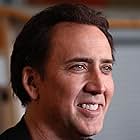
Nicolas Cage plays Charlie Kaufman, the lonely, insecure and socially awkward screenwriter who is hired to adapt "The Orchid Thief," written by Susan Orlean, who is portrayed by Meryl Streep. The novel itself concerns the story of John Laroche (played by Chris Cooper), a smug plant dealer who was arrested in 1994 for poaching rare orchids in the Fakahatchee Strand State Preserve. As Kaufman struggles to write the script, his troubles are compounded by the presence of his twin brother, Donald (also played by Nicolas Cage), who is Charlie's exact opposite: reckless, carefree, over-confident and perhaps even a bit dim. The script for 'Adaptation' darts back and forth between different moments in time, either chronicling Kaufman's screen writing exploits or Orlean's experiences in writing her novel. At several points in the story, more dramatic flashbacks take place: we see Charles Darwin first penning his theories of evolution and adaptation, a brief history of the grim activity of orchid-hunting, and, in one particularly impressive sequence, we are taken back billions of years to the beginning of life, to trace how Charlie Kaufman came to be here today.
Though purportedly based on a true story, the events of the film are highly fictionalised, and the story always treads a fine line with reality, with the audience never certain of whether or not an event is real (in the context of the film) or merely a creation of Charlie's (or even Donald's) imagination. Charlie Kaufman (the true-life writer, not the character) often receives most of the accolades for the film, but it is director Spike Jonze who shared the vision to execute "Adaptation" on screen. His approach to film-making is always original and daring, never tentative of trying something unique for the sake of the film, even if it may offend the tastes of an audience that is unaccustomed to anything other than the mundane clichés of the modern movies that are churned out daily by Hollywood studios. If this wasn't completely obvious after the weird, twisted, fascinating 'Being John Malkovich,' then 'Adaptation' put any lingering doubts to rest. The director, who started his career directing music videos, seems to share a singular understanding with Kaufman the writer, and a mutual agreement on what the film is actually trying to say.
In addition to a clever story, 'Adaptation' contains some of the finest acting of the 2000s, presenting an excellent selection of seasoned talents at the top of their games. In arguably the greatest role(s) of his career, Nicolas Cage is phenomenal as both Charlie and Donald Kaufman, twin brothers whose complete polarity is startlingly evident in the execution of their respective film scripts. Charlie, whilst writing his adaptation, is determined to avoid the usual clichés and construct a film without any conventional plot, to write a movie "simply about flowers." Donald, however, blissfully oblivious to his own unoriginality as a writer, churns out a hackneyed psychological thriller, entitled 'The 3,' in which the serial killer, his female hostage and the cop are the very same person. In an ironic twist of fate, Donald's trite treatment is hailed as a masterpiece, adding further to the inadequacy already being felt by his disillusioned brother. Cage is excellent, and often absolutely hilarious, as both characters, giving each brother a distinct attitude and personality, so that it is possible to tell immediately which is which even though their physical appearance is exactly the same.
Meryl Streep is equally excellent as Susan Orlean, the journalist for "The New Yorker" who researches John Laroche and endeavours to catch a glimpse of the famed and very rare Ghost Orchid, if only to understand what it feels like to be passionate about something. Chris Cooper arguably steals the entire show as the charismatic and enigmatic Laroche, whose tragedy-afflicted life is dedicated to mastering numerous obscure fields (such as orchid-collecting, or fish-collecting), each of which is sporadically cast aside and permanently forgotten as soon as he feels it's time to move on, to "adapt" to another hobby. From four Academy Award nominations, only Cooper walked away with a statue. Notably, Charlie Kaufman's screenplay was also nominated for an Oscar. Since the script was credited to both "Charlie Kaufman and Donald Kaufman," the latter became the only entirely fictional person in history to have been nominated for an Academy Award.
In a nutshell, 'Adaptation' is all about failure. Charlie Kaufman is absolutely determined to write an original script, without cramming in "sex or guns or car chases or characters learning profound life lessons or growing or coming to like each other or overcoming obstacles to succeed in the end." However, after he eventually asks Donald to complete the script for him, it descends into exactly that. A visit to a screen-writing seminar by Robert McKee (memorably played by Brian Cox) who is famous for warning strongly against Deus Ex Machina is used as exactly that. Charlie Kaufman the character fails miserably in writing his script, but, ironically, Charlie Kaufman the writer succeeds ever so magnificently!
64 of 75 people found this review helpful.
Was this review helpful to you?
After the phenomenal success of 'Being John Malkovich' in 1999, screenwriter Charlie Kaufman was commissioned to adapt Susan Orlean's non-fiction novel, "The Orchid Thief," for the screen. However, it didn't take long for him to realise that Orlean's book was basically unfilmable, its sprawling and ponderous story lacking any clear structure or coherence. After some months of struggling vainly to write a screenplay from the novel, Kaufman's script inexplicably became the story of a writer's effort to adapt an unadaptable novel. Kaufman's completed script was presented to his financial backers with some trepidation, but they reportedly loved it so much that they decided to abandon the original project and film his screenplay. Spike Jonze, who had also directed "Being John Malkovich," returned to direct "Adaptation," the quirky, twisting, self-referential film that received almost universal critical acclaim. Much like Federico Fellini's classic 1963 film, '8½,' from which Kaufman almost certainly drew inspiration, 'Adaptation' tells the story of its own creation.
Nicolas Cage plays Charlie Kaufman, the lonely, insecure and socially awkward screenwriter who is hired to adapt "The Orchid Thief," written by Susan Orlean, who is portrayed by Meryl Streep. The novel itself concerns the story of John Laroche (played by Chris Cooper), a smug plant dealer who was arrested in 1994 for poaching rare orchids in the Fakahatchee Strand State Preserve. As Kaufman struggles to write the script, his troubles are compounded by the presence of his twin brother, Donald (also played by Nicolas Cage), who is Charlie's exact opposite: reckless, carefree, over-confident and perhaps even a bit dim. The script for 'Adaptation' darts back and forth between different moments in time, either chronicling Kaufman's screen writing exploits or Orlean's experiences in writing her novel. At several points in the story, more dramatic flashbacks take place: we see Charles Darwin first penning his theories of evolution and adaptation, a brief history of the grim activity of orchid-hunting, and, in one particularly impressive sequence, we are taken back billions of years to the beginning of life, to trace how Charlie Kaufman came to be here today.
Though purportedly based on a true story, the events of the film are highly fictionalised, and the story always treads a fine line with reality, with the audience never certain of whether or not an event is real (in the context of the film) or merely a creation of Charlie's (or even Donald's) imagination. Charlie Kaufman (the true-life writer, not the character) often receives most of the accolades for the film, but it is director Spike Jonze who shared the vision to execute "Adaptation" on screen. His approach to film-making is always original and daring, never tentative of trying something unique for the sake of the film, even if it may offend the tastes of an audience that is unaccustomed to anything other than the mundane clichés of the modern movies that are churned out daily by Hollywood studios. If this wasn't completely obvious after the weird, twisted, fascinating 'Being John Malkovich,' then 'Adaptation' put any lingering doubts to rest. The director, who started his career directing music videos, seems to share a singular understanding with Kaufman the writer, and a mutual agreement on what the film is actually trying to say.
In addition to a clever story, 'Adaptation' contains some of the finest acting of the 2000s, presenting an excellent selection of seasoned talents at the top of their games. In arguably the greatest role(s) of his career, Nicolas Cage is phenomenal as both Charlie and Donald Kaufman, twin brothers whose complete polarity is startlingly evident in the execution of their respective film scripts. Charlie, whilst writing his adaptation, is determined to avoid the usual clichés and construct a film without any conventional plot, to write a movie "simply about flowers." Donald, however, blissfully oblivious to his own unoriginality as a writer, churns out a hackneyed psychological thriller, entitled 'The 3,' in which the serial killer, his female hostage and the cop are the very same person. In an ironic twist of fate, Donald's trite treatment is hailed as a masterpiece, adding further to the inadequacy already being felt by his disillusioned brother. Cage is excellent, and often absolutely hilarious, as both characters, giving each brother a distinct attitude and personality, so that it is possible to tell immediately which is which even though their physical appearance is exactly the same.
Meryl Streep is equally excellent as Susan Orlean, the journalist for "The New Yorker" who researches John Laroche and endeavours to catch a glimpse of the famed and very rare Ghost Orchid, if only to understand what it feels like to be passionate about something. Chris Cooper arguably steals the entire show as the charismatic and enigmatic Laroche, whose tragedy-afflicted life is dedicated to mastering numerous obscure fields (such as orchid-collecting, or fish-collecting), each of which is sporadically cast aside and permanently forgotten as soon as he feels it's time to move on, to "adapt" to another hobby. From four Academy Award nominations, only Cooper walked away with a statue. Notably, Charlie Kaufman's screenplay was also nominated for an Oscar. Since the script was credited to both "Charlie Kaufman and Donald Kaufman," the latter became the only entirely fictional person in history to have been nominated for an Academy Award.
In a nutshell, 'Adaptation' is all about failure. Charlie Kaufman is absolutely determined to write an original script, without cramming in "sex or guns or car chases or characters learning profound life lessons or growing or coming to like each other or overcoming obstacles to succeed in the end." However, after he eventually asks Donald to complete the script for him, it descends into exactly that. A visit to a screen-writing seminar by Robert McKee (memorably played by Brian Cox) who is famous for warning strongly against Deus Ex Machina is used as exactly that. Charlie Kaufman the character fails miserably in writing his script, but, ironically, Charlie Kaufman the writer succeeds ever so magnificently!