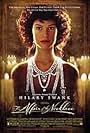
In pre-Revolutionary France, a young aristocratic woman left penniless by the political unrest in the country, must avenge her family's fall from grace by scheming to steal a priceless necklace.
Keep track of everything you watch; tell your friends.
If your account is linked with Facebook and you have turned on sharing, this will show up in your activity feed. If not, you can turn on sharing
here
.
The story of King George VI of Britain, his impromptu ascension to the throne and the speech therapist who helped the unsure monarch become worthy of it.
Director:
Tom Hooper
Stars:
Colin Firth,
Helena Bonham Carter,
Derek Jacobi
A Westerner finds refuge with a group of women in a church during Japan's rape of Nanking in 1937. Posing as a priest, he attempts to lead the women to safety.
The story of John Wilmot, a.k.a. the Earl of Rochester, a 17th century poet who famously drank and debauched his way to an early grave, only to earn posthumous critical acclaim for his life's work.
In pre-unified China, the King of Qin sends his concubine to a rival kingdom to produce an assassin for a political plot, but as the king's cruelty mounts she finds her loyalty faltering.
The story of the assassination of U.S. Senator Robert F. Kennedy who was shot in the early morning hours of June 5, 1968 in the Ambassador Hotel in Los Angeles, and 22 people in the hotel whose lives were never the same.
Director:
Emilio Estevez
Stars:
Harry Belafonte,
Anthony Hopkins,
Demi Moore
Paris, 1786: a woman in court. The Crown murdered her father for his views about the poor, now Jeanne wants her home and good name back. She believes all can be set right if she can talk to the Queen, whose House Minister rebuffs her. With the help of a courtside gigolo, she learns to use what others desire to get what she wants. She needs a patron: with forged letters, she convinces Cardinal de Rohan she is the Queen's confidante and can help him regain royal favor. Jeanne conspires to have the Cardinal purchase a fabulous diamond necklace for the Queen. He delivers it to Jeanne for Marie Antoinette. If the scheme breaks down, what then? Might this affair spark revolution? Written by
<jhailey@hotmail.com>
In the 1938 film Marie Antoinette, Norma Shearer refused any complimentary make-up for the final scene showing her character going to the guillotine. She wanted to look as haggard and exhausted as the real queen had in her final moments. In the final scene for this movie, Joely Richardson expressed the same effects as she tried to convey as her reflection can be viewed in the water bucket beside guillotine before the beheading. See more »
Quotes
[first lines]
Narrator:
Napoleon wrote that military blunders and domestic catastrophes fanned the flames of the French Revolution. But the cu-de-gras was a curious palace scandal involving woman of nobility denied, a member of the royal family, and the most magnificent string of jewels in all of Europe. This notorious intrigue came to be known as, L'affaire du Collier.
See more »
The Affair of the Necklace is a film that has some qualities but only adds more layers of falsehoods to a story that is already fraught with them. This film is trying to make Jeanne de la Motte into an unjustly destitute noble heroine along the lines of Thomas Hardy's Tess of the d'Urbervilles. Nothing could be further from the truth. She was a thief and a whore. Here are a few documented facts:
Jeanne's father was not dispossessed by the King's men; he pretty well did that to himself as a village drunkard and professional poacher. He married a servant girl who later became a prostitute. He was not a political agitator. Jeanne was actually generously pensioned by the King for being a true descendant of Henry II. She was introduced to Rohan by one of her many benefactors. She became his lover on her second visit. Cardinal Rohan, by the way, was not 'cardinal of all France', but Grand Almoner (or 'court cardinal'), a privilege he lost after the trial. Jeanne did not meet Rétaux as a court gigolo during one of her many fake fainting spells in court (three in all); he was a companion of arms and debauchery of her husband, who did not have a jealous bone in his body. At the conclusion of the trial, Cagliostro was also exiled from France by Parliament. After escaping from France, Jeanne did not retire to semi-gentility, lecturing English society matrons on her edifying adventures. She wrote pornographic memoirs in many volumes regaling the populace with further aspersions on the Queen's character, while her husband, back in France, made a very decent living getting paid by the Rohan family not to write his memoirs. She did in England what she had always done in France: she whored. She fell out the second-floor window of a London house of ill repute, to her death.
Other things bother me: The necklace itself is a rather slim, cut-rate and unattractive version of the documented original. Marie Antoinette was not tall, spindly, stoop-shouldered and bustless, no matter how effective Joely Richardson's performance is otherwise. Most of the source music heard in this film was never heard within several country miles of the French court, namely Vivaldi, Haendel, Mozart and various English baroque composers (Saints preserve us!). The ditty 'Plaisir d'amour' (misspelled in the end titles) was never part of a stage presentation. The film's main titles and theatrical trailer are disgraced by a nondescript and rather hair-raising piece sung by Alanis Morrissette, which sounds to all the world like an African mass sung in Gaelic (What were they thinking?!).
In the film's defence, it was shot in Versailles, it does show amazing detail, occasional accuracy, spurts of brilliance and a vigorous rhythm. Furthermore, it never stoops to the detailed depictions of bodily functions and gory acts of sadistic violence that have become the hallmark of recent euro-trash pseudo-historical epics (La Reine Margot, Elizabeth, Farinelli, Le Roi danse, Vatel, Ridicule, to name a few). It is infinitely more historically accurate than, say, Gladiator, but that's not saying much.
My favourite quote about this film comes from Rick Groen in Toronto's Globe and Mail who wrote: 'If life, as Keats suggests, is a 'mansion of many apartments', then this plot is its wrecking ball.'
5 of 7 people found this review helpful.
Was this review helpful to you?
The Affair of the Necklace is a film that has some qualities but only adds more layers of falsehoods to a story that is already fraught with them. This film is trying to make Jeanne de la Motte into an unjustly destitute noble heroine along the lines of Thomas Hardy's Tess of the d'Urbervilles. Nothing could be further from the truth. She was a thief and a whore. Here are a few documented facts:
Jeanne's father was not dispossessed by the King's men; he pretty well did that to himself as a village drunkard and professional poacher. He married a servant girl who later became a prostitute. He was not a political agitator. Jeanne was actually generously pensioned by the King for being a true descendant of Henry II. She was introduced to Rohan by one of her many benefactors. She became his lover on her second visit. Cardinal Rohan, by the way, was not 'cardinal of all France', but Grand Almoner (or 'court cardinal'), a privilege he lost after the trial. Jeanne did not meet Rétaux as a court gigolo during one of her many fake fainting spells in court (three in all); he was a companion of arms and debauchery of her husband, who did not have a jealous bone in his body. At the conclusion of the trial, Cagliostro was also exiled from France by Parliament. After escaping from France, Jeanne did not retire to semi-gentility, lecturing English society matrons on her edifying adventures. She wrote pornographic memoirs in many volumes regaling the populace with further aspersions on the Queen's character, while her husband, back in France, made a very decent living getting paid by the Rohan family not to write his memoirs. She did in England what she had always done in France: she whored. She fell out the second-floor window of a London house of ill repute, to her death.
Other things bother me: The necklace itself is a rather slim, cut-rate and unattractive version of the documented original. Marie Antoinette was not tall, spindly, stoop-shouldered and bustless, no matter how effective Joely Richardson's performance is otherwise. Most of the source music heard in this film was never heard within several country miles of the French court, namely Vivaldi, Haendel, Mozart and various English baroque composers (Saints preserve us!). The ditty 'Plaisir d'amour' (misspelled in the end titles) was never part of a stage presentation. The film's main titles and theatrical trailer are disgraced by a nondescript and rather hair-raising piece sung by Alanis Morrissette, which sounds to all the world like an African mass sung in Gaelic (What were they thinking?!).
In the film's defence, it was shot in Versailles, it does show amazing detail, occasional accuracy, spurts of brilliance and a vigorous rhythm. Furthermore, it never stoops to the detailed depictions of bodily functions and gory acts of sadistic violence that have become the hallmark of recent euro-trash pseudo-historical epics (La Reine Margot, Elizabeth, Farinelli, Le Roi danse, Vatel, Ridicule, to name a few). It is infinitely more historically accurate than, say, Gladiator, but that's not saying much.
My favourite quote about this film comes from Rick Groen in Toronto's Globe and Mail who wrote: 'If life, as Keats suggests, is a 'mansion of many apartments', then this plot is its wrecking ball.'