Based on the best selling autobiography by Irish expat Frank McCourt, Angela's Ashes follows the experiences of young Frankie and his family as they try against all odds to escape the ... See full summary »
Keep track of everything you watch; tell your friends.
If your account is linked with Facebook and you have turned on sharing, this will show up in your activity feed. If not, you can turn on sharing
here
.
When a man with AIDS is fired by a conservative law firm because of his condition, he hires a homophobic small time lawyer as the only willing advocate for a wrongful dismissal suit.
Director:
Jonathan Demme
Stars:
Tom Hanks,
Denzel Washington,
Roberta Maxwell
Lester Burnham, a depressed suburban father in a mid-life crisis, decides to turn his hectic life around after developing an infatuation for his daughter's attractive friend.
The story of how the novel "Mrs. Dalloway" affects three generations of women, all of whom, in one way or another, have had to deal with suicide in their lives.
Disgruntled Korean War vet Walt Kowalski sets out to reform his neighbor, a young Hmong teenager, who tried to steal Kowalski's prized possession: his 1972 Gran Torino.
Director:
Clint Eastwood
Stars:
Clint Eastwood,
Christopher Carley,
Bee Vang
Upon admittance to a mental institution, a brash rebel rallies the patients to take on the oppressive head nurse, a woman he views as more dictator than nurse.
Director:
Milos Forman
Stars:
Michael Berryman,
Peter Brocco,
Louise Fletcher
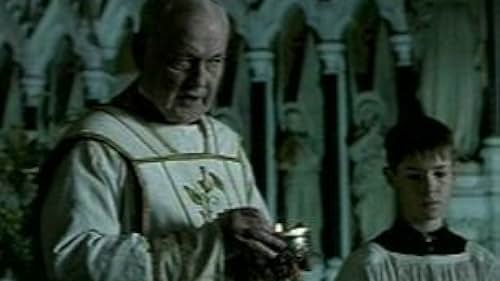
Based on the best selling autobiography by Irish expat Frank McCourt, Angela's Ashes follows the experiences of young Frankie and his family as they try against all odds to escape the poverty endemic in the slums of pre-war Limerick. The film opens with the family in Brooklyn, but following the death of one of Frankie's siblings, they return home, only to find the situation there even worse. Prejudice against Frankie's Northern Irish father makes his search for employment in the Republic difficult despite his having fought for the IRA, and when he does find money, he spends the money on drink. Written by
KB-26
Young Frank does not have a cleft chin, teenage Frank does, and in real life Frank McCourt has no cleft chin. See more »
Quotes
Narrator:
[First lines]
When I look back on my childhood, I wonder how my brothers and I managed to survive at all. It was, of course, a miserable childhood. The happy childhood is hardly worth telling. Worse than the ordinary miserable childhood is the miserable Irish childhood. And worse still is the miserable Irish Catholic childhood.
See more »
The trouble with making a movie out of a Pulitzer Prize winning book is that no matter how good and true to the book it is, it will usually be a disappointment. This has a lot to do with the difference between reading a story and seeing one. When one reads a book, it is usually done over time, perhaps a week or two. The words stir the imagination and the scenes described become images, usually more illusory than real. There is plenty of time for this process to work. A film, in contrast, is viewed over a period of about two hours, where the viewer is perceiving rather than imagining. The portrayals are well defined and no matter how creative the director, it is very difficult to create scenes that equal those of readers who have previously conjured fantastic images in their heads.
I believe this is the reason this film was such a disappointment to so many viewers who had read the book. Thankfully, I saw the film first, so I had no preconceived notions. With that fresh perspective, I must say that it was outstanding.
It the story is taken from the memoirs of Frank McCourt, who recounted his childhood in Ireland in the 1930's and 1940's. It is a poignant and compelling story of a poor family struggling to survive. The images are powerful depictions of the indignity of indigence in a world where hunger and disease were common and people went almost as frequently to the cemetery as to the market.
Alan Parker brings us a starkly realistic view of McCourt's Ireland. He scoured Ireland to find a ghetto that brought forth the images described in the book, but after an exhaustive search, he decided to build the lane from scratch using McCourt's photographs. Upon visiting the set, McCourt said it was chillingly accurate and he couldn't believe he wasn't back home. Parker desaturated the color to give the film a very stark look, consistent with the squalor he was trying to portray. Paradoxically, the loss of color intensity intensified the power of the images. Though I'm not a big fan of this technique (I like rich and vibrant color), in this case it was the perfect choice.
The film suffers a bit from excessive length, undoubtedly because there was so much to cover. However, when Parker bombards the viewer with disturbingly hopeless imagery for well over two hours, it becomes tedious. This is another advantage of reading a book. You can more easily put it down and come back to it. Parker sometimes overdoes certain ideas that he could have condensed. We could have done without half a dozen vomiting scenes and all the chamber pot activity. One or two such scenes would have gotten the message across.
The cast was consistently excellent. Parker saw over 15,000 child actors before casting the three boys who played Frank at various ages. All three were wonderful, but my favorite was Michael Legge, the oldest Frank. He was the most hopeful person in the film, giving him character and determination, without losing his idealistic innocence.
Emily Watson is a great dramatic actress and rose to the occasion to endow Angela with superhuman strength, courage and persistence in the face of crushing hardship and sorrow. Robert Carlyle was also terrific as Frank's father. He made the character a lovable man with fatal flaws. Despite his heinously irresponsible behavior squandering money on drink as his family starved, his charming nature and effusive affection for the children evoked as much love from us as disgust.
This is a brilliant production. Though many who read the book were disappointed, I must point out that Frank McCourt, who wrote the book, was unabashed in praising it for its realism in capturing his impressions and feelings of the times. I rated it a 9/10. Other than a bit of overkill, this is superb filmmaking giving us an affecting look at the human face of poverty.
20 of 20 people found this review helpful.
Was this review helpful to you?
The trouble with making a movie out of a Pulitzer Prize winning book is that no matter how good and true to the book it is, it will usually be a disappointment. This has a lot to do with the difference between reading a story and seeing one. When one reads a book, it is usually done over time, perhaps a week or two. The words stir the imagination and the scenes described become images, usually more illusory than real. There is plenty of time for this process to work. A film, in contrast, is viewed over a period of about two hours, where the viewer is perceiving rather than imagining. The portrayals are well defined and no matter how creative the director, it is very difficult to create scenes that equal those of readers who have previously conjured fantastic images in their heads.
I believe this is the reason this film was such a disappointment to so many viewers who had read the book. Thankfully, I saw the film first, so I had no preconceived notions. With that fresh perspective, I must say that it was outstanding.
It the story is taken from the memoirs of Frank McCourt, who recounted his childhood in Ireland in the 1930's and 1940's. It is a poignant and compelling story of a poor family struggling to survive. The images are powerful depictions of the indignity of indigence in a world where hunger and disease were common and people went almost as frequently to the cemetery as to the market.
Alan Parker brings us a starkly realistic view of McCourt's Ireland. He scoured Ireland to find a ghetto that brought forth the images described in the book, but after an exhaustive search, he decided to build the lane from scratch using McCourt's photographs. Upon visiting the set, McCourt said it was chillingly accurate and he couldn't believe he wasn't back home. Parker desaturated the color to give the film a very stark look, consistent with the squalor he was trying to portray. Paradoxically, the loss of color intensity intensified the power of the images. Though I'm not a big fan of this technique (I like rich and vibrant color), in this case it was the perfect choice.
The film suffers a bit from excessive length, undoubtedly because there was so much to cover. However, when Parker bombards the viewer with disturbingly hopeless imagery for well over two hours, it becomes tedious. This is another advantage of reading a book. You can more easily put it down and come back to it. Parker sometimes overdoes certain ideas that he could have condensed. We could have done without half a dozen vomiting scenes and all the chamber pot activity. One or two such scenes would have gotten the message across.
The cast was consistently excellent. Parker saw over 15,000 child actors before casting the three boys who played Frank at various ages. All three were wonderful, but my favorite was Michael Legge, the oldest Frank. He was the most hopeful person in the film, giving him character and determination, without losing his idealistic innocence.
Emily Watson is a great dramatic actress and rose to the occasion to endow Angela with superhuman strength, courage and persistence in the face of crushing hardship and sorrow. Robert Carlyle was also terrific as Frank's father. He made the character a lovable man with fatal flaws. Despite his heinously irresponsible behavior squandering money on drink as his family starved, his charming nature and effusive affection for the children evoked as much love from us as disgust.
This is a brilliant production. Though many who read the book were disappointed, I must point out that Frank McCourt, who wrote the book, was unabashed in praising it for its realism in capturing his impressions and feelings of the times. I rated it a 9/10. Other than a bit of overkill, this is superb filmmaking giving us an affecting look at the human face of poverty.