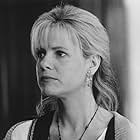
When two kids find and play a magical board game, they release a man trapped for decades in it and a host of dangers that can only be stopped by finishing the game.
Keep track of everything you watch; tell your friends.
If your account is linked with Facebook and you have turned on sharing, this will show up in your activity feed. If not, you can turn on sharing
here
.
The magical inhabitants of a rainforest called FernGully fight to save their home that is threatened by logging and a polluting force of destruction called Hexxus.
Director:
Bill Kroyer
Stars:
Tim Curry,
Samantha Mathis,
Christian Slater
On his ninth birthday a boy receives many presents. Two of them first seem to be less important: an old cupboard from his brother and a little Indian figure made of plastic from his best ... See full summary »
Upon moving into the run-down Spiderwick Estate with their mother, twin brothers Jared and Simon Grace, along with their sister Mallory, find themselves pulled into an alternate world full of faeries and other creatures.
Director:
Mark Waters
Stars:
Freddie Highmore,
Mary-Louise Parker,
Sarah Bolger
19-year-old Alice returns to the magical world from her childhood adventure, where she reunites with her old friends and learns of her true destiny: to end the Red Queen's reign of terror.
Director:
Tim Burton
Stars:
Johnny Depp,
Mia Wasikowska,
Helena Bonham Carter
A Las Vegas cabbie enlists the help of a UFO expert to protect two siblings with paranormal powers from the clutches of an organization that wants to use the kids for their nefarious plans.
Director:
Andy Fickman
Stars:
Dwayne Johnson,
AnnaSophia Robb,
Alexander Ludwig
A young girl discovers her father has an amazing talent to bring characters out of their books and must try to stop a freed villain from destroying them all, with the help of her father, her aunt, and a storybook's hero.
Director:
Iain Softley
Stars:
Brendan Fraser,
Sienna Guillory,
Eliza Bennett
In a parallel universe, young Lyra Belacqua journeys to the far North to save her best friend and other kidnapped children from terrible experiments by a mysterious organization.
Director:
Chris Weitz
Stars:
Nicole Kidman,
Daniel Craig,
Dakota Blue Richards
Lucy and Edmund Pevensie return to Narnia with their cousin Eustace where they meet up with Prince Caspian for a trip across the sea aboard the royal ship The Dawn Treader. Along the way they encounter dragons, dwarves, merfolk, and a band of lost warriors before reaching the edge of the world.
After being trapped in a jungle board game for 26 years, a Man-Child wins his release from the game. But, no sooner has he arrived that he is forced to play again, and this time sets the creatures of the jungle loose on the city. Now it is up to him to stop them. Written by
Joshua Davis <xtnb64a@prodigy.com>
The Sir-Save-Alot scene was shot in Tsawwassen, BC located at 56th Street & 12th Avenue in what was the Tsawwassen Shoppers Mall. The Sir-Save-ALot store was the old Super Valu store (which was a grocery store before it closed). At the time of filming, the store was vacant, and although the exterior was repaired after the movie was shot, the store never re-opened. The mall has since been redeveloped, with Safeway being the anchor tenant. The Sir-Save-ALot/Super Valu in the old mall was along the west perimeter of the current mall, what is now a parking lot/entranceway. See more »
Goofs
When Alan tries to get the game back from the pelican, he puts his hand in the water to get a fish. As his hand appears with the fish, it is dry. See more »
Quotes
[after Alan jumps onto Carl's cruiser]
Alan Parrish:
What year is it?
Carl:
It was brand new.
Alan Parrish:
No, what year is it?
Judy Shepherd:
Uh, 1995, remember?
Alan Parrish:
[in shock]
'95?
Carl:
You got some ID? Oh, let me guess, you probably left it in your other Tarzan outfit, right?
Alan Parrish:
[to himself]
26 years!
Carl:
Are you from around here?
Alan Parrish:
I was. But I've been in Jumanji.
[...] See more »
Crazy Credits
SPOILERS: Green flames swirl around to form the opening title, which spirals into a vortex. This is in fact the sequence that occurs when Alan finishes the game near the end. See more »
In 1969, in a small town in New Hampshire, a twelve-year-old boy named Alan Parrish finds a Victorian-era board game called "Jumanji", and starts to play it with his friend Sarah. What the children do not realise, however, is that the game has strange, mysterious powers, and when Alan's token lands on a particular square he is suddenly sucked into the game. Unsurprisingly traumatised by the disappearance of her friend, Sarah runs out of the house shrieking, leaving the game unfinished.
Twenty-six years later two more children, Peter and Judy, orphaned by the death of their parents in a car crash, move into the former Parrish family home with their Aunt Nora. They find the old Jumanji set and start playing the game; when Peter rolls a five Alan suddenly reappears, now a grown man. He explains to them that he has been trapped inside the game for the last twenty-six years and that they must now finish the game which he and Sarah started. This, however, is easier said than done. Not only must the children find Sarah and persuade her to take part, they must also cope with the magical effects of the game. Each roll of the dice results in strange happenings in keeping with the game's jungle adventure theme; animals such as lions, monkeys, elephants and rhinoceroses suddenly materialise and proceed to wreak havoc in the town. Just as deadly is a white hunter named Van Pelt who will take pot-shots at anything that moves, animal or human.
The big-name star in this film is Robin Williams, although it also features a young Kirsten Dunst, later to become a big name herself. This isn't Williams' best role- I generally prefer him in his more serious films like "Dead Poet's Society" or "Good Morning, Vietnam"- but it's a lot better than many of his comedies, which can descend into either silliness or sentimentality.
This is the sort of family film that offers something to entertain the adults as well as the children, and has some underlying serious themes. The main theme is that of courage and of confronting one's fears; the horrors unleashed by the game can (if one is in a particularly serious, analytic frame of mind) be seen as symbolic of the problems that the characters need to overcome. Although (or perhaps because) he is from a wealthy, privileged family, the young Alan is a shy, lonely boy who finds it difficult to make friends and who is neglected by his cold, distant parents. Nevertheless, he does win his father's approval when he finds the courage to stand up to a gang of bullies who have been tormenting him. There is doubtless some Freudian significance in the fact that Alan's father and the murderous Van Pelt are played by the same actor.
Children, of course, could not care less about Freudian symbolism and are generally allergic to underlying serious themes. When I was a child the one thing that would kill a book or a film stone dead for me was the suspicion that it was being used by the adult world to preach some morally improving message to me. (C.S. Lewis was a particular bête noire of mine after an intellectually precocious classmate, who even at the age of nine cherished the long-term ambition to become Archbishop of Canterbury, pointed out to me the Christian allegory behind the "Narnia" stories).
Fortunately, any moralising in "Jumanji" is fairly light, and I suspect that children will simply see it as an exciting adventure story, even if the final twist in the tale involves the intellectually difficult concept of "alternative timelines". The special effects used to create the scenes of the rampaging animals seem to have aroused some excitement when the film first came out, although thirteen years on they have a rather retro, nineties feel to them. (And from the point of view of today's techno-literate youngsters the 1990s probably seem only slightly less technologically backward than the 1890s). 7/10
5 of 5 people found this review helpful.
Was this review helpful to you?
In 1969, in a small town in New Hampshire, a twelve-year-old boy named Alan Parrish finds a Victorian-era board game called "Jumanji", and starts to play it with his friend Sarah. What the children do not realise, however, is that the game has strange, mysterious powers, and when Alan's token lands on a particular square he is suddenly sucked into the game. Unsurprisingly traumatised by the disappearance of her friend, Sarah runs out of the house shrieking, leaving the game unfinished.
Twenty-six years later two more children, Peter and Judy, orphaned by the death of their parents in a car crash, move into the former Parrish family home with their Aunt Nora. They find the old Jumanji set and start playing the game; when Peter rolls a five Alan suddenly reappears, now a grown man. He explains to them that he has been trapped inside the game for the last twenty-six years and that they must now finish the game which he and Sarah started. This, however, is easier said than done. Not only must the children find Sarah and persuade her to take part, they must also cope with the magical effects of the game. Each roll of the dice results in strange happenings in keeping with the game's jungle adventure theme; animals such as lions, monkeys, elephants and rhinoceroses suddenly materialise and proceed to wreak havoc in the town. Just as deadly is a white hunter named Van Pelt who will take pot-shots at anything that moves, animal or human.
The big-name star in this film is Robin Williams, although it also features a young Kirsten Dunst, later to become a big name herself. This isn't Williams' best role- I generally prefer him in his more serious films like "Dead Poet's Society" or "Good Morning, Vietnam"- but it's a lot better than many of his comedies, which can descend into either silliness or sentimentality.
This is the sort of family film that offers something to entertain the adults as well as the children, and has some underlying serious themes. The main theme is that of courage and of confronting one's fears; the horrors unleashed by the game can (if one is in a particularly serious, analytic frame of mind) be seen as symbolic of the problems that the characters need to overcome. Although (or perhaps because) he is from a wealthy, privileged family, the young Alan is a shy, lonely boy who finds it difficult to make friends and who is neglected by his cold, distant parents. Nevertheless, he does win his father's approval when he finds the courage to stand up to a gang of bullies who have been tormenting him. There is doubtless some Freudian significance in the fact that Alan's father and the murderous Van Pelt are played by the same actor.
Children, of course, could not care less about Freudian symbolism and are generally allergic to underlying serious themes. When I was a child the one thing that would kill a book or a film stone dead for me was the suspicion that it was being used by the adult world to preach some morally improving message to me. (C.S. Lewis was a particular bête noire of mine after an intellectually precocious classmate, who even at the age of nine cherished the long-term ambition to become Archbishop of Canterbury, pointed out to me the Christian allegory behind the "Narnia" stories).
Fortunately, any moralising in "Jumanji" is fairly light, and I suspect that children will simply see it as an exciting adventure story, even if the final twist in the tale involves the intellectually difficult concept of "alternative timelines". The special effects used to create the scenes of the rampaging animals seem to have aroused some excitement when the film first came out, although thirteen years on they have a rather retro, nineties feel to them. (And from the point of view of today's techno-literate youngsters the 1990s probably seem only slightly less technologically backward than the 1890s). 7/10