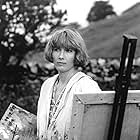
Dora Carrington: [voice-over, a letter] My dearest Lytton, There is a great deal to say, and I feel very incompetent to write it today. You see, I knew there was nothing really to hope for from you, well, ever since the beginning. All these years, I have known all along that my life with you was limited. Lytton, you're the only person who I ever had an all-absorbing passion for. I shall never have another. I couldn't, now. I had one of the most self-abasing loves that a person can have. It's too much of a strain to be quite alone here, waiting to see you, or craning my nose and eyes out of the top window at 44, Gordon Square to see if you were coming down the street. Ralph said you were nervous lest I'd feel I have some sort of claim on you, and that all your friends wondered how you could have stood me so long, as I didn't understand a word of literature. That was wrong. For nobody, I think, could have loved the Ballards, Donne, and Macaulay's Essays and, best of all, Lytton's Essays, as much as I. You never knew, or never will know, the very big and devastating love I had for you. How I adored every hair, every curl of your beard. Just thinking of you now makes me cry so I can't see this paper. Once you said to me - that Wednesday afternoon in the sitting room - you loved me as a friend. Could you tell it to me again. Yours, Carrington.
Lytton Strachey: [voice-over, his written reply] My dearest and best, Do you know how difficult I find it to express my feelings, either in letters or talk ? Do you really want me to tell you that I love you as a friend ? But of course that is absurd. And you do know very well that I love you as something more than a friend, you angelic creature, whose goodness has made me happy for years. Your letter made me cry. I feel a poor, old, miserable creature. If there was a chance that your decision meant that I should somehow or other lose you, I don't think I could bear it. You and Ralph and our life at Tidmarsh are what I care for most in the world.