Keep track of everything you watch; tell your friends.
If your account is linked with Facebook and you have turned on sharing, this will show up in your activity feed. If not, you can turn on sharing
here
.
Homicide detective John Hobbes witnesses the execution of serial killer Edgar Reese. Soon after the execution the killings start again, and they are very similar to Reese's style.
Director:
Gregory Hoblit
Stars:
Denzel Washington,
John Goodman,
Donald Sutherland
Jerry Lundegaard's inept crime falls apart due to his and his henchmen's bungling and the persistent police work of the quite pregnant Marge Gunderson.
Director:
Joel Coen
Stars:
William H. Macy,
Steve Buscemi,
Peter Stormare
After thirteen and half years in prison for kidnapping and murdering the boy Park Won-mo, Geum-ja Lee is released and tries to fix her life. She finds a job in a bakery; she orders the ... See full summary »
John has lost all his money. He sits outside a diner in the desert when Sydney happens along, buys him coffee, then takes him to Reno and shows him how to get a free room without losing ... See full summary »
Director:
Paul Thomas Anderson
Stars:
Philip Baker Hall,
John C. Reilly,
Gwyneth Paltrow
In late 1950s New York, Tom Ripley, a young underachiever, is sent to Italy to retrieve a rich and spoiled millionaire playboy, named Dickie Greenleaf. But when the errand fails, Ripley takes extreme measures.
Based on the true story of Juliet Hulme and Pauline Parker, two close friends who share a love of fantasy and literature, who conspire to kill Pauline's mother when she tries to end the girls' intense and obsessive relationship. Written by
Alexander Lum <aj_lum@postoffice.utas.edu.au>
Almost all locations used for filming were the genuine locations where the events occurred. The tea shop where Honora Parker ate her last meal was knocked down a few days after the shoot ended. According to director Peter Jackson, when they got to the location of the murder on the dirt path, it was eerily quiet; the birds stopped singing, and it didn't seem right. So they moved along a couple of hundred yards. See more »
Goofs
Pauline's diary shows January 1st, 1954 as a Thursday, when it was really a Friday. This goof is even worse when you consider that earlier in the film, a similar shot of the same diary clearly shows the previous year and date (Thursday January 1st, 1953.) See more »
Quotes
[first lines]
[Director Peter Jackson opens with the scene that should, logically, end the film: that is, the moments immediately following the murder. The girls Juliet and Pauline run screaming up the hill-path to the tea-house, sobbing and covered in blood. The scene is intercut with b&w visions of the two running across a ship deck to meet Dr. and Mrs. Hulme, whom they both refer to as their mother, as the first three exclamations of "Mummy!" demonstrate]
Juliet Hulme:
Mummy!
Pauline Parker:
Mummy!
Juliet Hulme:
Mummmmy!
[...] See more »
Crazy Credits
Special thanks to the brave Borovnian extras. See more »
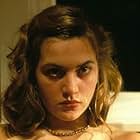
While watching Heavenly Creatures, we bring ourselves to sympathize with two unlikely heroines, and then they betray our trust by committing an unthinkable crime; by the time the film has ended, we feel as if our emotions have been chewed up and spat back out to the degree where we don't know WHAT to feel anymore. Heavenly Creatures is either the greatest act of manipulation ever put on film or a brilliant masterpiece about the dark side of life: personally, I think it's a little bit of both. Either way, I'm still trying to get my pulse to return to its normal rate. Director Peter Jackson (who before this had only made a number of cheap nasty horror movies -- Bad Taste and Braindead being the most popular --, but later became one of the most talked-about film-makers as a result of his film interpretation of The Lord of the Rings) does some remarkable things with bringing this horrendous true story to the screen: not only is this one of the most amazing motion pictures I've ever viewed, but it is one of the most important films to date. Period. Pauline (Melanie Lynskey) and Juliet (Kate Winslet) have developed an inseparable friendship whose intimacy is questioned by their strict parents -- Pauline's being the most stern. As their lives (and our sentiments) are suddenly torn apart, they decide to run off together -- but this could mean having to murder someone. I will not go any further in describing the plot (and I fear that I may already have said too much), not because I want it to surprise you, but because this film is so powerful that I would be doing a disservice to it if I tried to describe it in mere words. Written by Jackson and his real-life spouse, Frances Walsh, the screenplay for Heavenly Creatures is nothing short of remarkable (it even garnered the Academy's attention, earning the film's singular nomination). We both hate and love the two main characters, but most of all we just want them to be happy, to which Jackson and Walsh ask us the question, "at what cost?" Their scenes together -- ESPECIALLY the joyous ones -- are drenched with an unbearable amount of foreboding hopelessness that makes the inevitable conclusion even more tense. In her debut film role, Kate Winslet displays much of the potential she fulfilled later on in her career, but Melanie Lynskey (who has only achieved modest success since) deserves an equal amount of praise -- if not more. By the time we're sucked into the story (which doesn't take long), we forget that they're even acting, and our eyes are peeled to the screen with a voyeuristic intensity that is utterly discomforting. Jackson's direction is simply stunning: his visual depiction of the girls' surreal alternate universe is altogether mesmerizing. Heavenly Creatures is both fascinating and repelling in a way reminiscent of David Lynch's Blue Velvet. But after having written all this, I am still brought to the ultimate conclusion that words cannot contain the experience of viewing this film. There are only a few films that were genuinely painful for me to watch (Neil LaBute's In the Company of Men and Kimberly Pierce's Boys Don't Cry among them), but this is certainly such a film, and I would not recommend it to the faint of heart. This is not a movie you enjoy (and if you do, you should seek psychiatric help), but it is one you will never forget; I know I certainly won't.
Grade: A+
46 of 64 people found this review helpful.
Was this review helpful to you?
While watching Heavenly Creatures, we bring ourselves to sympathize with two unlikely heroines, and then they betray our trust by committing an unthinkable crime; by the time the film has ended, we feel as if our emotions have been chewed up and spat back out to the degree where we don't know WHAT to feel anymore. Heavenly Creatures is either the greatest act of manipulation ever put on film or a brilliant masterpiece about the dark side of life: personally, I think it's a little bit of both. Either way, I'm still trying to get my pulse to return to its normal rate. Director Peter Jackson (who before this had only made a number of cheap nasty horror movies -- Bad Taste and Braindead being the most popular --, but later became one of the most talked-about film-makers as a result of his film interpretation of The Lord of the Rings) does some remarkable things with bringing this horrendous true story to the screen: not only is this one of the most amazing motion pictures I've ever viewed, but it is one of the most important films to date. Period. Pauline (Melanie Lynskey) and Juliet (Kate Winslet) have developed an inseparable friendship whose intimacy is questioned by their strict parents -- Pauline's being the most stern. As their lives (and our sentiments) are suddenly torn apart, they decide to run off together -- but this could mean having to murder someone. I will not go any further in describing the plot (and I fear that I may already have said too much), not because I want it to surprise you, but because this film is so powerful that I would be doing a disservice to it if I tried to describe it in mere words. Written by Jackson and his real-life spouse, Frances Walsh, the screenplay for Heavenly Creatures is nothing short of remarkable (it even garnered the Academy's attention, earning the film's singular nomination). We both hate and love the two main characters, but most of all we just want them to be happy, to which Jackson and Walsh ask us the question, "at what cost?" Their scenes together -- ESPECIALLY the joyous ones -- are drenched with an unbearable amount of foreboding hopelessness that makes the inevitable conclusion even more tense. In her debut film role, Kate Winslet displays much of the potential she fulfilled later on in her career, but Melanie Lynskey (who has only achieved modest success since) deserves an equal amount of praise -- if not more. By the time we're sucked into the story (which doesn't take long), we forget that they're even acting, and our eyes are peeled to the screen with a voyeuristic intensity that is utterly discomforting. Jackson's direction is simply stunning: his visual depiction of the girls' surreal alternate universe is altogether mesmerizing. Heavenly Creatures is both fascinating and repelling in a way reminiscent of David Lynch's Blue Velvet. But after having written all this, I am still brought to the ultimate conclusion that words cannot contain the experience of viewing this film. There are only a few films that were genuinely painful for me to watch (Neil LaBute's In the Company of Men and Kimberly Pierce's Boys Don't Cry among them), but this is certainly such a film, and I would not recommend it to the faint of heart. This is not a movie you enjoy (and if you do, you should seek psychiatric help), but it is one you will never forget; I know I certainly won't.
Grade: A+