Keep track of everything you watch; tell your friends.
If your account is linked with Facebook and you have turned on sharing, this will show up in your activity feed. If not, you can turn on sharing
here
.
Rich Mr. Dashwood dies, leaving his second wife and her three daughters poor by the rules of inheritance. The two eldest daughters are the titular opposites.
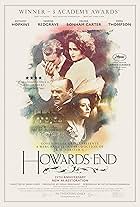
When Lucy Honeychurch and chaperone Charlotte Bartlett find themselves in Florence with rooms without views, fellow guests Mr Emerson and son George step in to remedy the situation. Meeting... See full summary »
Director:
James Ivory
Stars:
Maggie Smith,
Helena Bonham Carter,
Denholm Elliott
A British medical doctor fights a cholera outbreak in a small Chinese village, while also being trapped at home in a loveless marriage to an unfaithful wife.
Director:
John Curran
Stars:
Catherine An,
Edward Norton,
Liev Schreiber
Post-WWII Germany: Nearly a decade after his affair with an older woman came to a mysterious end, law student Michael Berg re-encounters his former lover as she defends herself in a war-crime trial.
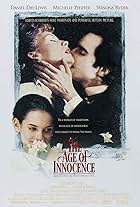
Tale of 19th century New York high society in which a young lawyer falls in love with a woman separated from her husband, while he is engaged to the woman's cousin.
Director:
Martin Scorsese
Stars:
Daniel Day-Lewis,
Michelle Pfeiffer,
Winona Ryder
Sophie is the survivor of Nazi concentration camps, who has found a reason to live in Nathan, a sparkling if unsteady American Jew obsessed with the Holocaust. They befriend Stingo, the ... See full summary »
The lives of two lovelorn spouses from separate marriages, a registered sex offender, and a disgraced ex-police officer intersect as they struggle to resist their vulnerabilities and temptations.
Director:
Todd Field
Stars:
Kate Winslet,
Jennifer Connelly,
Patrick Wilson
A young couple living in a Connecticut suburb during the mid-1950s struggle to come to terms with their personal problems while trying to raise their two children. Based on a novel by Richard Yates.
Director:
Sam Mendes
Stars:
Kate Winslet,
Leonardo DiCaprio,
Christopher Fitzgerald
A rule bound head butler's world of manners and decorum in the household he maintains is tested by the arrival of a housekeeper who falls in love with him in post-WWI Britain. The possibility of romance and his master's cultivation of ties with the Nazi cause challenge his carefully maintained veneer of servitude. Written by
Keith Loh <loh@sfu.ca>
It was while shooting Mr. & Mrs. Bridge in Kansas City that actor Remak Ramsay, who was reading "The Remains of the Day" while playing a part in the film, gave the book to James Ivory to read thinking that its subject and setting might intrigue Ivory. See more »
Goofs
We see a dozen bottles of Graham's Port being delivered for the banquet - but the port would have been cellared for at least six months before being decanted - vintage port is undrinkable immediately after being transported; and later Stevens takes (and breaks) a bottle of Dow 1913 vintage port- but no producers declared a vintage in that year. 1912 was a vintage year, and the next one was 1917. See more »
Quotes
James Stevens:
I don't believe a man can consider himself fully content until he has done all he can to be of service to his employer.
See more »
I am disappointed to see reviewers refer to this movie as anti-war or a story of unrequited love or Lord Darlington as a Nazi or WWII as a nuclear holocaust. I think that perhaps these comments reflect both the lack of an adequate attention span and a lack of a proper knowledge and perspective of the times. "The Remains of the Day" requires both. I found it to be an interesting movie with many facets, each of which could be used as the sole theme of a movie. It is a movie that has great acting, is beautifully filmed in and around one of England's great mansions, and tells a fascinating and complex story as well.
It is true that the movie is about, in part, what many in the audience would believe is a romance that never has a chance because of Mr. Stevens' devotion to and pride in the occupation he has chosen. It is important to recognize that it is the job of his choosing, not one that has been forced upon him. It is tempting to write the job off as no more than servant of the wealthy, but it is actually the equivalent of presidency of a small company. Stevens is in charge of seeing that the large staff serving Darlington gets all of the many jobs in the household done - to perfection - every day of the week. I doubt that the White House has standards that approach those of Lord Darlington. So, each viewer can decide for himself or herself whether there could have ever been a woman in Stevens' life to whom he could give husband-like devotion.
Darlington is not a Nazi sympathizer. He is a man who exhibits the ideals of 20th century Britain: honor, fairness, and full devotion to what is right. He believes, most would say correctly, that the Treaty of Versailles was unduly harsh in its treatment of post-WWI Germany. Unfortunately, he fails to recognize, as many Americans do now, that unfairness in the past cannot be rectified by stupid policies in the present. So, by seeking what he considers fairness for Germany in the 1930's, when Hitler's evil and expansionist aims should have been clearly evident, he and others set the stage for a world-wide conflict that cost 60 million lives, of which the lives lost in Hiroshima and Nagasaki constitute less than one-half of one percent.
One of my tests of a movie is how far into it I start looking at my watch. In this case I began looking at my watch not to see how much more I had to sit through: rather, I was hoping to assure myself that there was enough movie left to provide a satisfactory ending. There was: however, I could have enjoyed much more of the talent and story I was seeing.
26 of 31 people found this review helpful.
Was this review helpful to you?
I am disappointed to see reviewers refer to this movie as anti-war or a story of unrequited love or Lord Darlington as a Nazi or WWII as a nuclear holocaust. I think that perhaps these comments reflect both the lack of an adequate attention span and a lack of a proper knowledge and perspective of the times. "The Remains of the Day" requires both. I found it to be an interesting movie with many facets, each of which could be used as the sole theme of a movie. It is a movie that has great acting, is beautifully filmed in and around one of England's great mansions, and tells a fascinating and complex story as well.
It is true that the movie is about, in part, what many in the audience would believe is a romance that never has a chance because of Mr. Stevens' devotion to and pride in the occupation he has chosen. It is important to recognize that it is the job of his choosing, not one that has been forced upon him. It is tempting to write the job off as no more than servant of the wealthy, but it is actually the equivalent of presidency of a small company. Stevens is in charge of seeing that the large staff serving Darlington gets all of the many jobs in the household done - to perfection - every day of the week. I doubt that the White House has standards that approach those of Lord Darlington. So, each viewer can decide for himself or herself whether there could have ever been a woman in Stevens' life to whom he could give husband-like devotion.
Darlington is not a Nazi sympathizer. He is a man who exhibits the ideals of 20th century Britain: honor, fairness, and full devotion to what is right. He believes, most would say correctly, that the Treaty of Versailles was unduly harsh in its treatment of post-WWI Germany. Unfortunately, he fails to recognize, as many Americans do now, that unfairness in the past cannot be rectified by stupid policies in the present. So, by seeking what he considers fairness for Germany in the 1930's, when Hitler's evil and expansionist aims should have been clearly evident, he and others set the stage for a world-wide conflict that cost 60 million lives, of which the lives lost in Hiroshima and Nagasaki constitute less than one-half of one percent.
One of my tests of a movie is how far into it I start looking at my watch. In this case I began looking at my watch not to see how much more I had to sit through: rather, I was hoping to assure myself that there was enough movie left to provide a satisfactory ending. There was: however, I could have enjoyed much more of the talent and story I was seeing.