Keep track of everything you watch; tell your friends.
If your account is linked with Facebook and you have turned on sharing, this will show up in your activity feed. If not, you can turn on sharing
here
.
Biography of Mohandas K. Gandhi, the lawyer who became the famed leader of the Indian revolts against the British rule through his philosophy of non-violent protest.
Harvard student Mark Zuckerberg creates the social networking website that would become known as Facebook, but is later sued by two brothers who claimed he stole their idea, and the co-founder who was later squeezed out of the business.
Director:
David Fincher
Stars:
Jesse Eisenberg,
Rooney Mara,
Andrew Garfield
GOODBYE BAFANA is the true story of a white South African racist whose life was profoundly altered by the black prisoner he guarded for twenty years. The prisoner's name was Nelson Mandela.
Director:
Bille August
Stars:
Joseph Fiennes,
Dennis Haysbert,
Diane Kruger
Herzog's film is based upon the true and mysterious story of Kaspar Hauser, a young man who suddenly appeared in Nuremberg in 1828, barely able to speak or walk, and bearing a strange note;... See full summary »
The retelling of France's iconic but ill-fated queen, Marie Antoinette. From her betrothal and marriage to Louis XVI at 15 to her reign as queen at 19 and to the end of her reign as queen and ultimately the fall of Versailles.
Director:
Sofia Coppola
Stars:
Kirsten Dunst,
Jason Schwartzman,
Judy Davis
The story of Oscar Wilde, genius, poet, playwright and the First Modern Man. The self-realization of his homosexuality caused Wilde enormous torment as he juggled marriage, fatherhood and ... See full summary »
During the early 16th Century idealistic German monk Martin Luther, disgusted by the materialism in the church, begins the dialogue that will lead to the Protestant Reformation.
Director:
Eric Till
Stars:
Joseph Fiennes,
Alfred Molina,
Peter Ustinov
Nelson Mandela, in his first term as the South African President, initiates a unique venture to unite the apartheid-torn land: enlist the national rugby team on a mission to win the 1995 Rugby World Cup.
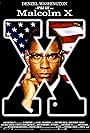
Biopic of Malcolm X, the famous African American leader. Born Malcolm Little, his father (a minister) was killed by the Ku Klux Klan. Malcolm became a gangster, and while in jail discovered the Nation of Islam writings of Elijah Muhammad. He preaches the teachings when let out of jail, but later on goes on a pilgrimage to the city of Mecca, there he converts to the original Islamic religion and becomes a Sunni Muslim. He changes his name to El-Hajj Malik Al-Shabazz and stops his anti-white teachings, as he realizes the error of his mistakes. He is later on assassinated and dies a Muslim martyr. Written by
Anonymous
The trumpeter in the "Billie Holiday Quintet" is played by Terence Blanchard, who composed the music for the film, and is a frequent collaborator of Spike Lee. See more »
Goofs
When "West Indian Archie" buys Malcolm a double in the bar, a neon sign has a modern Miller beer logo (visible in the mirror behind the bar). See more »
Quotes
[first lines]
Announcer:
In the name of Allah the merciful, all praises due to Allah, Lord of all the worlds. The one God to whom praise is due forever. The one who came to us in the person of Master Fard Muhammad and raised up the Honorable Elijah Muhammad. Amen.
[pause]
Announcer:
Asalaamalaikum!
Crowd:
Alaikum-salaam!
Announcer:
How do you feel?
Crowd:
Good!
Announcer:
Who do we want to hear?
Announcer:
Malcolm X!
Announcer:
Are we gonna bring him on? Yes, we gonna bring him on. Well let us hear from our minister, Minister Malcolm X. Let us bring him on with a round of ...
See more »
Crazy Credits
One of the few films that actually lists every member of the studio orchestra that recorded the soundtrack. See more »
Malcolm X cannot truthfully be said to be one of Spike Lee's best films, but it was an important step for him, perhaps the most important one of his career. This biopic, and Spike's fifth full-length feature, makes only partial sense as a follow-up to his greatest classics, Do The Right Thing, Mo' Better Blues and Jungle Fever, the three films in which he created and developed his unique voice and made a name for himself as one of the most prominent independent filmmakers in the US; Spike's own voice can barely be heard in Malcolm X, and his usually immediately recognizable trademarks are tough to point out. The reason is that for the first time in his career Spike Lee took a step back, and he is not the dominant personality in the film; the dominant personality is Malcolm X himself, and Spike let Malcolm's voice be heard throughout the film louder than anything else.
So Malcolm X is less a work of art and more a statement than Spike's previous films. It's scope is immensely larger than anything he did before it does, after all, span 200 minutes and is therefore, naturally, not as tight and focused as Do The Right Thing or Jungle Fever; but in Malcolm X Spike tackles head on the very subjects he treated with symbolism and subtlety in those films, and it was therefore a natural and important progression for him, and a logical continuation of those movies, and in it he proved that he has more than one voice. In a biopic, and for that matter, in any docu-drama, the most important factor is for the director to care about the subject, and I'm yet to see a director who's more passionate about his subject than Mr. Lee.
Malcolm X boasts a huge ensemble casts, with wonderful performances by Delroy Lindo, Angela Bassette, Al Freeman Jr. (in a harrowing performance as Muslim extremist Elijah Muhammad) and Spike Lee himself but the movie is still entirely Malcolm X's, and therefore Denzel Washington's. Spike's protégé gave a lifetime performance in Mo' Better Blues two years earlier, but he surpassed it with his gut-wrenching portrayal of Malcolm X, which earned him an Oscar nomination (unfortunately lost to Al Pacino in Scent of a Woman) and based him as one of the best actors of his generation.
Although Malcolm X is not Spike Lee's best film, it's an important film that needed to be made, and it's a good thing that Spike was the one to do it. More than it's an impressive, moving, beautiful movie and it is - Malcolm X's story is a story that must be heard, and this biopic is a film that, truly, every cultured and intelligent person needs to watch.
20 of 30 people found this review helpful.
Was this review helpful to you?
Malcolm X cannot truthfully be said to be one of Spike Lee's best films, but it was an important step for him, perhaps the most important one of his career. This biopic, and Spike's fifth full-length feature, makes only partial sense as a follow-up to his greatest classics, Do The Right Thing, Mo' Better Blues and Jungle Fever, the three films in which he created and developed his unique voice and made a name for himself as one of the most prominent independent filmmakers in the US; Spike's own voice can barely be heard in Malcolm X, and his usually immediately recognizable trademarks are tough to point out. The reason is that for the first time in his career Spike Lee took a step back, and he is not the dominant personality in the film; the dominant personality is Malcolm X himself, and Spike let Malcolm's voice be heard throughout the film louder than anything else.
So Malcolm X is less a work of art and more a statement than Spike's previous films. It's scope is immensely larger than anything he did before it does, after all, span 200 minutes and is therefore, naturally, not as tight and focused as Do The Right Thing or Jungle Fever; but in Malcolm X Spike tackles head on the very subjects he treated with symbolism and subtlety in those films, and it was therefore a natural and important progression for him, and a logical continuation of those movies, and in it he proved that he has more than one voice. In a biopic, and for that matter, in any docu-drama, the most important factor is for the director to care about the subject, and I'm yet to see a director who's more passionate about his subject than Mr. Lee.
Malcolm X boasts a huge ensemble casts, with wonderful performances by Delroy Lindo, Angela Bassette, Al Freeman Jr. (in a harrowing performance as Muslim extremist Elijah Muhammad) and Spike Lee himself but the movie is still entirely Malcolm X's, and therefore Denzel Washington's. Spike's protégé gave a lifetime performance in Mo' Better Blues two years earlier, but he surpassed it with his gut-wrenching portrayal of Malcolm X, which earned him an Oscar nomination (unfortunately lost to Al Pacino in Scent of a Woman) and based him as one of the best actors of his generation.
Although Malcolm X is not Spike Lee's best film, it's an important film that needed to be made, and it's a good thing that Spike was the one to do it. More than it's an impressive, moving, beautiful movie and it is - Malcolm X's story is a story that must be heard, and this biopic is a film that, truly, every cultured and intelligent person needs to watch.