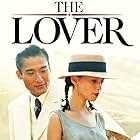
The Lover
(1992)
|
|
| Watch Trailer 0Share... |
The Lover
(1992)
|
|
| Watch Trailer 0Share... |
| Cast overview, first billed only: | |||
| Jane March | ... | ||
| Tony Leung Ka Fai | ... | ||
| Frédérique Meininger | ... |
The Mother
|
|
|
|
Arnaud Giovaninetti | ... | |
| Melvil Poupaud | ... |
The Younger Brother
|
|
| Lisa Faulkner | ... |
Helene Lagonelle
|
|
|
|
Xiem Mang | ... |
The Chinaman's Father
|
|
|
Philippe Le Dem | ... |
The French Teacher
|
|
|
Ann Schaufuss | ... | |
|
|
Quach Van An | ... |
The Driver
|
|
|
Tania Torrens | ... |
The Principal
|
|
|
Raymonde Heudeline | ... |
The Writer (end)
|
|
|
Yvonne Wingerter | ... |
The Writer (beginning)
|
|
|
Do Minh Vien | ... |
The Young Boy
|
|
|
Hélène Patarot | ... |
The Assistant Mistress
|
It is French Colonial Vietnam in 1929. A young French girl from a family that is having some monetary difficulties is returning to boarding school. She is alone on public transportation when she catches the eye of a wealthy Chinese businessman. He offers her a ride into town in the back of his chauffeured sedan, and sparks fly. Can the torrid affair that ensues between them overcome the class restrictions and social mores of that time? Based on the semi-autobiographical novel by Maugerite Duras. Written by Cal Lott <cal.lott@gsb.uchicago.edu>
This movie is one of the very few successful attempts at evoking female sexuality and sensuality in a non-obscene way. It's an exploration of the work of the senses, not so much a story with a plot. Therefore, it is unique in the history of cinema. Whereas other movies featuring a young girl and an older lover are mostly playful, ironic or simply intent on breaking a taboo, this movie brings an ode to the senses themselves in a much more subtle way.
Difficult as this may be, Annaud brings us as close as we can get to the atmosphere of love in a colonial and exotic setting. This delicate setting with its many contradictions (race, gender, age) adds to the experience. (A young girl who explores her own sexuality, couldn't dream of a more well-suiting context). In fact, the "colony" herself is a major character in the movie; the colony with her mighty Mekong River, her smells and colors, her strange sounds and her enigmatic people.
On a more metaphoric level, the Colony represents a temporary space, a place where Western people only pass through, a space that cannot be owned forever, a place of love and hate, just like the lovers' relationship. And in the end, the lovers have to go their own way, just like the colonialists have to leave the colony they love.
The movie is poetically slow, and at times becomes an almost ritual repetition of a single act. Precisely therein lies its 'dramatic content'. Add the beautiful cinematography and you have a nice exercise in film.