Looking for a great, in-yer-face fast-moving action THRILLER? Driving Miss Daisy ain't it.
Looking for a great MOVIE? You're in the right place.
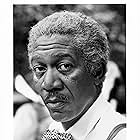
"Driving Miss Daisy" charts the subtly-shifting relationship between "Miss Daisy," a very reluctantly aging Jewish lady who's no longer able to drive for herself, and her new (and, as you can expect, rather unwelcome!) driver -- a not-terribly-young-himself Black guy (or African-American guy, whichever you prefer) named Hoke.
Bear in mind this is the Deep South of the 1950's and 60's we're talking about here, and the racial attitudes and prejudices of that time make for fascinating background -- as does the whole general culture, which I believe was well portrayed.
The directors frankly took on some delicate racial subject matter here (and certainly the racial divide in those days was very deep indeed) -- but they handled it with remarkable skill. I think they succeeded so well because they brought you into the lives of people as people, not just as cardboard stereotypes. Long before the movie is over, you find yourself really caring about the two main characters -- Daisy and Hoke.
This is a movie about life, relationships, and people. You see some good things -- and also some very human weaknesses, not the least of which is sheer stubborn pride.
I personally was a child of the deep South, and I appreciate movies such as this one and Jessica Tandy's other wonderful movie Fried Green Tomatoes (which is in some ways very similar) which give us a glimpse into the culture of those days. There are definitely things we can learn from the past, and there are also things we can learn from watching how people change over the course of their lives.
Several moments from this movie stand out, some of which are funny, some sobering, and some of which are particularly moving:
The scene involving Dr. Martin Luther King.
The unashamedly bigoted comments of a 50's or 60's police officer.
A great scene involving Hoke and Miss Daisy's businessman son.
An incredible scene in which Jessica Tandy portrays the aging Miss Daisy.
And, perhaps most of all, what Miss Daisy says to Hoke towards the end of the movie.
Now personally, I love action movies so well that I was initially reluctant even to watch this one. This is not a movie of action, but it IS a movie of substance and beauty, mixed with some funny moments.
The acting is great, the script and directing are beautifully done, and the substance, humor and beauty are such that overall, I consider "Driving Miss Daisy," one of the best movies I've ever seen.