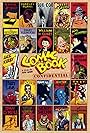
Comic Book Confidential (1988)A survey of the artistic history of the comic book medium and some of the major talents associated with it. Director:Ron Mann |
|
| Watch Trailer 0Share... |
Comic Book Confidential (1988)A survey of the artistic history of the comic book medium and some of the major talents associated with it. Director:Ron Mann |
|
| Watch Trailer 0Share... |
| Cast overview, first billed only: | |||
|
|
Lynda Barry | ... |
Herself
|
|
|
Charles Burns | ... |
Himself
|
|
|
Sue Coe | ... |
Herself
|
|
|
Robert Crumb | ... |
Himself
|
|
|
Will Eisner | ... |
Himself
|
|
|
Al Feldstein | ... |
Himself
|
|
|
Shary Flenniken | ... |
Herself
|
|
|
William M. Gaines | ... |
Himself
|
|
|
Bill Griffith | ... |
Himself /
Zippy the Pinhead
|
|
|
Jaime Hernández | ... |
Himself
|
|
|
Jack Kirby | ... |
Himself
|
|
|
Harvey Kurtzman | ... |
Himself
|
| Stan Lee | ... |
Himself
|
|
|
|
Paul Mavrides | ... |
Himself
|
| Frank Miller | ... |
Himself
|
|
In the 20th century, no artistic medium in North America with so much potential for creative expression has had a more turbulent history plagued with less respect than comic books. Through animated montages, readings and interviews, this film guides us through the history of the medium from the late 1930s and 1940s with the first explosion of popularity with the superheroes created by great talents like Jack Kirby and hitting its first artistic zenith with Will Eisner's "Spirit". It then shifts to the post war comics world with the rising popularity of crime and horror comics, especially those published by EC Comics under the editorshiop of William B. Gaines until it came crashing down the rise of censorship with the imposition of the Comics Code. In its wake of the devastation of the medium's creative freedom, we also explore EC's defiant survival with the creation of the singular "Mad Magazine" by Harvey Kurtzman. We then move to the resurgence of the superheroes in the late 1950's ... Written by Kenneth Chisholm <kchishol@rogers.com>
Comic Book Confidential, which is a (now) relatively obscure documentary on the history of 20th century comics up until its finished filming date (about 50+ years between the start of the 'Funnies' to the publication of The Dark Knight Returns by Frank Miller), is a film I look at on two levels: one is as a growing fan of comic books and graphic novels, who has known names like Stan Lee and Robert Crumb for years and is now knowing well names and works by the likes of Will Eisner, Harvey Pekar, Charles Burns and Jack Kirby better than ever, and wants to soak up as much knowledge as possible. The other is as a documentary informing on the varied and eclectic history of a very modern medium that can only grow. On both fronts the film reaches far from greatness, and in all actuality is incomplete. But I admired its ambition for a different approach with its transitions and showing what the comics were an evolving but "primitive art form", as Eisner says.
Ron Mann and his team basically gathered a rogue gallery of 'who's-who' of comic book writing legends (with the sad exception of a few, Bob Kane and especially Alan Moore, that add to it feeling short and incomplete though not just because of that), and covers how comics started in papers, spread to Superman and Batman, then the war, horror comics, the wretched "Comics Code", and the slow but eventual erosion through the start of Marvel comics and, more-so, the underground comic boom started by Robert Crumb and going on to more radical and crazy dimensions. While Mann may spend a little too much time with the underground folk (may being the big word, I dug it visually mostly), he gathers up a lot of useful and funny anecdotes- from Pekar about his embarrassing jazz radio station fiasco to one writer's troubles with doing an outrageous rip on Mickey Mouse.
The film tries, and usually succeeds, at engaging on its own serio-comic approach, with the panels of comics flashing by at a cool and concentrated pace, and some groovy tunes from Doo-Wop onto 80s New-Wave. It's biggest problem though, aside from a few notables not being included that, if only as a minor fan-boy, feels irksome, is that it's actually too short to fully dig into its well of possibilities. What's scratched here can suffice for die-hards and newcomers, the latter probably just bedazzled by the amount of underground product they've never heard of (some of it news to me and some, like Maus, that one means to check out but haven't yet for a reason or another). But there's probably a more ambitious documentary waiting to be made, one with more access or more money, maybe even on the level of a Ken Burns probe, that could be made on the subject either as a companion or update (bring in Warren Ellis!)