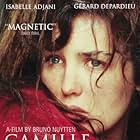
Biography of Camille Claudel. Sister of writer Paul Claudel, her enthusiasm impresses already-famous sculptor Auguste Rodin. He hires her as an assistant, but soon Camille begins to sculpt ... See full summary »
Keep track of everything you watch; tell your friends.
If your account is linked with Facebook and you have turned on sharing, this will show up in your activity feed. If not, you can turn on sharing
here
.
Queen Victoria is deeply depressed after the death of her husband, disappearing from public. Her servant Brown, who adores her, through caress and admiration brings her back to life, but ... See full summary »
Director:
John Madden
Stars:
Judi Dench,
Billy Connolly,
Geoffrey Palmer
A mature Queen Elizabeth endures multiple crises late in her reign including court intrigues, an assassination plot, the Spanish Armada, and romantic disappointments.
The death of King Henry VIII throws his kingdom into chaos because of succession disputes. His weak son Edward, is on his deathbed. Anxious to keep England true to the Reformation, a ... See full summary »
Director:
Trevor Nunn
Stars:
Helena Bonham Carter,
Cary Elwes,
John Wood
A radical American journalist becomes involved with the Communist revolution in Russia and hopes to bring its spirit and idealism to the United States.
Director:
Warren Beatty
Stars:
Warren Beatty,
Diane Keaton,
Edward Herrmann
An aspiring young physician, Robert Merivel found himself in the service of King Charles II and saves the life of a spaniel dear to the King. Merivel joins the King's court and lives the ... See full summary »
Director:
Michael Hoffman
Stars:
Robert Downey Jr.,
Sam Neill,
David Thewlis
Biography of Camille Claudel. Sister of writer Paul Claudel, her enthusiasm impresses already-famous sculptor Auguste Rodin. He hires her as an assistant, but soon Camille begins to sculpt for herself and for Rodin. She also becomes his mistress. But after a while, she would like to get out of his shadow... Written by
Yepok
A major scene in the movie depicts the announcement of the death of Victor Hugo. In The Story of Adele H, Isabelle Adjani played Adèle Hugo, Victor Hugo's daughter who, like Camille Claudel, suffered from schizophrenia. See more »
Quotes
Morhardt:
Who do you think you are?
Camille Claudel:
Don't you know who I am? Or are you pretending?
Morhardt:
What kind of behavior is this? You're crazy!
Camille Claudel:
Camille Claudel. I am Camille Claudel! And if you don't know it, I'll show you!
See more »
This film is about the tragic failure of a genius. She fails not so much because of her tendency to make fatal mistakes but because of the shape those mistakes took in her mind. This, even as lesser personages prospered (e.g., Camille's brother Paul, the famous Catholic poet and diplomat) because they were not adverse to espousing convenient "beliefs" for the sake of earthly success. Many viewers will feel a strong affinity with Camille, not because they consider themselves geniuses but rather for the interior world she constructed that, without religion, gave the exterior world meaning. I say she was without religion, but in fact sculpture was her religion--at least until her final failure to gain the respect and patronage of capricious buyers. It was then that her religion (her meaningful myth) took the form of a conspiracy delusion. Powerful people, she thought (mostly, the sculptor Rodin, who had been her lover), were out to get her, thwarting her every move.
What we experience here is a thoughtful, scary exploration of the darkness that is a paradoxical part of all brilliance.
9 of 14 people found this review helpful.
Was this review helpful to you?
This film is about the tragic failure of a genius. She fails not so much because of her tendency to make fatal mistakes but because of the shape those mistakes took in her mind. This, even as lesser personages prospered (e.g., Camille's brother Paul, the famous Catholic poet and diplomat) because they were not adverse to espousing convenient "beliefs" for the sake of earthly success. Many viewers will feel a strong affinity with Camille, not because they consider themselves geniuses but rather for the interior world she constructed that, without religion, gave the exterior world meaning. I say she was without religion, but in fact sculpture was her religion--at least until her final failure to gain the respect and patronage of capricious buyers. It was then that her religion (her meaningful myth) took the form of a conspiracy delusion. Powerful people, she thought (mostly, the sculptor Rodin, who had been her lover), were out to get her, thwarting her every move.
What we experience here is a thoughtful, scary exploration of the darkness that is a paradoxical part of all brilliance.