IMDb >
Crossroads (1986)
Quicklinks
Top Links
trailers and videosfull cast and crewtriviaofficial sitesmemorable quotesOverview
main detailscombined detailsfull cast and crewcompany creditstv scheduleAwards & Reviews
user commentsexternal reviewsnewsgroup reviewsawardsuser ratingsparents guiderecommendationsmessage boardPlot & Quotes
plot summarysynopsisplot keywordsAmazon.com summarymemorable quotesFun Stuff
triviagoofssoundtrack listingcrazy creditsalternate versionsmovie connectionsFAQOther Info
merchandising linksbox office/businessrelease datesfilming locationstechnical specslaserdisc detailsDVD detailsliterature listingsNewsDeskPromotional
taglines trailers and videos posters photo galleryExternal Links
showtimesofficial sitesmiscellaneousphotographssound clipsvideo clipsCrossroads (1986) More at IMDbPro »
| Photos (see all 5 | slideshow) |
Overview
User Rating:
Director:
Writer:
John Fusco (written by)
Release Date:
14 March 1986 (USA)
more
Tagline:
'The Kid' keeps the legend alive.... more
Plot:
Ralph Macchio is Lightning Boy. A kid who can make a slide guitar sing. Blind Dog is an old pro who knows it. Together, they're headed to a place where deals are made. And legends are born. full summary | add synopsis
Plot Keywords:
Guitar
|
Mississippi
|
Song
|
Legend
|
Deal With The Devil
more
Awards:
1 win
more
NewsDesk:
User Comments:
One of those films you'll never tire of.
more (69 total)
Cast
(Cast overview, first billed only)| Ralph Macchio | ... | Eugene Martone | |
| Joe Seneca | ... | Willie Brown | |
| Jami Gertz | ... | Frances | |
| Joe Morton | ... | Scratch's Assistant | |
| Robert Judd | ... | Scratch | |
| Steve Vai | ... | Jack Butler | |
| Dennis Lipscomb | ... | Lloyd | |
| Harry Carey Jr. | ... | Bartender | |
| John Hancock | ... | Sheriff Tilford | |
| Allan Arbus | ... | Dr. Santis | |
| Gretchen Palmer | ... | Beautiful Girl / Dancer | |
| Al Fann | ... | Pawnbroker | |
| Wally Taylor | ... | O.Z | |
| Tim Russ | ... | Robert Johnson | |
| Tex Donaldson | ... | John McGraw |
Additional Details
Parents Guide:
Runtime:
99 min
Country:
Language:
Color:
Black and White (partial) |
Color (Technicolor)
Aspect Ratio:
1.85 : 1 more
Sound Mix:
Certification:
Filming Locations:
Company:
Fun Stuff
Trivia:
The Fender Telecaster Ralph Macchio carries along his hobo trek in the second half of the film is a 1970s CBS Fender with block lettering on the headstock. Very realistic for the film because not only were they affordable and easy to acquire (in the 1980s, that is), their heavy polyurethane finish made them near impervious to the tests of the road, as seen when Macchio and Seneca are walking through the rain, sleeping in barns, abandoned shacks and the outdoors. You could take a CBS Telecaster covered with snow, plug it in and it would play perfectly.
more
Goofs:
Continuity: When Willie catches Frances sneaking out of their hotel he has money in his hands. His hands are empty before he goes to his bag to get money to give to Frances.
more
Quotes:
Willie Brown:
They find out I can walk, they take away my Pontiac!
more
Movie Connections:
Referenced in "On the Waterfront: (#1.6)" (1988)
more
FAQ
This FAQ is empty. Add the first question.more (69 total)
Message Boards
Discuss this movie with other users on IMDb message board for Crossroads (1986) moreRecommendations
If you enjoyed this title, our database also recommends:
Show more recommendations
|
|
|
|
|
| Walk the Line | Lackawanna Blues | Once | Stoned | Ray |
|
IMDb User Rating:
|
IMDb User Rating:
|
IMDb User Rating:
|
IMDb User Rating:
|
IMDb User Rating:
|
Related Links
| Full cast and crew | Company credits | External reviews |
| News articles | IMDb Drama section | IMDb USA section |
| Add this title to MyMovies |


I've seen CROSSROADS so many times I've lost count. And, it won't be the last time I'll watch it. The music alone would be reason enough. But, this film is far deeper. And no amount of exposition about it could ever *SPOIL* it for the virgin-viewer who has never seen it.
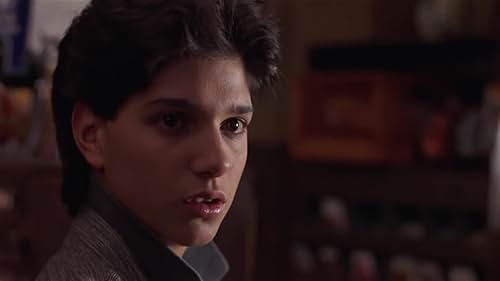
Eugene Martone, considered a prodigy on the classical guitar, is a young Long Island man attending the prestigious Julliard Music School. Problem? He prefers the blues over classical. And he's on a quest. He uncovers evidence that blues guitar legend, Robert Johnson, composed 30 songs. Since only 29 were ever recorded, he becomes obsessed at finding the 'lost' song number 30 (and being the first person to record it). And, after some sleuthing, he finds an old photograph and a news clipping -- pointing him toward the only living person who would know that song and who, fortunately, lives nearby. His name is Willie Brown (aka Blind Dog Fulton, aka Smokehouse Brown), a friend of Robert Johnson who traveled and performed with him (harmonica/vocals). Brown lives in a penal facility for old people (a criminal's nursing home). At first, Brown denies his true identity. But confronted with a photo of himself next to Robert Johnson, Brown finally admits the truth. And, he agrees to teach Martone the lost song -- but ONLY if Martone breaks him out of the facility and takes him back to Mississippi.
The catch? Martone knows that lore surrounding Robert Johnson says he sold his soul to the Devil. What he doesn't know is that it's fact, not lore ... and that Willie Brown did the same thing. And Martone doesn't know that Brown's reason for going back to Mississippi is to return to the 'crossroads' where he and Johnson sold their souls in hopes of getting the Devil to release him from his contract. This culminates in an eerie finale where Martone gambles his soul in a blues duel with the Devil's own guitarist, Jack Butler ... to save Brown from eternal damnation.
Director Walter Hill is masterful, combining music, drama, alternate history, fantasy, and horror into a single plot. Kudos must also be given to screenwriter John Fusco for giving Hill a masterful script to work from. But contrary to most people, my favorite scene isn't the blues duel. It's the scene where Martone wakes up to find out a girl he met in his travels with Brown (and had a romantic interest in) has unexpectedly left them to go her own way. And immediately after that, Brown admits he lied... that there never was a song number 30. At that moment, Martone, who'd been merely a good blues 'player' up to that point picks up his guitar and begins to play a sad blues song ... one certainly coming from his soul, not from his memory of what others have played. It is that momentary 'graduation' scene (the transition between blues 'player' and blues 'man') that sets the stage for the duel ... with film watchers knowing Martone is as ready for it as he can be.