A Performance of Macbeth (1979)Director:Philip Casson |
|
| 0Share... |
A Performance of Macbeth (1979)Director:Philip Casson |
|
| 0Share... |
| Cast overview, first billed only: | |||
| Ian McKellen | ... | ||
| Judi Dench | ... | ||
|
|
John Bown | ... | |
|
|
Susan Dury | ... | |
|
|
Judith Harte | ... | |
|
|
Greg Hicks | ... | |
|
|
David Howey | ... | |
|
|
Griffith Jones | ... | |
|
|
Marie Kean | ... | |
| Ian McDiarmid | ... | ||
| Bob Peck | ... | ||
|
|
Duncan Preston | ... | |
| Roger Rees | ... | ||
|
|
Zak Taylor | ... | |
|
|
Stephen Warner | ... | |
Most likely written for King James I, Macbeth is filled with references to witches, visions, dreams, ghosts, sleepwalking, and imagery of the supernatural. Professor Brian Levack of the University of Texas, has said, "Ever since classical antiquity, dramatists have used the theme of witchcraft in their literary works. The human exercise of mysterious or supernatural evil has always appealed to audiences and offers the dramatist numerous possibilities for character and plot development." Whether or not "evil witches" and witchcraft itself had any objective validity or were simply social constructs, they were part of the culture in which Shakespeare lived and his audiences were convinced of their reality.
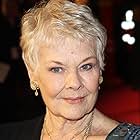
A TV production adapted for film in 1979, The Performance of Macbeth, directed by Philip Casson and Trevor Nunn, is one of the best on film. Marked by powerful performances by Ian McKellan as the ambitious Macbeth and Judi Dench as Lady Macbeth, the film is stripped down to its essentials without extraneous cinematic embellishments, but faithfully conveys the stunning poetry of William Shakespeare. The performance by Judi Dench was widely recognized as perhaps her best and she received a BAFTA nomination for Best Actress.
The first witch scene introduces the reader to thunder and lighting and the mood of darkness is established. Although Shakespeare does not include any description of the three witches, their portrayals in the film as old hags foaming at the mouth would most likely have reflected the prevailing attitude of Shakespeare's times. The witches then plan their next meeting and agree to meet Macbeth upon the heath "When the battle's lost and won". They then depart and mysteriously chant "Fair is foul, and foul is fair",(Act 1, Scene 1) which is a major theme of the play. They are saying good is bad and dark is light which is part of the confusion principle they use to cause the downfall of Macbeth.
The witches are gender neutral and have aspects of both male and female. Banquo says, "What are these / So withered, and so wild in their attire, / That look not like th' inhabitants o' th' earth / And yet are on 't?" (Act 1, Scene 3) Just like Lady Macbeth's association with the presumed male role of aggressiveness, ambition, and cruelty leads to madness, the witch's androgyny consigns them to villains in the play, leading the manly Macbeth astray. The witches confuse anyone who chooses to listen to their words. Perhaps after meeting them, Macbeth is being unconsciously motivated by evil to follow his deepest desires; whatever they may be.
Psychiatrist and author Dr. Jan Ehrenwald posits in Macbeth published in the Journal of the Society for Psychical Research that "the witches grasped Macbeth's repressed wish by telepathy, so their prophecy is a reflection of his own secret hopes and ambitions, of his own unformulated sinister designs." Though undoubtedly, Macbeth was ambitious, this interpretation, however, is pure speculation and rather dubious considering the witches later prophecies in Act 4, Scene 1. In my view, despite Macbeth's attempt to prevent the realization of the witches' supernatural predictions, he came to accept them as fated or predestined to occur, not as wish fulfillment.
Later, at the banquet in Macbeth's castle, Macbeth is haunted by the ghost of Banquo which is invisible to all but Macbeth. Shortly following Macbeth's change and the banquet scene, Hecate, a Greco-Roman goddess associated with magic and evil powers appears and plans on meeting the witches again so they can deceive Macbeth further. With her great wisdom and powerful occult magic, she plans to stir further confusion:
"By magical sleights, Shall raise such artificial sprites As by the strength of their illusion Shall draw him on to his confusion He shall spurn fate, scorn death, and bear His hopes' bove wisdom, grace, and fear: And you all know security Is mortals' chiefest enemy" (Act 3, Scene 5)
The most famous witch scene is, of course, the afore-mentioned Act IV, Scene 1, the "Double, double toil and trouble; Fire burn, and cauldron bubble" scene, where the three witches obtain the approval of Hecate. From this point on, Macbeth and his wife are stricken with insomnia and extreme paranoia. Meanwhile, the dark elements guiding Macbeth celebrate their victory. He believes the witches' prophecies and plans to fulfill the rest of their predictions even if he must influence the outcome himself. This also shows the beginning of the confusion that plagues Macbeth throughout the play. In referring to the words "mortals", it is now clear that Hecate and the other three witches are supernatural forces or demigods working under the powers of darkness.
Macbeth has been erroneously dated to 1606 because of the reference to the "Doctrine of Equivocation" in the Gunpowder Plot. However, recent research has discovered that this Catholic doctrine was first enunciated both in 1583 and 1584, Though earlier plays such as Richard III depict the dark side of the supernatural, Macbeth is the darkest and may reflect the possibility that, in Macbeth, Shakespeare turned from the genial acceptance of the supernatural in A Midsummer Night's Dream to a growing recognition of the hidden evil in men. The Tempest, however, is Shakespeare's final reconciliation with the supernatural, whereby the ultimate act of magic is the renunciation of magic itself. Renouncing his powers, Prospero is able to connect with his true self.