Keep track of everything you watch; tell your friends.
If your account is linked with Facebook and you have turned on sharing, this will show up in your activity feed. If not, you can turn on sharing
here
.
When Cyrus Kriticos, a very rich collector of unique things dies, he leaves it all to his nephew and his family. All including his house, his fortune, and his malicious collection of ghosts!
Director:
Steve Beck
Stars:
Tony Shalhoub,
Embeth Davidtz,
Matthew Lillard
A single mother gives her son a beloved doll for his birthday, later they find out that the doll is possessed with the soul of a serial killer, who try to put his soul into the boy's body in order to become human.
Director:
Tom Holland
Stars:
Catherine Hicks,
Chris Sarandon,
Alex Vincent
After twenty-two years of psychiatric care, Norman Bates attempts to return to a life of solitude... but the specters of his crimes -- and his mother -- continue to haunt him.
In this third installment of the Final Destination series, a student's premonition of a deadly rollercoaster ride saves her life and a lucky few, but not from death itself which seeks out those who escaped their fate.
Director:
James Wong
Stars:
Mary Elizabeth Winstead,
Ryan Merriman,
Kris Lemche
Ghost story in which a repressed female psychiatrist wakes up as a patient in the very asylum where she worked with no memory of why she is there and what she has done.
Director:
Mathieu Kassovitz
Stars:
Halle Berry,
Robert Downey Jr.,
Charles S. Dutton
An American nurse living and working in Tokyo is exposed to a mysterious supernatural curse, one that locks a person in a powerful rage before claiming their life and spreading to another victim.
Director:
Takashi Shimizu
Stars:
Sarah Michelle Gellar,
Jason Behr,
William Mapother
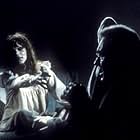
Dr. Gene Tuskin works with troubled children, perhaps none more troubled than Regan MacNeil, who suffers from bad dreams and repressed memories. The memories she represses are of the time she was possessed by a demon. Dr. Tuskin's invention, a device that hypnotizes two persons and links their minds together, reveals that the demon, named Pazuzu, still lurks within her. It is desperate to emerge again and wreak havoc. Meanwhile, Father Philip Lamont is ordered by his cardinal to investigate the death of Father Merrin, the priest who died while performing an exorcism on Regan. Father Lamont undertakes his task reluctantly. He feels unworthy of his assignment. He also feels that Evil is literally an entity and that this entity is winning the battle over Good. His investigation takes him to Africa where he locates another recipient of Merrin's exorcising and learns something fascinating and terrible about locusts. Written by
J. Spurlin
Originally, the script had a major role for Lee J. Cobb's character of "Lieutenant Kinderman" from the first film, but upon his death the entire film was reworked. The script for "The Heretic" apparently bore no resemblance to William Peter Blatty's "Legion", which was later made into "Exorcist III" and featured "Lieutenant Kinderman" (then played by George C. Scott) in a starring role. See more »
Goofs
When Fr. Lamont is showing Dr. Tuskin the drawing Regan had made of him on fire, Dr. Tuskin says "Where are you going?" but her lips don't move. See more »
Quotes
[first lines]
[theatrical version]
Possessed Woman:
Father! Agh! Agh! Oh, Father!
See more »
Crazy Credits
Tap Dance Routine Choreographed by Daniel Joseph Giaghi See more »
I liked this when it came out and I still do. The bad press on it began immediately, and all the reviewers jumped on the bandwagon; only one of the reviews seemed to correlate with what showed on the screen. I think the time was wrong for mysticism, and maybe for religion: the sixties had ended, and the mode of fantasy then in favor was space fantasy, full of technical detail. A couple of decades later, the climate is different: "Stigmata", which has a story not unlike that of "Exorcist II," and looks and feels so much like it that it might almost be the same film with different actors morphed in, didn't get good reviews but wasn't laughed out of theatres either.
Most of the people who like "Exorcist II" tend not to have liked "Exorcist I" much, and vice versa. Blatty himself said in one interview that it didn't work because the director was a Protestant, and in another interview that it was because he wasn't a believer. To me the second film shows more spiritual feeling than the first, but no interest at all in the Church, and maybe in some minds that equates to unreligiousness.
The first "Exorcist" purported to be about possession, but most of its imagery was of a young girl being raped: by her mother's party guests, by doctors, by priests, by a crucifix. "Exorcist II" actually is about possession, among other things, and culminates in the interesting idea (excised after release but later restored on video and DVD) that people who have been possessed and purged of evil can go forth to heal all the others who are similarly afflicted. I happen to think that's an inspiring idea for a story.
But then I like mystical thrillers, and apparently most filmgoers don't--or didn't then. The first "Exorcist" was not one; this is. The images in the first film, when they don't involve repulsive bodily detail, have no metaphysical resonance; they're relentlessly physical, often sexual, and when the demon itself appears, it's in the form of the actual, literal statue. By contrast the images in "Exorcist II" have deliberate metaphysical implications. I doubt that they were worked out thoroughly; it's more as if Boorman were playing with them, in the same way he lets the light play through the stylized sets and behind the actors. The scenes of possession capture the sense of historical accounts of the phenomenon more than those in the first film, which is too much distracted by physical threat and sexual aberration.
Like "Exorcist II" or no, take it seriously or no, I was and am puzzled why more people were unable to enjoy its appeal to the eye and the ear (the music was pretty too), let alone to the imagination. I think perhaps they couldn't allow themselves to enjoy it: that they had to deride it and be seen to deride it because what it said, or the way in which it was said, was something that they had just learned to reject or that contradicted something they had just learned to believe.
It must be admitted that the film is unsatisfactory dramatically. The fantastic incidents of the first film, besides being reduced to the most prosaic physical terms, were fitted within a sequence of conventional, punchy, easily playable scenes; one cared about Ellen Burstyn's problems in a movieish way, and through her Linda Blair's. In the sequel Blair doesn't have the scenes to play, and her inexperience as an actress keeps one from feeling involved with her; Burton is better, but his dialogue doesn't communicate the spiritual dilemma he's undergoing. The excitements of the narrative tend rather to distract from this also. But I found them fun in their own right, and the film as well, apart from the occasional gratuitous shock for shock's sake: fun for the mind and the fancy.
50 of 78 people found this review helpful.
Was this review helpful to you?
I liked this when it came out and I still do. The bad press on it began immediately, and all the reviewers jumped on the bandwagon; only one of the reviews seemed to correlate with what showed on the screen. I think the time was wrong for mysticism, and maybe for religion: the sixties had ended, and the mode of fantasy then in favor was space fantasy, full of technical detail. A couple of decades later, the climate is different: "Stigmata", which has a story not unlike that of "Exorcist II," and looks and feels so much like it that it might almost be the same film with different actors morphed in, didn't get good reviews but wasn't laughed out of theatres either.
Most of the people who like "Exorcist II" tend not to have liked "Exorcist I" much, and vice versa. Blatty himself said in one interview that it didn't work because the director was a Protestant, and in another interview that it was because he wasn't a believer. To me the second film shows more spiritual feeling than the first, but no interest at all in the Church, and maybe in some minds that equates to unreligiousness.
The first "Exorcist" purported to be about possession, but most of its imagery was of a young girl being raped: by her mother's party guests, by doctors, by priests, by a crucifix. "Exorcist II" actually is about possession, among other things, and culminates in the interesting idea (excised after release but later restored on video and DVD) that people who have been possessed and purged of evil can go forth to heal all the others who are similarly afflicted. I happen to think that's an inspiring idea for a story.
But then I like mystical thrillers, and apparently most filmgoers don't--or didn't then. The first "Exorcist" was not one; this is. The images in the first film, when they don't involve repulsive bodily detail, have no metaphysical resonance; they're relentlessly physical, often sexual, and when the demon itself appears, it's in the form of the actual, literal statue. By contrast the images in "Exorcist II" have deliberate metaphysical implications. I doubt that they were worked out thoroughly; it's more as if Boorman were playing with them, in the same way he lets the light play through the stylized sets and behind the actors. The scenes of possession capture the sense of historical accounts of the phenomenon more than those in the first film, which is too much distracted by physical threat and sexual aberration.
Like "Exorcist II" or no, take it seriously or no, I was and am puzzled why more people were unable to enjoy its appeal to the eye and the ear (the music was pretty too), let alone to the imagination. I think perhaps they couldn't allow themselves to enjoy it: that they had to deride it and be seen to deride it because what it said, or the way in which it was said, was something that they had just learned to reject or that contradicted something they had just learned to believe.
It must be admitted that the film is unsatisfactory dramatically. The fantastic incidents of the first film, besides being reduced to the most prosaic physical terms, were fitted within a sequence of conventional, punchy, easily playable scenes; one cared about Ellen Burstyn's problems in a movieish way, and through her Linda Blair's. In the sequel Blair doesn't have the scenes to play, and her inexperience as an actress keeps one from feeling involved with her; Burton is better, but his dialogue doesn't communicate the spiritual dilemma he's undergoing. The excitements of the narrative tend rather to distract from this also. But I found them fun in their own right, and the film as well, apart from the occasional gratuitous shock for shock's sake: fun for the mind and the fancy.