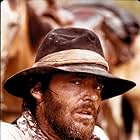
Tom Logan is a horse thief. Rancher David Braxton has horses, and a daughter, worth stealing. But Braxton has just hired Lee Clayton, an infamous "regulator", to hunt down the horse thieves... See full summary »
Keep track of everything you watch; tell your friends.
If your account is linked with Facebook and you have turned on sharing, this will show up in your activity feed. If not, you can turn on sharing
here
.
A gambler and a prostitute become business partners in a remote Old West mining town, and their enterprise thrives until a large corporation arrives on the scene.
Hud Bannon is a ruthless young man who tarnishes everything and everyone he touches. Hud represents the perfect embodiment of alienated youth, out for kicks with no regard for the ... See full summary »
When his cattle drivers abandon him for the gold fields, rancher Wil Andersen is forced to take on a collection of young boys as his drivers in order to get his herd to market in time to ... See full summary »
Ace Bonner returns to Arizona several years after he abandoned his family, Junior Bonner is a wild young man. Against the typical rodeo championship, family drama erupts.
A mountain man who wishes to live the life of a hermit becomes the unwilling object of a long vendetta by Indians when he proves to be the match of their warriors in one-to-one combat on ... See full summary »
Jim Douglas has been relentlessly pursuing the four outlaws who murdered his wife, but finds them in jail about to be hanged. While he waits to witness their execution, they escape; and the... See full summary »
Tom Logan is a horse thief. Rancher David Braxton has horses, and a daughter, worth stealing. But Braxton has just hired Lee Clayton, an infamous "regulator", to hunt down the horse thieves; one at a time. Written by
Anonymous
Seeing the movie for the second time after a break of some twenty plus years, I realized that I was watching a film that deserved more attention than it has received over the decades. Apart from the fact that it contains one of the finest lines in cinema "You know what woke you up? You just had your throat cut!" most reviewers have logically zoomed in on the obviousthe swaggering performance of Marlon Brando at the peak of his career and an overshadowed but endearing performance of Jack Nicholson. Yet the film belongs not to these two worthies but to Arthur Penn, the director.
Penn seems to be constantly attracted by characters that are out of the ordinarythose who are constrained either physically or mentally ("The Miracle Worker," "The Chase" "The Little, Big Man," "Night Moves" etc.). He loves anti-heroes. In "The Missouri Breaks" there are three anti-heroesa rustler, a cross-dressing bounty hunter, and a gay rancher who reads "Tristam Shandy" but serves as judge and jury as he metes out death sentences to make his little world better to live in.
One would assume in a film studded with such unlikable characters that Penn would paint them black. Penn does the oppositehe manipulates the viewer to sympathize with the bad guys. Nicholson's horse rustler is smarthe knows the circumstances when a gun would have a bullet in it. He knows how to court a woman by brewing Chinese tea in the Wild West. Brando's bounty hunter is equally eruditehe carries a book on ornithology while horseback as he watches eagles seek its prey through binoculars, just as he follows desperadoes before he moves in to his kill. The ranch owner, with a gay lover on the ranch, is a good father and well read with 3500 works of English literature in his library. What a weird set of anti-heroes! One would have expected good women to balance the bad guys. The women of Penn have shades of gray"Missouri Breaks" is no exception. The leading lady seems to be fascinated by the bad guys and "demands" sex. Another rancher's wife has illicit sex with a guest.
The final sequence of two important characters leaving for different destinations after checking out where they would be 6 months hence leaves the viewer guessing of what would happen. Penn's films tend to end with a perspective of a detached outsider, making the characters quixotic and the end open to several viewpoints.
Brando was a treat to watchonly his "Quiemada" (Burn) appealed to me more among all his films. Interestingly, in both films Brando had problems with the director and took matters in his own hands.
The music and screenplay are in many ways a tribute to the rising fame of the spaghetti Western and therefore quite stunningalso because of the very interesting and intelligent use of sound editing. The opening fifteen minutes of the film underline this argument, although this is a Penn film and not a Sergio Leone film.
All in all this film is a major western as it has elements that never surfaced in most otherswomen who were not mere attractions, the effect of carbines on those shot by them, and of course the slow death by hanging, in contrast to the lovely countryside (stated by the leading lady). This western entertains in a way most others do not. (Exceptions are William Fraker's "Monte Walsh", "Will Penny," and Altman's "McCabe and Mrs. Miller"). Thank you, Mr. Penn and all those that contributed to making this deceptively interesting film so enjoyable.
21 of 25 people found this review helpful.
Was this review helpful to you?
Seeing the movie for the second time after a break of some twenty plus years, I realized that I was watching a film that deserved more attention than it has received over the decades. Apart from the fact that it contains one of the finest lines in cinema "You know what woke you up? You just had your throat cut!" most reviewers have logically zoomed in on the obviousthe swaggering performance of Marlon Brando at the peak of his career and an overshadowed but endearing performance of Jack Nicholson. Yet the film belongs not to these two worthies but to Arthur Penn, the director.
Penn seems to be constantly attracted by characters that are out of the ordinarythose who are constrained either physically or mentally ("The Miracle Worker," "The Chase" "The Little, Big Man," "Night Moves" etc.). He loves anti-heroes. In "The Missouri Breaks" there are three anti-heroesa rustler, a cross-dressing bounty hunter, and a gay rancher who reads "Tristam Shandy" but serves as judge and jury as he metes out death sentences to make his little world better to live in.
One would assume in a film studded with such unlikable characters that Penn would paint them black. Penn does the oppositehe manipulates the viewer to sympathize with the bad guys. Nicholson's horse rustler is smarthe knows the circumstances when a gun would have a bullet in it. He knows how to court a woman by brewing Chinese tea in the Wild West. Brando's bounty hunter is equally eruditehe carries a book on ornithology while horseback as he watches eagles seek its prey through binoculars, just as he follows desperadoes before he moves in to his kill. The ranch owner, with a gay lover on the ranch, is a good father and well read with 3500 works of English literature in his library. What a weird set of anti-heroes! One would have expected good women to balance the bad guys. The women of Penn have shades of gray"Missouri Breaks" is no exception. The leading lady seems to be fascinated by the bad guys and "demands" sex. Another rancher's wife has illicit sex with a guest.
The final sequence of two important characters leaving for different destinations after checking out where they would be 6 months hence leaves the viewer guessing of what would happen. Penn's films tend to end with a perspective of a detached outsider, making the characters quixotic and the end open to several viewpoints.
Brando was a treat to watchonly his "Quiemada" (Burn) appealed to me more among all his films. Interestingly, in both films Brando had problems with the director and took matters in his own hands.
The music and screenplay are in many ways a tribute to the rising fame of the spaghetti Western and therefore quite stunningalso because of the very interesting and intelligent use of sound editing. The opening fifteen minutes of the film underline this argument, although this is a Penn film and not a Sergio Leone film.
All in all this film is a major western as it has elements that never surfaced in most otherswomen who were not mere attractions, the effect of carbines on those shot by them, and of course the slow death by hanging, in contrast to the lovely countryside (stated by the leading lady). This western entertains in a way most others do not. (Exceptions are William Fraker's "Monte Walsh", "Will Penny," and Altman's "McCabe and Mrs. Miller"). Thank you, Mr. Penn and all those that contributed to making this deceptively interesting film so enjoyable.