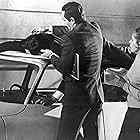
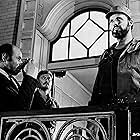
A French intelligence agent becomes embroiled in the Cold War politics first with uncovering the events leading up to the 1962 Cuban Missle Crisis, and then back to France to break up an international Russian spy ring.
Keep track of everything you watch; tell your friends.
If your account is linked with Facebook and you have turned on sharing, this will show up in your activity feed. If not, you can turn on sharing
here
.
Alice White is the daughter of a shopkeeper in 1920's London. Her boyfriend, Frank Webber is a Scotland Yard detective who seems more interested in police work than in her. Frank takes ... See full summary »
Four London working class stiffs pool their money to put one in a high stakes card game, but things go wrong and they end up owing half a million pounds and having one week to come up with the cash.
Unscrupulous boxing promoters, violent bookmakers, a Russian gangster, incompetent amateur robbers, and supposedly Jewish jewelers fight to track down a priceless stolen diamond.
A retired FBI agent with psychological gifts is assigned to help track down "The Tooth Fairy", a mysterious serial killer; aiding him is imprisoned criminal genius Hannibal "The Cannibal" Lecter.
Director:
Brett Ratner
Stars:
Anthony Hopkins,
Edward Norton,
Ralph Fiennes
A high ranking Russian official defects to the United States, where he is interviewed by US agent Michael Nordstrom. The defector reveals that a French spy ring codenamed "Topaz" has been passing NATO secrets to the Russians. Michael calls in his French friend and counterpart Andre Devereaux to expose the spies. Written by
Col Needham <col@imdb.com>
The Universal Pictures logo does not appear on this film. See more »
Goofs
Andre puts the "money" in his left breast pocket, but when he goes to retrieve it at the florist, he retrieves first the drawing (which is still also in his left breast pocket), but then pulls the envelope with the money out of his right breast pocket. See more »
While Leon Uris' book is a good read, Hitchcock's adaptation of the book for cinema captures much of the book's selling points. The killing of Juanita by Rico Parra is central to book and the film. The book has a sensual scene where Juanita distracts Parra to allow Andre to escape before she is killed. In the film, Hitchcock dispenses with the sexual distraction to go directly to the killing. The killing of Juanita captured by the overhead camera, shows the purple gown spreading in the floor as blood would have spread. No blood is shownonly the gown. What a brilliant shot from Hitchcock and cameraman Jack Hildyard! The second remarkable facet of the movie is the performance of Phillip Noiret as a French bureaucrat and spy. The lunch sequence (a typical Hitchcock food event) may look simple but the montage of shots capturing Noiret's apparent interest in the food than the conversation is truly engaging. Noiret is a fine actor. So is Michel Piccoli. The two of them outshine Frederick Stafford and John Forsythe.
The third most fascinating shot is post-torture interrogation of Mrs Mendozathe whispered response from a posture that reminds one of Michelangelo's Pietawith her dead husband replacing the dead Christ.
Hitchcock's perseverance with "marriage" continues. Andre blandly tells his daughter of his wife "She left me. I did not leave her" after a tryst with his lover in Havana. The Michel Piccoli character says of Andre's wife "Andre, his wife and I were very close. She married him." We know later that Andre's wife was cheating on him as she recognizes the Piccoli character's phone number at his secret love nest.
The defection sequence in Copenhagen might look clumsybut Hitchcock's style is everywherefaces in mirrors, close up of a porcelain figure about to be dropped with no music in the background, etc. What was most amusing was the criticism of the American espionage agents: "We would have done it better" and the exchange of words by the defector in Washington, D.C. Andre's outburst to his bosses on the outcome of French intervention in the defection would lead to the defector's assassination is equally poignant had the film ended with the French spy defecting to Russia (one of the alternate endings).
Finally, Hitchcock's use of the newspaper headlines during key scenes in the background was interesting: The Pieta shot had the newspaper shot in the background and the newspaper left behind on a bench in Paris is the final shot. The alternate endingsthe duel and the departure of the spies to two cold-warring countries would not have served well as well the suicide of the spy suggested by the gunshot in his house.
23 of 26 people found this review helpful.
Was this review helpful to you?
While Leon Uris' book is a good read, Hitchcock's adaptation of the book for cinema captures much of the book's selling points. The killing of Juanita by Rico Parra is central to book and the film. The book has a sensual scene where Juanita distracts Parra to allow Andre to escape before she is killed. In the film, Hitchcock dispenses with the sexual distraction to go directly to the killing. The killing of Juanita captured by the overhead camera, shows the purple gown spreading in the floor as blood would have spread. No blood is shownonly the gown. What a brilliant shot from Hitchcock and cameraman Jack Hildyard! The second remarkable facet of the movie is the performance of Phillip Noiret as a French bureaucrat and spy. The lunch sequence (a typical Hitchcock food event) may look simple but the montage of shots capturing Noiret's apparent interest in the food than the conversation is truly engaging. Noiret is a fine actor. So is Michel Piccoli. The two of them outshine Frederick Stafford and John Forsythe.
The third most fascinating shot is post-torture interrogation of Mrs Mendozathe whispered response from a posture that reminds one of Michelangelo's Pietawith her dead husband replacing the dead Christ.
Hitchcock's perseverance with "marriage" continues. Andre blandly tells his daughter of his wife "She left me. I did not leave her" after a tryst with his lover in Havana. The Michel Piccoli character says of Andre's wife "Andre, his wife and I were very close. She married him." We know later that Andre's wife was cheating on him as she recognizes the Piccoli character's phone number at his secret love nest.
The defection sequence in Copenhagen might look clumsybut Hitchcock's style is everywherefaces in mirrors, close up of a porcelain figure about to be dropped with no music in the background, etc. What was most amusing was the criticism of the American espionage agents: "We would have done it better" and the exchange of words by the defector in Washington, D.C. Andre's outburst to his bosses on the outcome of French intervention in the defection would lead to the defector's assassination is equally poignant had the film ended with the French spy defecting to Russia (one of the alternate endings).
Finally, Hitchcock's use of the newspaper headlines during key scenes in the background was interesting: The Pieta shot had the newspaper shot in the background and the newspaper left behind on a bench in Paris is the final shot. The alternate endingsthe duel and the departure of the spies to two cold-warring countries would not have served well as well the suicide of the spy suggested by the gunshot in his house.