Who's That Knocking at My Door
(1967)
|
|
| 0Share... |
Who's That Knocking at My Door
(1967)
|
|
| 0Share... |
| Cast overview, first billed only: | |||
| Zina Bethune | ... |
Girl
|
|
| Harvey Keitel | ... |
J.R.
|
|
| Anne Collette | ... |
Girl in Dream
(as Ann Collette)
|
|
|
|
Lennard Kuras | ... |
Joey
|
|
|
Michael Scala | ... |
Sally Gaga
|
| Harry Northup | ... |
Harry
|
|
|
|
Tsuai Yu-Lan | ... |
Girl in Dream
|
|
|
Saskia Holleman | ... |
Girl in Dream
|
|
|
Bill Minkin | ... |
Iggy at Party
|
|
|
Philip Carlson | ... |
Boy in Copake
(as Phil Carlson)
|
|
|
Wendy Russell | ... |
Gaga's Girl
|
|
|
Robert Uricola | ... |
Boy with Gun
|
|
|
Susan Wood | ... |
Girl at Party
|
|
|
Marissa Mathes | ... |
Girl at Party
(as Marrisa Joffrey)
|
| Catherine Scorsese | ... |
Mother
|
|
J.R. is a typical Italian-American on the streets of New York. When he gets involved with a local girl, he decides to get married and settle down, but when he learns that she was once raped, he cannot handle it. More explicitly linked with Catholic guilt than Scorsese's later work, we see what happens to J.R. when his religious guilt catches up with him. Written by David Gibson <djg@ukc.ac.uk>
I am an unabashed admirer of Martin Scorsese's work, and his first feature did not disappoint. Filmed on practically no budget, this movie uses a nonlinear approach to storytelling that predates "Pulp Fiction" by some 25 years. One can also see a precursor of Scorsese's later cinematic technique, and just a hint of his nightmare-world view of New York that is so apparent in his later works "Taxi Driver," "After Hours" and "Bringing Out the Dead." Scorsese's trademark—finding the perfect piece of contemporary music for each scene—is also quite apparent here.
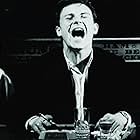
As the traditionally-minded J.R., the young Keitel turns in a riveting performance in his first film appearance, as a working-class New Yorker torn between his cultural norms and his love for an intelligent, independent woman. Bethune is today better known as a dancer and humanitarian, but as "The Girl" she is utterly convincing and nothing short of ravishing, with a presence both ethereal and self-assuredly erotic. The meeting of the two characters is really a meeting of the traditional with the modern--something much on people's minds in 1968 when this film was made. It's interesting that in some places this movie was retitled "I Call First"—the gist of the conflict between the lovers. J.R. receives a piece of information about The Girl's past, one that he cannot put into perspective given his macho set of social norms. Scorsese throws in a dash of the Catholic morality and male-centeredness current at the time, and we have a memorable exploration of the place of culture and religion in determining who and how much we love.
If you're a Scorsese fan, this film is a must-rent. If you're uninitiated, see a couple of his later films first, then go back to this one for a look at two future giants—Scorsese and Keitel—on their first project, as well as an excellent performance by Bethune, who should certainly have had more featured roles following this one.