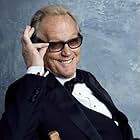
Peter Fonda plays 'Heavenly Blues', the leader of Hell's Angels chapter from Venice, California while Bruce Dern plays 'Loser', his best pal. When they both botch their attempt to retrieve ... See full summary »
Keep track of everything you watch; tell your friends.
If your account is linked with Facebook and you have turned on sharing, this will show up in your activity feed. If not, you can turn on sharing
here
.
Peter Fonda plays 'Heavenly Blues', the leader of Hell's Angels chapter from Venice, California while Bruce Dern plays 'Loser', his best pal. When they both botch their attempt to retrieve Loser's stolen bike, Loser ends up in the hospital. When the Angels bust him out, he dies, and they bury him. Nancy Sinatra plays Mike, Blues' "old lady" and Diane Ladd plays Loser's wife (Dern's real-life wife at the time). The plot is basically a buildup to the last half-hour of the film in which Loser's funeral becomes another wild party. Written by
alfiehitchie
Actress Laura Dern (daughter of Bruce Dern and Diane Ladd) was conceived during the movie shoot. Growing up, she sometimes showed people who asked about her parents a still of them in their biker outfits. See more »
Goofs
The last bike of the funeral procession has a flat rear tire. See more »
Quotes
Medic:
[said jokingly to girl dancing]
Hey, don't get none of that on me!
See more »
Roger Corman, the genius of low budget (no budget) exploitation filmmaking, decided to pioneer the 60's biker genre by making this picture about the Hell's angels. He spent time with writer Chuck Griffith hanging out with the Hell's angels, and hearing their stories. Then Corman hired the Angels, along with Peter Fonda (his first succesful movie), Bruce Dern, Nancy Sinatra (Daddy must have not liked this), and Diane Ladd, along with a few others who knew how to deliver their lines when asked for.
The result is a decently entertaining picture (which most Corman films tend to be), but overall full of filler material that gets boring after a while (such as party sequences that go on for a very long time) as a substitute for character and story development (another Corman trademark as well). As the saying goes, "Good, quick, and cheap - pick two". This film, however, wasn't inexpensive according to Corman standards - it cost almost 1 million to make (and it raked in over 3 million in its first week alone, with many bikers rolling in to drive-in cinemas to see it).
For 1966, the content (people clad in swastikas, partying and drinking their lights out in a protestant church, women scantily clad in their underwear, passing the occasional joint, and 2 inexplicit rape sequences) was obviously a shocker. Today a film like this would have been ten times more disguisting and explicit, and the church scene would be milked for it's offensive potential (and it wouldn't be able to earn the profit this one did, given today's consolidated theater market).
The film's visual style is exciting, with some interesting camera movement and handheld camerawork, lending a documentary feel (complete with soft focus shots). The soundtrack does not feature any exciting 60's music, only the usual film score by a jazzy rock band. The performances are not as bad as the dialogue itself - if the judges at the Venice Film Festival spoke English, it is unlikely this film would have made it in. Peter Fonda does not come off as a great Hell's Angel, and his performance is on the stiff side (probably afraid of how his dad might react). However, this film - and Corman's next film, "The Trip" - inspired Peter Fonda and Dennis Hopper to make Easy Rider (which Corman tried to help finance), a considerably better developed, more meaningful picture than this one - in all departments.
8 of 8 people found this review helpful.
Was this review helpful to you?
Roger Corman, the genius of low budget (no budget) exploitation filmmaking, decided to pioneer the 60's biker genre by making this picture about the Hell's angels. He spent time with writer Chuck Griffith hanging out with the Hell's angels, and hearing their stories. Then Corman hired the Angels, along with Peter Fonda (his first succesful movie), Bruce Dern, Nancy Sinatra (Daddy must have not liked this), and Diane Ladd, along with a few others who knew how to deliver their lines when asked for.
The result is a decently entertaining picture (which most Corman films tend to be), but overall full of filler material that gets boring after a while (such as party sequences that go on for a very long time) as a substitute for character and story development (another Corman trademark as well). As the saying goes, "Good, quick, and cheap - pick two". This film, however, wasn't inexpensive according to Corman standards - it cost almost 1 million to make (and it raked in over 3 million in its first week alone, with many bikers rolling in to drive-in cinemas to see it).
For 1966, the content (people clad in swastikas, partying and drinking their lights out in a protestant church, women scantily clad in their underwear, passing the occasional joint, and 2 inexplicit rape sequences) was obviously a shocker. Today a film like this would have been ten times more disguisting and explicit, and the church scene would be milked for it's offensive potential (and it wouldn't be able to earn the profit this one did, given today's consolidated theater market).
The film's visual style is exciting, with some interesting camera movement and handheld camerawork, lending a documentary feel (complete with soft focus shots). The soundtrack does not feature any exciting 60's music, only the usual film score by a jazzy rock band. The performances are not as bad as the dialogue itself - if the judges at the Venice Film Festival spoke English, it is unlikely this film would have made it in. Peter Fonda does not come off as a great Hell's Angel, and his performance is on the stiff side (probably afraid of how his dad might react). However, this film - and Corman's next film, "The Trip" - inspired Peter Fonda and Dennis Hopper to make Easy Rider (which Corman tried to help finance), a considerably better developed, more meaningful picture than this one - in all departments.