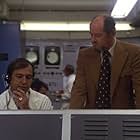
An American scientist publicly defects to East Germany as part of a cloak and dagger mission to find the solution for a formula resin and then figuring out a plan to escape back to the West.
Keep track of everything you watch; tell your friends.
If your account is linked with Facebook and you have turned on sharing, this will show up in your activity feed. If not, you can turn on sharing
here
.
A Scotland Yard undercover detective is on the trail of a saboteur who is part of a plot to set off a bomb in London. But when the detective's cover is blown, the plot begins to unravel.
Director:
Alfred Hitchcock
Stars:
Sylvia Sidney,
Oskar Homolka,
Desmond Tester
A man in London tries to help a counterespionage agent. But when the agent is killed and he stands accused, he must go on the run to both save himself and also stop a spy ring trying to steal top secret information.
Director:
Alfred Hitchcock
Stars:
Robert Donat,
Madeleine Carroll,
Lucie Mannheim
The population of a small, isolated countryside village believe that their alliance with the mysterious creatures that inhabit the forest around them is coming to an end.
Director:
M. Night Shyamalan
Stars:
Bryce Dallas Howard,
Joaquin Phoenix,
William Hurt
A murder inside the Louvre and clues in Da Vinci paintings lead to the discovery of a religious mystery protected by a secret society for two thousand years -- which could shake the foundations of Christianity.
A mysterious, tall blonde woman, wearing dark sunglasses murders one of a psychiatrist's patients, and now she goes after the high-priced call girl who witnessed the murder.
Director:
Brian De Palma
Stars:
Michael Caine,
Angie Dickinson,
Nancy Allen
Professor Michael Armstrong is heading to Stockholm to attend a physics conference accompanied by his assistant-fiancée Sarah Sherman. Once arrived however, Michael informs her that he may be staying for awhile and she should return home. She follows him and realizes he's actually heading to East Germany, behind the Iron Curtain. She follows him there and is shocked when he announces that he's defecting to the East after the US government canceled his research project. In fact, Michael is there to obtain information from a renowned East German scientist. Once the information is obtained, he and Sarah now have to make their way back to the West. Written by
garykmcd
Hitchcock wanted to cast Eva Marie Saint, whom he had previously directed in North by Northwest. However, the studio felt that, at 42, Saint was too old to play the female lead. They instead cast the younger and more popular Julie Andrews. See more »
Goofs
When Gromek's motorbike is unearthed, the chrome is shiny, without any soil on it. See more »
Quotes
[first lines]
Professor Karl Manfred:
Are they ever going to get the heating fixed?
Norwegian crewman:
They are working at it, Professor. Perhaps some of you scientists would like to give us a helping hand!
See more »
Between "The Birds" and "Frenzy" Hitchcock made three consecutive critical and box office failures: "Marnie (1964), "Torn Curtain" (1966), and "Topaz" (1969). It's natural to want to rehabilitate one or other of these, and most fans and critics, following (of course) François Truffaut, pick "Marnie". But the real hidden gem is "Torn Curtain".
People have found all manner of trivial things to complain about. The leads, it is said, aren't Hitchcock leads. Julie Andrews certainly isn't: unlike most of Hitchcock's American actresses, she imbues her character with warmth and good sense, qualities that may well be out of place in other films - certainly they'd be out of place in "Marnie" - but which are needed here. And Paul Newman is as convincing and sympathetic a Hitchcock hero as any other. ANY other, including my personal favourite, Robert Donat. It's hard not to like Jimmy Stewart and Cary Grant, but (this cannot be denied) for some reason they're never at their best in Hitchcock films. Paul Newman is.
Then there's the score - everyone has to take turns sinking their boots into the musical score. Yes, it's not by Bernard Herrmann. Yes, Bernard Herrmann was unceremoniously dumped from the project. Yes, Bernard Herrmann was one of Hollywood's best composers. Yes, if his score had been used instead (not that I've heard it), it would probably have changed the character of the film. For the best? That's hard to say. There's more than one musical personality capable of complementing a Hitchcock film, and if you ask me Miklós Rózsa ("Spellbound") and John Williams ("Family Plot"), writing very differently, do just as well as Herrmann would have with similar material. John Addison's score for "Torn Curtain" isn't quite as good, but it's pleasant, and it casts a warm glow over chilly grey surroundings, just as the photography does. And everyone admits the photography is wonderful - Technicolor greys and beiges, with flashes of red. Hitchcock had never been quite this good with colour before. (And no wonder. I just noticed this in the credits: the production designer was the Hein Heckroth - in fact, it was his last film. His first was "The Red Shoes".)
Moreover it's one of Hitchcock's better stories. A man is sent to a foreign country on a mission he finds distasteful; his girlfriend follows him, suspicious about what he's planning to do; they must escape together. It's one of those stories where we can happily follow one party or the other without feeling cheated out of the other storyline. It was Hitchcock's first stab at the "distasteful mission" theme since "The Secret Agent" (1936), which was a failure - not BECAUSE the hero's mission was distasteful to us, but simply because it wasn't a good film in other regards. Hitchcock was wrong to think that when a character does dirty things we'll cease to like him. There's such a thing as moral sympathy: the compromising moral position into which Michael is pushed makes us care about him all the more.
I'll never understand critical consensus about Hitchcock. When he takes one of his successful British films ("The 39 Steps"), one that can hardly be improved upon, and makes a pale imitation of it ("North by Northwest"), critics and audiences cheer. When he takes one of his weaker and more muddled British films and turns it into gold, nobody, not even Hitchcock himself, has a kind word to say. I don't get it. "Torn Curtain" has two fantastic scenes as good as anything Hitchcock ever did (the fight with Gromek, the consultation with the East German scientist) and one of his best bit-part characters (the older middle-aged woman who wants to migrate to America). And there's nothing - NOTHING - wrong with the rest of it.
18 of 25 people found this review helpful.
Was this review helpful to you?
Between "The Birds" and "Frenzy" Hitchcock made three consecutive critical and box office failures: "Marnie (1964), "Torn Curtain" (1966), and "Topaz" (1969). It's natural to want to rehabilitate one or other of these, and most fans and critics, following (of course) François Truffaut, pick "Marnie". But the real hidden gem is "Torn Curtain".
People have found all manner of trivial things to complain about. The leads, it is said, aren't Hitchcock leads. Julie Andrews certainly isn't: unlike most of Hitchcock's American actresses, she imbues her character with warmth and good sense, qualities that may well be out of place in other films - certainly they'd be out of place in "Marnie" - but which are needed here. And Paul Newman is as convincing and sympathetic a Hitchcock hero as any other. ANY other, including my personal favourite, Robert Donat. It's hard not to like Jimmy Stewart and Cary Grant, but (this cannot be denied) for some reason they're never at their best in Hitchcock films. Paul Newman is.
Then there's the score - everyone has to take turns sinking their boots into the musical score. Yes, it's not by Bernard Herrmann. Yes, Bernard Herrmann was unceremoniously dumped from the project. Yes, Bernard Herrmann was one of Hollywood's best composers. Yes, if his score had been used instead (not that I've heard it), it would probably have changed the character of the film. For the best? That's hard to say. There's more than one musical personality capable of complementing a Hitchcock film, and if you ask me Miklós Rózsa ("Spellbound") and John Williams ("Family Plot"), writing very differently, do just as well as Herrmann would have with similar material. John Addison's score for "Torn Curtain" isn't quite as good, but it's pleasant, and it casts a warm glow over chilly grey surroundings, just as the photography does. And everyone admits the photography is wonderful - Technicolor greys and beiges, with flashes of red. Hitchcock had never been quite this good with colour before. (And no wonder. I just noticed this in the credits: the production designer was the Hein Heckroth - in fact, it was his last film. His first was "The Red Shoes".)
Moreover it's one of Hitchcock's better stories. A man is sent to a foreign country on a mission he finds distasteful; his girlfriend follows him, suspicious about what he's planning to do; they must escape together. It's one of those stories where we can happily follow one party or the other without feeling cheated out of the other storyline. It was Hitchcock's first stab at the "distasteful mission" theme since "The Secret Agent" (1936), which was a failure - not BECAUSE the hero's mission was distasteful to us, but simply because it wasn't a good film in other regards. Hitchcock was wrong to think that when a character does dirty things we'll cease to like him. There's such a thing as moral sympathy: the compromising moral position into which Michael is pushed makes us care about him all the more.
I'll never understand critical consensus about Hitchcock. When he takes one of his successful British films ("The 39 Steps"), one that can hardly be improved upon, and makes a pale imitation of it ("North by Northwest"), critics and audiences cheer. When he takes one of his weaker and more muddled British films and turns it into gold, nobody, not even Hitchcock himself, has a kind word to say. I don't get it. "Torn Curtain" has two fantastic scenes as good as anything Hitchcock ever did (the fight with Gromek, the consultation with the East German scientist) and one of his best bit-part characters (the older middle-aged woman who wants to migrate to America). And there's nothing - NOTHING - wrong with the rest of it.