I Am Cuba
(1964)
|
|
| Watch Trailer 0Share... |
I Am Cuba
(1964)
|
|
| Watch Trailer 0Share... |
| Cast overview, first billed only: | |||
|
|
Sergio Corrieri | ... |
Alberto
|
|
|
Salvador Wood |
|
|
|
|
José Gallardo | ... |
Pedro
|
|
|
Raúl García | ... |
Enrique
|
|
|
Luz María Collazo | ... |
Maria /
Betty
|
|
|
Jean Bouise | ... |
Jim (in Cuban version)
(as Jean Bouisse)
|
|
|
Alberto Morgan |
|
|
|
|
Celia Rodriguez | ... |
Gloria (in Cuban version)
(as Zilia Rodríguez)
|
|
|
Fausto Mirabal |
|
|
|
|
Roberto García York | ... |
American activist
|
|
|
María de las Mercedes Díez |
|
|
|
|
Bárbara Domínguez |
|
|
|
|
Jesús del Monte | ... |
(as Isis del Monte)
|
|
|
Luisa María Jiménez | ... |
Teresa
|
|
|
Mario González Broche | ... |
Pablo (in Cuban version)
(as Mario González)
|
This study of Cuba--partially written by renowned poet Yevgeny Yevtushenko--captures the island just before it made the transition to a post-revolutionary society. Moving from city to country and back again, I AM CUBA examines the various problems caused by political oppression as well as by great discrepancies in wealth and power. Beginning in Havana in the pre-Castro era, we see how foreigners contributed to the city's prostitution and poverty; this sequence features dreamy, hallucinogenic camera work that creates a feeling of unease and dislocation. Then, in glorious images of palm tress and fertile land, the film looks at the sugar cane fields in the countryside, and the difficulties faced by peasants working the land. Finally, back in the city again, leftist students battle the police and a corrupt government--and pay a high price for their rebellion. Written by Mr Bongo
I am Cuba/Soy Cuba features the stories of several Cuban citizen-types: a young prostitute, a farmer, a young revolutionary and so on, up to the start of the island's Castro Revolution.
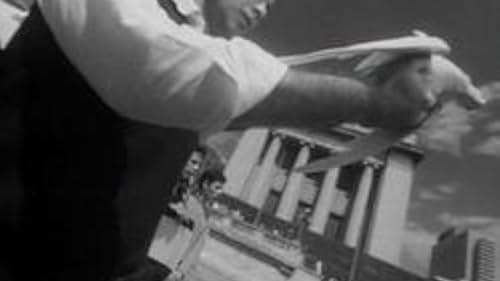
If this sounds dull, then rest assured that the plot is minimal and, despite it's avowedly political purpose, hardly gets in the way of the film's main attractions today. What distinguishes the production is the cinematography. It is not an exaggeration to say that the images and technique in the film are breathtaking, and it is a tour-de-force of bravura camera work. Apparently Martin Scorcese has screened this film privately to work out how such-and-such a shot was achieved, and perhaps it's influence can be found in the famous through-the-kitchens tracking shot in 'Goodfellas'.
This is a film where the camera is constantly in motion, with sweeping balletic long takes, crane and hand held shots, tracking shots, including some over and down the side of buildings, through cane fields, into swimming pools, around packed night clubs, even hovering and moving along high over a street in the middle of a packed funeral procession - all without the usual cutting. I estimate the average length of a take in this film at about 2 - 3 minutes, a figure rare and astonishing these days, even with the benefit of steadicams - but jaw dropping given the still-unwieldy equipment they were surely using in 1964. In particular one or two large scale sequences must have taken days, if not weeks, to prepare, and presumably needed government marshaling to choreograph. (Ironically, whether or not the film makers intended it, the liberated camera work on display here reflects the notion of revolutionary freedom far more than the actual story vignettes.)
The film itself is shot in high contrast gleaming black and white, favouring wide angle lenses, and with a constant deep focus that reminded me of Greg Toland's work for Welles or some of James Wong Howes' work. Kalatozov's use of a handful of character 'types' throughout recalls Eisenstein's (and in fact there is a faint reference to his the Odessa Steps sequence in 'Battleship Potemkin' at one point when the revolutionary rioters march down some steps), but the effect here is far more sensual and lyrical. (Among the professional actors, Sergio Corrieri also appears in the better-known Memories of Underdevelopment). The film's 'artiness' is undeniably a distraction from the message of struggle, and to the original viewers the beautiful images must have been a long way from reality in the New Cuba.
Today we don't have this problem and the viewer is left with a visual feast to enjoy over and over again..