Keep track of everything you watch; tell your friends.
If your account is linked with Facebook and you have turned on sharing, this will show up in your activity feed. If not, you can turn on sharing
here
.
As corruption grows in 1950s LA, three policemen - the straight-laced, the brutal, and the sleazy - investigate a series of murders with their own brand of justice.
A Russian teenager living in London who dies during childbirth leaves clues to a midwife in her journal that could tie her child to a rape involving a violent Russian mob family.
An insomniac office worker looking for a way to change his life crosses paths with a devil-may-care soap maker and they form an underground fight club that evolves into something much, much more...
Director:
David Fincher
Stars:
Edward Norton,
Brad Pitt,
Helena Bonham Carter
In the midst of trying to legitimize his business dealings in 1979 New York and Italy, aging mafia don Michael Corleone seeks to vow for his sins while taking a young protégé under his wing.
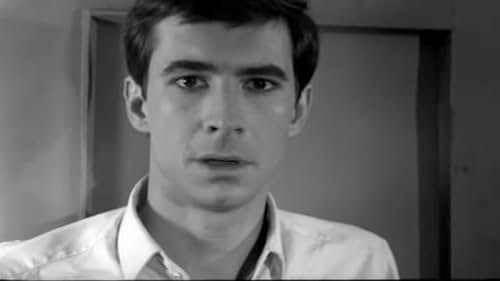
Josef K wakes up in the morning and finds the police in his room. They tell him that he is on trial but nobody tells him what he is accused of. In order to find out about the reason of this accusation and to protest his innocence, he tries to look behind the facade of the judicial system. But since this remains fruitless, there seems to be no chance for him to escape from this Kafkaesque nightmare. Written by
Joern Richts <richts@informatik.rwth-aachen.de>
Orson Welles originally wanted Jackie Gleason to play the advocate. Welles was going to play the priest, which would have made the fable in the beginning be further justified. See more »
Goofs
When Josef K. follows Hilda being carried out of the large trial room/hall by the law student, he hastily grabs and throws on his suit jacket. In the succeeding scenes, the jacket's buttons which are buttoned changes. See more »
Quotes
[first lines]
Narrator:
Before the law, there stands a guard. A man comes from the country, begging admittance to the law. But the guard cannot admit him. May he hope to enter at a later time? That is possible, said the guard. The man tries to peer through the entrance. He'd been taught that the law was to be accessible to every man. "Do not attempt to enter without my permission", says the guard. I am very powerful. Yet I am the least of all the guards. From hall to hall, door after door, each guard is ...
See more »
Crazy Credits
The end cast credits are read over by Orson Welles without titles See more »
After reading some of the other user comments for this movie, I feel a bit out of my league. Unlike the other reviewers, I do not belong to Mensa, and I am not going to even TRY to show how this movie represents "social regimentation" or whatever.
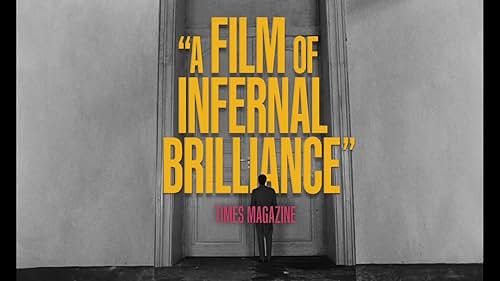
Instead, I am simply going to say what I like best about it: the atmosphere. This is one of the most beautiful movies I have ever seen. Welles did a superb job of capturing an uneasy, nightmarish feeling. The camera angles and perspectives are perfect.
"The Trial" basically consists of scene after scene of surreal settings. We get to see endless rows of people working on typewriters, the inside of a crate while hundreds of eyes peer through the cracks, a labyrinth of tall bookshelves stacked with old law books, and tons of other dark surrealism that is amazing to look at.
As far as plot goes, Anthony Perkins is trapped in a corrupt judicial system, accused of an unspecified crime. He does a great job of making his character a paranoid wreck, and you can't help but feel paranoid yourself while watching the movie. Sometimes there is a spacious atmosphere, and other times it is extremely claustrophobic. And it is all perfectly done in black and white.
I highly recommend watching this, if only to look at the awesome sets. You will think you are in a nightmare yourself.
60 of 65 people found this review helpful.
Was this review helpful to you?
After reading some of the other user comments for this movie, I feel a bit out of my league. Unlike the other reviewers, I do not belong to Mensa, and I am not going to even TRY to show how this movie represents "social regimentation" or whatever.
Instead, I am simply going to say what I like best about it: the atmosphere. This is one of the most beautiful movies I have ever seen. Welles did a superb job of capturing an uneasy, nightmarish feeling. The camera angles and perspectives are perfect.
"The Trial" basically consists of scene after scene of surreal settings. We get to see endless rows of people working on typewriters, the inside of a crate while hundreds of eyes peer through the cracks, a labyrinth of tall bookshelves stacked with old law books, and tons of other dark surrealism that is amazing to look at.
As far as plot goes, Anthony Perkins is trapped in a corrupt judicial system, accused of an unspecified crime. He does a great job of making his character a paranoid wreck, and you can't help but feel paranoid yourself while watching the movie. Sometimes there is a spacious atmosphere, and other times it is extremely claustrophobic. And it is all perfectly done in black and white.
I highly recommend watching this, if only to look at the awesome sets. You will think you are in a nightmare yourself.