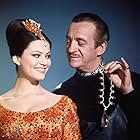
Bumbling and conceited French police inspector Clouseau tries to catch The Phantom, a daring jewel thief whose identity and features are unknown - and is acting right under his nose.
Keep track of everything you watch; tell your friends.
If your account is linked with Facebook and you have turned on sharing, this will show up in your activity feed. If not, you can turn on sharing
here
.
Charles Dreyfus threatens to destroy the world with a doomsday device if Inspector Clouseau is not killed. Naturally, this is far harder than it sounds.
Director:
Blake Edwards
Stars:
Peter Sellers,
Herbert Lom,
Lesley-Anne Down
To prove that he still is strong and powerful, Philippe Douvier decides to kill Chief Inspector Jacques Clouseau. Once Clouseau's death has been announced, the former Chief Inspector, ... See full summary »
Two New Yorkers are accused of murder in rural Alabama while on their way back to college, and one of their cousins--an inexperienced, loudmouth lawyer not accustomed to Southern rules and manners--comes in to defend them.
Lawrence and Freddie are con-men; big-time and small time respectively. They unsuccessfully attempt to work together only to find that this town (on the French Mediterranean coast) aint big... See full summary »
A Las Vegas-set comedy centered around three groomsmen who lose their about-to-be-wed buddy during their drunken misadventures, then must retrace their steps in order to find him.
Director:
Todd Phillips
Stars:
Bradley Cooper,
Ed Helms,
Zach Galifianakis
The trademark of The Phantom, a renowned jewel thief, is a glove left at the scene of the crime. Inspector Clouseau, an expert on The Phantom's exploits, feels sure that he knows where The Phantom will strike next and leaves Paris for Switzerland, where the famous Lugashi jewel 'The Pink Panther' is going to be. However, he does not know who The Phantom really is, or for that matter who anyone else really is... Written by
Graeme Roy <gsr@cbmamiga.demon.co.uk>
Between 1964 and 1993, nine Inspector Clouseau (or related) films would be released, although Inspector Clouseau and the movies made after Peter Sellers's death are mostly not considered canon. All but two would carry the "Pink Panther" title, but only four of the films actually deal with the Pink Panther diamond itself: this one, The Return of the Pink Panther, Trail of the Pink Panther and Curse of the Pink Panther. The reason they still kept The Pink Panther in the title was because it had become synonymous with inspector Clouseau. See more »
Goofs
When Sir Charles is first skiing behind Princess Dala to spy on her movements, he is wearing binoculars with the strap over his right shoulder, his left arm through the strap, and binoculars under his left arm as he skis with ski poles in both hands. When he stops, his left arm and ski pole are no longer through the strap; the binocular strap is simply around his neck with the binoculars hanging on his chest as he grabs them to look through them. See more »
Quotes
[first lines]
Gem dealer 1:
As in every stone of this size, there is a flaw.
Sultan:
A flaw?
Gem dealer 2:
The slightest flaw, your excellency.
Gem dealer 1:
If you look deep into the stone, you will perceive the tiniest discoloration. It resembles an animal.
Sultan:
An animal?
Gem dealer 1:
A little panther.
Sultan:
Yes! A pink panther. Come here, Dala. A gift to your father from his grateful people. Some day it will be yours. The most fabulous diamond in all the world. Come closer.
See more »
Crazy Credits
At the end of the film the cartoon pink panther makes a brief appearance in a live-action scene holding up a sign reading THEND, which he then corrects to THE END. See more »
The early and mid 1960s were an interesting period, sandwiched between the bland 1950s and the revolutionary end of the decade, a relatively prosperous period, people still dressed for dinner and the clothing styles were simple yet elegant. (Audrey Hepburn in those Givenchy outfits.) This flick is set firmly in that moment.
The plot has something to do with the theft of the pink panther, a diamond, but it's nothing more than the MacGuffin and is of no particular significance. The humor lies not so much in the overall story but in individual sequences, put finely together in pieces, like a jigsaw puzzle. Each movement seems choreographed carefully. Three times Peter Sellers tries to embrace his wife, Capucine, on a slick quilt, and three times her body slides off the bed under one of his arms. A good deal of effort went into milking each situation for its immanent comedy. Blake Edwards shares the writing credit, and he's done several other comedies that work in one way or another. It's odd because Edwards himself, in interviews, is not a witty person -- kind of somber in fact. ("That's Life" makes his ontological Angst explicit.) So it's all the more strange that this comedy doesn't try to say anything "important" -- soul clap its hands and sing. It's funny all the way through. I must have seen it a dozen times and there are some incidents that still make me laugh out loud. I'd much rather have my funnybone tickled than my thought provoked, wouldn't you?
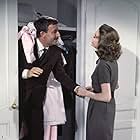
The best sequence in the movie takes place in the bedroom of Sellers and his wife in Cortina d'Ampezzo, an upscale ski resort (aren't they all?). It's impossible to describe, really. Sellers is trying to get in bed with Capucine, is called away, and she is visited by two men, Niven and Wagner, each unaware of the other. People hide in closets and under beds. Champagne bottles pop open at the wrong times. Sellers steps on his fiddle and remarks, "Once you've seen one Stradivarius you've seen them all." I will just mention two incidents. Wagner has been hiding from Sellers in a bathtub full of suds and when he comes up for air and climbs out, trying to escape, his form-fitting wool sweater is now dragging around his ankles. Niven escapes by climbing out a window but falls off the balcony. Next shot: a few people are chatting at the base of a vertical bank of snow. Niven, dressed only in a bathrobe, his eyebrows frozen, pushes his way out of the snowbank and finds himself a few feet from this group. With an excess of savoir-faire he shakes the snow from himself, salutes the group with a cheerful, "Good evening," and strolls away without explanation, leaving four gawking people in his wake. One more image from a later scene, which I won't try to explain. A zebra sneaks up to a buffet table and begins slurping out of the punch bowl. A man in a suit of full armor takes a whip and begins beating the zebra on the head, screaming, "No drinking on duty -- I'll have your stripes for this!" That's what farce IS.
The performers are all good, not that any particular attention from Thalia is demanded. Claudia Cardinale is pretty but a bit, I don't know, inanimate maybe. Wagner -- R.J. to his friends -- is handsome and plays a libidinous young con man. He's pretty good actually, as he plays the idealistic college graduate for Cardinale, and good physically, as he makes a foiled pass at a woman at the top of a ski slope and finds himself flailing downwards. Sellers is as good as he usually is, which is very good. Niven is in his element too, a lighthearted dandy, ever unflappable, only a step away from boredom no matter how outrageous the situation. The editor deserves plaudits for catching Niven half frozen, blowing into his cupped hands, and for cutting at the exact moment Niven looks up and his eyeballs bulge with distress. Poor Capucine. What an exquisite-looking woman. She may have begun her career as a model but she turns in a decent performance here, unlike many models before and after her. Her large eyes and feline body manage to suggest an almost childlike vulnerability beneath that womanhood. Of course death comes to all of us, but when it's self imposed, as in her case, it seems more than usually tragic.
Henry Mancini's score is part of the movie. It sounds as if he had a lot of fun writing it. It covers a wide range too. There are cartoon-like sound effects -- men swing at one another, deliberately missing, and the track goes "Wheee!" He works in some delightful variations on "Domani." He demonstrates it full blown in a very sexy samba number using Fran Jeffries who has a pelvic girdle that seems independent of the rest of her body. Wow. Then it becomes a slow dance, using the breathy Dexter Gordon-ish tenor sax that Mancini is so fond of. The physical climax of the film is backed by a rinky-tink gallop.
That physical climax, by the way, may be the weakest part of the film. All farces are faced with the same problem: how do you manage to top all the funny stuff that has come before? If you can't figure out a good answer, as Feydeau could, you must fall back on a pointless frantic chase, as this story does. (That's a minor carp, though.)
Yes, the early 60s were okay. Especially if you lived in Paris, drove a Ferarri, and went skiing at ritzy resorts and liked to drink champagne. The only thing most of us have in common with these elegant folk is that we like champagne. Pardon me while I open a Rolling Rock. Don't miss this one. It's worth repeated viewings too.
26 of 35 people found this review helpful.
Was this review helpful to you?
The early and mid 1960s were an interesting period, sandwiched between the bland 1950s and the revolutionary end of the decade, a relatively prosperous period, people still dressed for dinner and the clothing styles were simple yet elegant. (Audrey Hepburn in those Givenchy outfits.) This flick is set firmly in that moment.
The plot has something to do with the theft of the pink panther, a diamond, but it's nothing more than the MacGuffin and is of no particular significance. The humor lies not so much in the overall story but in individual sequences, put finely together in pieces, like a jigsaw puzzle. Each movement seems choreographed carefully. Three times Peter Sellers tries to embrace his wife, Capucine, on a slick quilt, and three times her body slides off the bed under one of his arms. A good deal of effort went into milking each situation for its immanent comedy. Blake Edwards shares the writing credit, and he's done several other comedies that work in one way or another. It's odd because Edwards himself, in interviews, is not a witty person -- kind of somber in fact. ("That's Life" makes his ontological Angst explicit.) So it's all the more strange that this comedy doesn't try to say anything "important" -- soul clap its hands and sing. It's funny all the way through. I must have seen it a dozen times and there are some incidents that still make me laugh out loud. I'd much rather have my funnybone tickled than my thought provoked, wouldn't you?
The best sequence in the movie takes place in the bedroom of Sellers and his wife in Cortina d'Ampezzo, an upscale ski resort (aren't they all?). It's impossible to describe, really. Sellers is trying to get in bed with Capucine, is called away, and she is visited by two men, Niven and Wagner, each unaware of the other. People hide in closets and under beds. Champagne bottles pop open at the wrong times. Sellers steps on his fiddle and remarks, "Once you've seen one Stradivarius you've seen them all." I will just mention two incidents. Wagner has been hiding from Sellers in a bathtub full of suds and when he comes up for air and climbs out, trying to escape, his form-fitting wool sweater is now dragging around his ankles. Niven escapes by climbing out a window but falls off the balcony. Next shot: a few people are chatting at the base of a vertical bank of snow. Niven, dressed only in a bathrobe, his eyebrows frozen, pushes his way out of the snowbank and finds himself a few feet from this group. With an excess of savoir-faire he shakes the snow from himself, salutes the group with a cheerful, "Good evening," and strolls away without explanation, leaving four gawking people in his wake. One more image from a later scene, which I won't try to explain. A zebra sneaks up to a buffet table and begins slurping out of the punch bowl. A man in a suit of full armor takes a whip and begins beating the zebra on the head, screaming, "No drinking on duty -- I'll have your stripes for this!" That's what farce IS.
The performers are all good, not that any particular attention from Thalia is demanded. Claudia Cardinale is pretty but a bit, I don't know, inanimate maybe. Wagner -- R.J. to his friends -- is handsome and plays a libidinous young con man. He's pretty good actually, as he plays the idealistic college graduate for Cardinale, and good physically, as he makes a foiled pass at a woman at the top of a ski slope and finds himself flailing downwards. Sellers is as good as he usually is, which is very good. Niven is in his element too, a lighthearted dandy, ever unflappable, only a step away from boredom no matter how outrageous the situation. The editor deserves plaudits for catching Niven half frozen, blowing into his cupped hands, and for cutting at the exact moment Niven looks up and his eyeballs bulge with distress. Poor Capucine. What an exquisite-looking woman. She may have begun her career as a model but she turns in a decent performance here, unlike many models before and after her. Her large eyes and feline body manage to suggest an almost childlike vulnerability beneath that womanhood. Of course death comes to all of us, but when it's self imposed, as in her case, it seems more than usually tragic.
Henry Mancini's score is part of the movie. It sounds as if he had a lot of fun writing it. It covers a wide range too. There are cartoon-like sound effects -- men swing at one another, deliberately missing, and the track goes "Wheee!" He works in some delightful variations on "Domani." He demonstrates it full blown in a very sexy samba number using Fran Jeffries who has a pelvic girdle that seems independent of the rest of her body. Wow. Then it becomes a slow dance, using the breathy Dexter Gordon-ish tenor sax that Mancini is so fond of. The physical climax of the film is backed by a rinky-tink gallop.
That physical climax, by the way, may be the weakest part of the film. All farces are faced with the same problem: how do you manage to top all the funny stuff that has come before? If you can't figure out a good answer, as Feydeau could, you must fall back on a pointless frantic chase, as this story does. (That's a minor carp, though.)
Yes, the early 60s were okay. Especially if you lived in Paris, drove a Ferarri, and went skiing at ritzy resorts and liked to drink champagne. The only thing most of us have in common with these elegant folk is that we like champagne. Pardon me while I open a Rolling Rock. Don't miss this one. It's worth repeated viewings too.