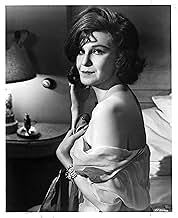
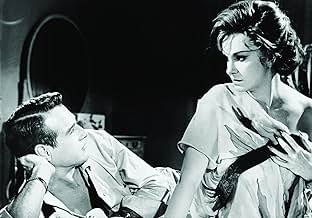
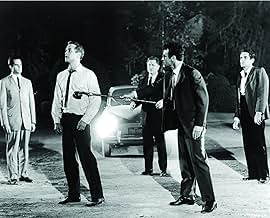
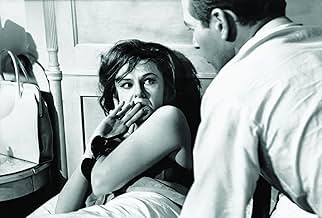
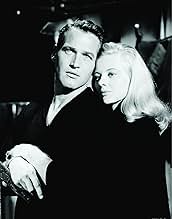
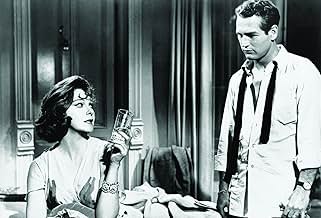
Drifter Chance Wayne returns to his hometown after many years of trying to make it in the movies. Arriving with him is a faded film star he picked up along the way, Alexandra Del Lago. ... See full summary »
Keep track of everything you watch; tell your friends.
If your account is linked with Facebook and you have turned on sharing, this will show up in your activity feed. If not, you can turn on sharing
here
.
Henriette and Louise, a foundling, are raised together as sisters. When Louise goes blind, Henriette swears to take care of her forever. They go to Paris to see if Louise's blindness can be... See full summary »
Director:
D.W. Griffith
Stars:
Lillian Gish,
Dorothy Gish,
Joseph Schildkraut
Brick, an alcoholic ex-football player, drinks his days away and resists the affections of his wife, Maggie. His reunion with his father, Big Daddy, who is dying of cancer, jogs a host of memories and revelations for both father and son.
Prince Wolfram is the betrothed of mad Queen Regina V of Kronberg. Supreme ruler, her word is law and he is a playboy. On maneuvers as punishment for partying with other women, he sees ... See full summary »
In the Salinas Valley, in and around World War I, Cal Trask feels he must compete against overwhelming odds with his brother Aron for the love of their father Adam. Cal is frustrated at ... See full summary »
A young woman comes to Hollywood with dreams of stardom, but achieves them only with the help of an alcoholic leading man whose best days are behind him.
Drifter Chance Wayne returns to his hometown after many years of trying to make it in the movies. Arriving with him is a faded film star he picked up along the way, Alexandra Del Lago. While trying to get her help to make a screen test, he also finds the time to meet his former girlfriend Heavenly, the daughter of the local politician Tom 'Boss' Finley, who more or less forced him to leave the town many years ago. Written by
Mattias Thuresson
Longtime MGM hair stylist Sydney Guilaroff appears uncredited attending to the hair of Geraldine Page. He was extremely well respected, serving as chief hair stylist at MGM from 1934 until the late 1970s. Although he did not receive onscreen credit, he designed Judy Garland's hair styles for The Wizard of Oz and made Lucille Ball's hair red for Du Barry Was a Lady, the color she kept it for the rest of her life. See more »
Goofs
Just after the opening scene in which he and the Ms. Page character are leaving Florida, the Paul Newman character pulls their Cadillac off the road and parks it in front of a liquor store, where he goes in to get Ms. Page's character a bottle of Smirnoff vodka. Look carefully at the neon signs in the liquor store display window. One of them clearly advertises Coors beer. But this is supposed to be the eastern United States (presumably a Gulf Coast state), and Coors was only sold in Colorado and western states at that time. See more »
Quotes
Scotty:
Leroy, did you know this is Chance Wayne... the famous Hollywood and Broadway celebrity?
Leroy:
Really?
Bud:
Sure. All bartenders become movie stars. Right, Chance?
Chance Wayne:
Oh, well. What he's trying to say is that I had your job for too long.
See more »
There are numerous qualities that make SWEET BIRD OF YOUTH a stellar film, starting with the tremendous source material. Williams' tale of fading film actress and princess-by-marriage Alexandra Del Largo escaping Hollywood after a failed comeback attempt and being taken advantage of by aspiring actor/gigolo Chance Wayne is full of ripe drama, all of which is fully exploited by the 1962 film. Williams' typical subplots of southern hypocrisy are also well incorporated into central story by director/screenwriter Richard Brooks (who also helmed 1958's sensational CAT ON A HOT TIN ROOF), and actually heighten the tension of the piece. Even with the censorship of early-sixties cinema (including an unnecessarily re-written ending), Brook's SWEET BIRD OF YOUTH still packs a mean punch.
Also crucial to the film's success is casting. No matter what film you're watching, you can always depend on Paul Newman to deliver the goods (which is precisely why he remained a top box office drawl up through the mid-eighties), and he gives one of his absolute best performances SWEET BIRD. Newman had originated the role of Chance in the original stage production, and his immortal screen performance of the role has clearly benefited from the hundreds times that he had previously played the role on stage. Arrogant, masculine, and painfully gorgeous, Newman nearly incinerates the colloid! Also returning from the original stage play is Geraldine Page as Alexandra, the ultimate boozing, wash-up actress. Page is nothing short of sensational a true thinking, feeling, conflicted woman who is desperate to run away from her problems, but completely uncertain of her next move. Alexandra is vain, insecure, and even comedic at times, and Page finds the perfect balance in her portrayal, as she understands that the very qualities that make Alexandra so strong is also what causes her to be weak. Page won a well-deserved Golden Globe for Best Actress in a Drama, but lost the Oscar to Anne Bancroft for her tour de force performance in THE MIRACLE WORKER - seeing that both performances are so phenomenal, I would venture to say that the votes for both awards were probably mighty close.
The rest of the cast is no less impressive. Ed Begley won a Supporting Actor Oscar for his role as 'Boss' Finely, and it is refreshing to see the actor let loose in a vile performance without any obvious apprehension. Rip Torn and Mildred Dunnock are great in supporting bits, and Oscar-nominated Shirley Knight is hauntingly lovely as the appropriately named "Heavenly." Director Brooks also makes excellent use of the widescreen frame, composing many exceptional shots that are all but destroyed when the film is altered from its original Panavision format.
Certainly some viewers will carp about the re-written ending (the studio demanded that things end "happily") as well as the removal of such hot-button topics as abortion and castration to appease the censors, yet none of these omissions dramatically affect the film. Even though he caved in to the studio in terms of the finale, director Brooks must be given credit for focusing on the characters and dialogue and avoiding the temptation to "dress" the play up for movie audiences. The film is firmly planted in its central relationships, and this is what carries the day. No matter how censorious the Production Code may have been, no one could mask the white-hot dynamic between Newman and Page.
13 of 16 people found this review helpful.
Was this review helpful to you?
There are numerous qualities that make SWEET BIRD OF YOUTH a stellar film, starting with the tremendous source material. Williams' tale of fading film actress and princess-by-marriage Alexandra Del Largo escaping Hollywood after a failed comeback attempt and being taken advantage of by aspiring actor/gigolo Chance Wayne is full of ripe drama, all of which is fully exploited by the 1962 film. Williams' typical subplots of southern hypocrisy are also well incorporated into central story by director/screenwriter Richard Brooks (who also helmed 1958's sensational CAT ON A HOT TIN ROOF), and actually heighten the tension of the piece. Even with the censorship of early-sixties cinema (including an unnecessarily re-written ending), Brook's SWEET BIRD OF YOUTH still packs a mean punch.
Also crucial to the film's success is casting. No matter what film you're watching, you can always depend on Paul Newman to deliver the goods (which is precisely why he remained a top box office drawl up through the mid-eighties), and he gives one of his absolute best performances SWEET BIRD. Newman had originated the role of Chance in the original stage production, and his immortal screen performance of the role has clearly benefited from the hundreds times that he had previously played the role on stage. Arrogant, masculine, and painfully gorgeous, Newman nearly incinerates the colloid! Also returning from the original stage play is Geraldine Page as Alexandra, the ultimate boozing, wash-up actress. Page is nothing short of sensational a true thinking, feeling, conflicted woman who is desperate to run away from her problems, but completely uncertain of her next move. Alexandra is vain, insecure, and even comedic at times, and Page finds the perfect balance in her portrayal, as she understands that the very qualities that make Alexandra so strong is also what causes her to be weak. Page won a well-deserved Golden Globe for Best Actress in a Drama, but lost the Oscar to Anne Bancroft for her tour de force performance in THE MIRACLE WORKER - seeing that both performances are so phenomenal, I would venture to say that the votes for both awards were probably mighty close.
The rest of the cast is no less impressive. Ed Begley won a Supporting Actor Oscar for his role as 'Boss' Finely, and it is refreshing to see the actor let loose in a vile performance without any obvious apprehension. Rip Torn and Mildred Dunnock are great in supporting bits, and Oscar-nominated Shirley Knight is hauntingly lovely as the appropriately named "Heavenly." Director Brooks also makes excellent use of the widescreen frame, composing many exceptional shots that are all but destroyed when the film is altered from its original Panavision format.
Certainly some viewers will carp about the re-written ending (the studio demanded that things end "happily") as well as the removal of such hot-button topics as abortion and castration to appease the censors, yet none of these omissions dramatically affect the film. Even though he caved in to the studio in terms of the finale, director Brooks must be given credit for focusing on the characters and dialogue and avoiding the temptation to "dress" the play up for movie audiences. The film is firmly planted in its central relationships, and this is what carries the day. No matter how censorious the Production Code may have been, no one could mask the white-hot dynamic between Newman and Page.