MOVIEmeter
SEE RANK
Down 121 this week

Harakiri (1962)
"Seppuku" (original title)

 -  Drama  -  4 August 1964 (USA)
8.4
Your rating:
    1 2 3 4 5 6 7 8 9 10 -/10 X  
Ratings: 8.4/10 from 11,410 users  
Reviews: 93 user | 52 critic

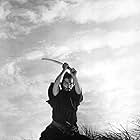
An elder ronin samurai arrives at a feudal lord's home and requests an honorable place to commit suicide. But when the ronin inquires about a younger samurai who arrived before him things take an unexpected turn.

Director:

Writers:

(screenplay), (novel), 1 more credit »
0Check in
0Share...

User Lists

Related lists from IMDb users

a list of 2369 titles created 4 months ago
 
a list of 1269 titles created 6 months ago
 
a list of 553 titles created 09 Jun 2011
 
a list of 1228 titles created 02 May 2012
 
a list of 10 titles created 9 months ago
 

Connect with IMDb


Share this Rating

Title: Harakiri (1962)

Harakiri (1962) on IMDb 8.4/10

Want to share IMDb's rating on your own site? Use the HTML below.

Take The Quiz!

Test your knowledge of Harakiri.
8 wins & 2 nominations. See more awards »

Videos

Photos

Learn more

People who liked this also liked... 

Drama
    1 2 3 4 5 6 7 8 9 10 8.1/10 X  

The mother of a feudal lord's only heir is kidnapped away from her husband by the lord. The husband and his samurai father must decide whether to accept the unjust decision, or risk death to get her back.

Director: Masaki Kobayashi
Stars: Toshirô Mifune, Yôko Tsukasa, Gô Katô
Drama
    1 2 3 4 5 6 7 8 9 10 8.2/10 X  

In mediaeval Japan a compassionate governor is sent into exile. His wife and children try to join him, but are separated, and the children grow up amid suffering and oppression.

Director: Kenji Mizoguchi
Stars: Kinuyo Tanaka, Yoshiaki Hanayagi, Kyôko Kagawa
Drama
    1 2 3 4 5 6 7 8 9 10 8.1/10 X  

A war-hardened general, egged on by his ambitious wife, works to fulfill a prophecy that he would become lord of Spider's Web Castle.

Director: Akira Kurosawa
Stars: Toshirô Mifune, Isuzu Yamada, Takashi Shimura
Ordet (1955)
Drama
    1 2 3 4 5 6 7 8 9 10 7.9/10 X  

How do we understand faith and prayer, and what of miracles? August 1925 on a Danish farm. Patriarch Borgen has three sons: Mikkel, a good-hearted agnostic whose wife Inger is pregnant, ... See full summary »

Director: Carl Theodor Dreyer
Stars: Hanne Agesen, Emil Hass Christensen, Preben Lerdorff Rye
Red Beard (1965)
Drama
    1 2 3 4 5 6 7 8 9 10 8/10 X  

In 19th century Japan, a rough tempered yet charitable town doctor trains a young intern.

Director: Akira Kurosawa
Stars: Toshirô Mifune, Yûzô Kayama, Tsutomu Yamazaki
Tokyo Story (1953)
Drama
    1 2 3 4 5 6 7 8 9 10 8.2/10 X  

An old couple visit their children and grandchildren in the city; but the children have little time for them.

Director: Yasujirô Ozu
Stars: Chishû Ryû, Chieko Higashiyama, Setsuko Hara
Late Spring (1949)
Drama
    1 2 3 4 5 6 7 8 9 10 8/10 X  

Noriko is 27 years old and still living with her widowed father. Everybody tries to talk her into marrying, but Noriko wants to stay taking care of her father.

Director: Yasujirô Ozu
Stars: Chishû Ryû, Setsuko Hara, Yumeji Tsukioka
Drama
    1 2 3 4 5 6 7 8 9 10 8.3/10 X  

After living a life marked by coldness, an aging professor is forced to confront the emptiness of his existence.

Director: Ingmar Bergman
Stars: Victor Sjöström, Bibi Andersson, Ingrid Thulin
Ikiru (1952)
Drama
    1 2 3 4 5 6 7 8 9 10 8.3/10 X  

A bureaucrat tries to find a meaning in his life after he discovers he has terminal cancer.

Director: Akira Kurosawa
Stars: Takashi Shimura, Shin'ichi Himori, Haruo Tanaka
Winter Light (1963)
Drama
    1 2 3 4 5 6 7 8 9 10 7.9/10 X  

On a cold winter's Sunday, the pastor of a small rural church (Tomas Ericsson) performs service for a tiny congregation; though he is suffering from a cold and a severe crisis of faith. ... See full summary »

Director: Ingmar Bergman
Stars: Ingrid Thulin, Gunnar Björnstrand, Gunnel Lindblom
I Am Cuba (1964)
Drama
    1 2 3 4 5 6 7 8 9 10 7.8/10 X  

This study of Cuba--partially written by renowned poet Yevgeny Yevtushenko--captures the island just before it made the transition to a post-revolutionary society. Moving from city to ... See full summary »

Director: Mikhail Kalatozov
Stars: Sergio Corrieri, Salvador Wood, José Gallardo
Drama
    1 2 3 4 5 6 7 8 9 10 7.8/10 X  

A troupe of travelling players arrive at a small seaport in the south of Japan. Komajuro Arashi, the aging master of the troupe, goes to visit his old flame Oyoshi and their son Kiyoshi, ... See full summary »

Director: Yasujirô Ozu
Stars: Ganjirô Nakamura, Machiko Kyô, Ayako Wakao
Edit

Cast

Cast overview, first billed only:
...
Akira Ishihama ...
...
Tetsurô Tanba ...
Hikokuro Omodaka
Masao Mishima ...
Tango Inaba
Ichirô Nakatani ...
Hayato Yazaki
Kei Satô ...
Masakazu
Yoshio Inaba ...
Jinai Chijiiwa
Hisashi Igawa ...
Retainer
Tôru Takeuchi ...
Retainer
Yoshirô Aoki ...
Umenosuke Kawabe
Tatsuo Matsumura
Akiji Kobayashi
Kôichi Hayashi
Ryûtarô Gomi ...
(as Katsuo Gomi)
Edit

Storyline

Peace in 17th-century Japan causes the Shogunate's breakup of warrior clans, throwing thousands of samurai out of work and into poverty. An honorable end to such fate under the samurai code is ritual suicide, or hara-kiri (self-inflicted disembowelment). An elder warrior, Hanshiro Tsugumo (Tatsuya Nakadai) seeks admittance to the house of a feudal lord to commit the act. There, he learns of the fate of his son-in-law, a young samurai who sought work at the house but was instead barbarically forced to commit traditional hara-kiri in an excruciating manner with a dull bamboo blade. In flashbacks the samurai tells the tragic story of his son-in-law, and how he was forced to sell his real sword to support his sick wife and child. Tsugumo thus sets in motion a tense showdown of revenge against the house. Written by Kevin Rayburn <kprayb01@homer.louisville.edu>

Plot Summary | Plot Synopsis

Plot Keywords:

samurai | hara kiri | ronin | suicide | poverty | See more »

Genres:

Drama

Certificate:

Not Rated | See all certifications »

Parents Guide:

 »
Edit

Details

Country:

Language:

Release Date:

4 August 1964 (USA)  »

Also Known As:

Harakiri  »

Company Credits

Production Co:

 »
Show detailed on  »

Technical Specs

Runtime:

Sound Mix:

Aspect Ratio:

2.35 : 1
See  »
Edit

Did You Know?

Trivia

Stage-trained actor Tatsuya Nakadai and older film actor Rentarô Mikuni could not agree on an acceptable speaking voice while sharing the film stage. Nakadai spoke loudly and Mikuni spoke softly each citing their related acting experiences for their choice. They strongly disagreed with each other. The director, Masaki Kobayashi, halted filming and stated that he would not resume until both the actors came to an agreement. They did; stopping the shooting for three days! See more »

Quotes

Hanshiro Tsugumo: When my master's house fell we immediately left the domain and moved to Edo. The streets of Edo were crowded with ronin - flotsam from the Battle of Sekigahara. In former times, other clans would have gladly taken in any ronin who'd earned a name for himself. But in an era no longer in need of warriors or horses, so peaceful that no wind even rustled the leaves on the trees, it was a constant struggle simply to find a meal. Indeed, it shames me to recall our miserable lives of these last eight ...
See more »

Connections

Referenced in Jeanie's Magic Box (1972) See more »

Frequently Asked Questions

This FAQ is empty. Add the first question.

User Reviews

 
A Gem of Japanese Cinema
13 April 2006 | by (United States) – See all my reviews

Harakiri is an excellent human drama set in feudal Japan that involves a ronin presenting himself to a powerful clan and asking to commit harikiri. However, through a series of flashbacks we see that this ronin is motivated by more than the idea of dying honorably. The events that follow are a critique of the feudal system and a celebration of dying for one's beliefs.

Every frame in Harikiri is wonderfully composed and a treat to view. The cinematography is crisp, the sets wonderful and the actors are spectacular. Much can be said about this film's technical merits as well as its social implications. I found out about this film through my love of Akira Kurosawa's samurai dramas (who else...) and I must say that it is very different from Kurosawa-sans work although it draws inevitable comparisons. Due to its themes, Harikiri is more of an anti samurai film. Generally Kurosawa's work seems to glorify the honor of the samurai and celebrate them as Japanese heroes by showing them gloriously in battle. Kurosawa is the Japanese John Ford, taking an icon from his culture and celebrating it. Harikiri exposes the virtues that Kurosawa portrays as being "a facade" to directly quote the film.

I say this so as not to mislead any potential viewers, I do not know enough about Japanese history to judge what the samurai really stood for and really I am not concerned with the idea. This is the only Kobyashi film I have seen and it has been brought to my attention that many of his films deal with similar themes. All in all I think that Harikiri is a wonderful film that offers a new take on feudal Japan.


18 of 19 people found this review helpful.  Was this review helpful to you?

Message Boards

Recent Posts
Know any similar Samurai movies? nathang-1
Male/female divide weownyoursoul
Top 250? Bellator86
questions; the doll figure and bamboo sword 65chevynova
Why did Motome do it? joly24601
Hard to watch ccewilliams
Discuss Harakiri (1962) on the IMDb message boards »

Contribute to This Page

Create a character page for:
?