Edit
Storyline
Dr. Henry Jekyll is a dull, bookish scientist who spends more time with his lab animals testing theories of alternate personalities than with his beautiful, young wife. Kitty Jekyll has given up trying to find any passion in her distant, preoccupied husband and is involved in an affair with one of Jekyll's old 'friends,' Paul Allen, a weak slacker and wastrel who relies on Jekyll to pay his numerous gambling debts. After experimenting on himself, the bearded, tweedy Jekyll transforms himself into the young, dynamic, and self-confidant Edward Hyde. In his new character he befriends Allen, who has no idea of that this clean-cut, handsome playboy prone to outbursts of violence is really Jekyll. As Hyde, he encourages Allen to introduce him to the dark underbelly of London's night life including opium dens and sex clubs, where he begins an affair with the sensual courtesan Maria, an exotic dancer and snake charmer. When he tries to seduce Allen's mistress, in reality his own wife, he is ... Written by
duke 1029@aol.com
Plot Summary
|
Add Synopsis
Taglines:
THE NERVE-SHATTERING STORY OF A MAN WHO COMMITTED EVRY OUTRAGE IN THE BOOK... LIVING A LIFE OF HORROR BEYOND IMAGINATION!
See more »
Edit
Did You Know?
Trivia
Christopher Lee's role was written especially for him, and remains one of his personal favorites.
See more »
Quotes
Dr. Henry Jekyll:
[
Referring to deaf and dumb schoolchildren who are fighting at recess]
In each one of these dumb human animals there is a personality which shows itself only in play.
Dr. Ernst Littauer:
Dumb human animals? Henry, these are not pretty guinea pigs; they are children who cannot speak.
Dr. Henry Jekyll:
But I am convinced that, in this case, the not speaking is a refusal of one part of the mind to allow the other part to express itself freely.
Dr. Ernst Littauer:
You suggest they play out what they cannot speak out?
Dr. Henry Jekyll:
Precisely!
Dr. Ernst Littauer:
You are the same Hnry Jekyll...
See more »
Connections
Version of
Dr. Jekyll and Mr. Hyde (1932)
See more »
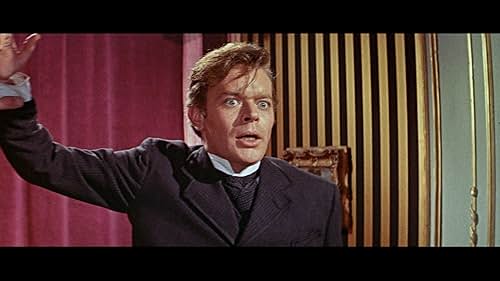
In the 1870's London, the middle-aged Dr. Henry Jekyll lives a reclusive life with his young wife Kitty. Jekyll has given up lecturing in Universities and dedicates his time for charity works and his personal research in his private lab. He completely neglects his wife Kitty, who has started an affair with Jekyll's friend Paul Allen, who also spends Jekyll's money on his gambling debts. One night, Jekyll tests a drug he has invented to separate the good and evil in man, on himself. As a result he becomes young and handsome Edward Hyde, who soon begins his mission of not only to destroy Kitty and Paul, but Jekyll as well.
Terence Fisher's film "The Two Faces of Dr. Jekyll" is one of the most original and underrated adaptations of Robert Louis Stevenson's classic "The Strange Case of Dr. Jekyll and Mr. Hyde". Since the three most well known movie versions of Jekyll & Hyde before this (1920 silent film with John Barrymore, 1931 classic with Frederic March and 1941 remake with Spencer Tracy) all repeated similar plot pattern, the Hammer Films wanted to give something different.
Like with Hammer's other adaptations of classic horror stories, the film only keeps the essential backbone of the original story and changes all else. Unlike in the three previous movies where Jekyll was presented as a young handsome and likable man and Hyde as evil looking ugly monster, here Jekyll is middle-aged bearded and very cold and harsh towards others. Hyde on the other hand is smooth, handsome player who gets everyone to like him like that. However, he is no less evil then other versions of Hyde. This time Hyde doesn't use Jekyll as a hiding place to escape to, but he puts the blame of his crimes on Jekyll. Nasty piece of work.
The film has been much underrated because it doesn't have the same kind of Hammer horror feel to it. But Fisher and others are not even trying to make this same kind of shocking horror film as their previous works "The Curse of Frankenstein", "Horror of Dracula" and "The Mummy" are. Instead Fisher and screenwriter Wolf Mankowitz are telling a tragedy of how one man's quest for knowledge ultimately destroys everything and everyone around him. The makers are more interested in showing the duality of Victorian era, where people were respectable during the day and transformed during the night. Jekyll in the movie is just the only one who does it literally.
The role of Jekyll/Hyde was originally meant for Christopher Lee, but not wanting to be type casted as the monster, since he had already played Frankenstein's creature, Count Dracula and the Mummy, Lee was casted as Paul Allen instead. Obviously glad to play different kind of part, Lee delivers one of his best Hammer performances as the suave and unreliable gambler. Lee played Jekyll and Hyde later in a movie called "I, Monster" from 1971, which follows Stevenson's book more faithfully than this one.
In the role of Jekyll/Hyde, Paul Massie is really underrated. Sure, I could name half a dozen other actors who have played the part better. But Massie is one of the few actors, along with Frederic March and Jack Palance, who managed to make both Henry Jekyll and Edward Hyde interesting characters. Most actors I've found are rather boring when playing Jekyll, only coming to life when changing to Hyde. In the role of Jekyll's cheating wife Kitty, Dawn Addams is not just a candy to the eyes, she really fits the part perfectly and is one of the few Hammer leading ladies with some other talent than just their looks. In minor roles you can see Norma Marla and her very erotic snake dance, as well as young Oliver Reed in one of his earliest movie roles.
All in all, "The Two Faces of Dr. Jekyll" is a forgotten gem, an enjoyable film from Hammer's highlight era, as long as you keep open mind and not expect gallons of blood.