Keep track of everything you watch; tell your friends.
If your account is linked with Facebook and you have turned on sharing, this will show up in your activity feed. If not, you can turn on sharing
here
.
This tale centers around the love between Baptiste, a theater mime, and Claire Reine, an actress and otherwise woman-about-town who calls herself Garance. Garance, in turn, is loved by ... See full summary »
Director:
Marcel Carné
Stars:
Arletty,
Jean-Louis Barrault,
Pierre Brasseur
A young man, inching his way up from working-class traditions via a white-collar job, finds himself trapped by the frightening reality of his girlfriend's pregnancy and is forced into ... See full summary »
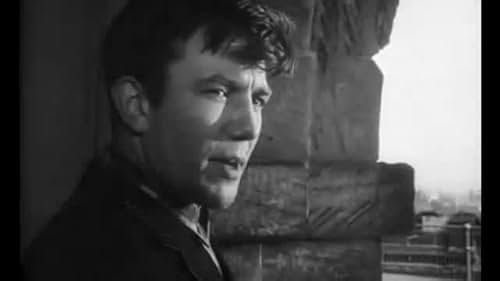
Arthur, one of Britain's angry young men of the 1960s, is a hardworking factory worker who slaves all week at his mindless job for his modest wages. Come Saturday night, he's off to the pub for a loud and rowdy beer session. With him is Brenda, his girlfriend of the moment. Married to a fellow worker, she is nonetheless captivated by his rugged good looks and his devil-may-care attitude. Soon a new love interest Doreen enters and a week later, Brenda announces she's pregnant. She tells Arthur she needs money for an abortion, and Arthur promises to pay for it. By this time, his relationship with Doreen has ripened and Brenda, hearing of it, confronts him. He denies everything, but it's obvious that their affair is all but over. Written by
alfiehitchie
[first lines]
Arthur Seaton:
Nine hundred and fifty four, nine hundred and fifty bloody five. Another few more and that's the lot for a Friday.
See more »
Albert Finney is a rebel without a cause in this Kitchen Sink entry from 1960 that depicts the mind numbing existence of the British factory worker. Seaton is a hard worker but also a smart ass that rubs his work supervisor ( who calls him a Red ) and neighbors the wrong way. He is also sleeping with a co-workers wife.
Albert Finney as the surly Seaton is uncomfortably excellent. His bitter tone and attitude cuts like a power saw. Sooner or later his arrogance will be rewarded and you can't wait. He does display a tender side occasionally with Brenda the married woman but the softness is soon washed away as he rails against the system and his predicament. He is also a world class beer drinker which makes him even more unpleasant as he insults pub patrons and takes a nasty fall down a flight of stairs, only to lie there smiling. Pain is a major source of his existence and rowdy nights out like this serve in a perverse way to blunt it.
Director Karel Reisz moves the storyline along at a rapid pace capturing the grim existence of row house living and deafening factory work. It is a world of gray skies and defeated characters trying to make the best of what they have. They are not the "Happy Breed" of generations past.
Made in the first year of the tumultuous decade that changed the world forever Night is pretty tame by today's standards. But in it's day it was condemned by the Catholic Church for its blatant immorality. One might venture that it had an influence on John Lennon who wrote "Working Class Hero" and on many occasions was witnessed to act like the unctuous Seaton in his life. It might also be argued that Seaton was a prototype for the futuristic angry young man Alex the Droog in Clockwork Orange.
Betty Ann Field, Hylda Baker and Norman Rossington make up a convincing supporting cast in ably assisting Reisz in the world he depicts. Rachel Roberts is outstanding as the tragic Brenda. Smitten with Arthur and doomed by her predicament she perfectly conveys her situation with a tawdry lack of glamor.
Saturday Night and Sunday Morning may be an unpleasant film but it is a powerful and important one.
13 of 15 people found this review helpful.
Was this review helpful to you?
Albert Finney is a rebel without a cause in this Kitchen Sink entry from 1960 that depicts the mind numbing existence of the British factory worker. Seaton is a hard worker but also a smart ass that rubs his work supervisor ( who calls him a Red ) and neighbors the wrong way. He is also sleeping with a co-workers wife.
Albert Finney as the surly Seaton is uncomfortably excellent. His bitter tone and attitude cuts like a power saw. Sooner or later his arrogance will be rewarded and you can't wait. He does display a tender side occasionally with Brenda the married woman but the softness is soon washed away as he rails against the system and his predicament. He is also a world class beer drinker which makes him even more unpleasant as he insults pub patrons and takes a nasty fall down a flight of stairs, only to lie there smiling. Pain is a major source of his existence and rowdy nights out like this serve in a perverse way to blunt it.
Director Karel Reisz moves the storyline along at a rapid pace capturing the grim existence of row house living and deafening factory work. It is a world of gray skies and defeated characters trying to make the best of what they have. They are not the "Happy Breed" of generations past.
Made in the first year of the tumultuous decade that changed the world forever Night is pretty tame by today's standards. But in it's day it was condemned by the Catholic Church for its blatant immorality. One might venture that it had an influence on John Lennon who wrote "Working Class Hero" and on many occasions was witnessed to act like the unctuous Seaton in his life. It might also be argued that Seaton was a prototype for the futuristic angry young man Alex the Droog in Clockwork Orange.
Betty Ann Field, Hylda Baker and Norman Rossington make up a convincing supporting cast in ably assisting Reisz in the world he depicts. Rachel Roberts is outstanding as the tragic Brenda. Smitten with Arthur and doomed by her predicament she perfectly conveys her situation with a tawdry lack of glamor.
Saturday Night and Sunday Morning may be an unpleasant film but it is a powerful and important one.