Keep track of everything you watch; tell your friends.
If your account is linked with Facebook and you have turned on sharing, this will show up in your activity feed. If not, you can turn on sharing
here
.
When Cinderella's cruel stepmother prevents her from attending the Royal Ball, she gets some unexpected help from the lovable mice Gus and Jaq, and from her Fairy Godmother.
A fairy tale set in Jazz Age-era New Orleans and centered on a young woman named Tiana and her fateful kiss with a frog prince who desperately wants to be human again.
At long last, Aladdin is about to marry the Princess Jasmine. Despite the presence and encouragement of his friends Genie, Carpet, and Abu, he is fearful and anxious. He is most worried as ... See full summary »
Director:
Tad Stones
Stars:
Robin Williams,
Scott Weinger,
Linda Larkin
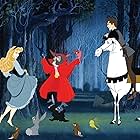
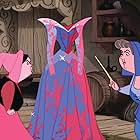
Adaptation of the fairy tale of the same name. Princess Aurora is cursed by the evil witch Maleficent - who declares that before Aurora reaches her 16th birthday she will die by pricking her finger on the spindle of a spinning-wheel. To try to prevent this, the king places her into hiding, in the care of three good-natured - but not too bright - fairies. Written by
Tim Pickett <quetzal@yoyo.cc.monash.edu.au>
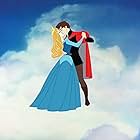
One of the film's iconic scenes - when Briar Rose meets Prince Phillip for the first time to the tune of "Once Upon a Dream" - was called Sequence 8 when it was being produced. It was a particularly hard sequence to get right (Walt Disney rejected it several times) and ultimately had to be done 4 times, almost bankrupting the studio in the process. See more »
Goofs
During his revelation of the living palace he has had built for Aurora and Phillip, King Hubert places a bottle of wine at the end of the buffet table behind an elevated bowl of food, but when he and King Stefan proceed to the center to share a laugh, they separate to reveal that the bottle has disappeared from the end of the table to the center. See more »
Quotes
[first lines]
Narrator:
In a faraway land, long ago, there lived a King and his fair Queen. Many years they had longed for a child, and finally their wish was granted. A daughter was born, and they called her Aurora. Yes, they named her after the dawn, for she filled their lives with sunshine. Then a great holiday was proclaimed throughout the land, so that all of high or low estate could pay homage to the infant Princess. And our story begins on that most joyful day...
See more »
Crazy Credits
The opening credits say Technirama, but not Super Technirama 70, which is the process it was filmed in. See more »
In its scale, beauty, and dramatic power, Sleeping Beauty stands as (I think at least) the pinnacle of Disney's animated features. While in terms of cultural significance, it holds a second tiara to Snow White and Fantasia, it is set apart by its richly detailed, groundbreaking expressionistic design. The Disney animators had decidedly moved away from the European storybook feel of its 30's and 40's triumphs with Alice in Wonderland (1951) and Lady and the Tramp (1955), yet it was Sleeping Beauty that was the most radical departure. With its $6 million budget, the film has an epic sweep and scope never before achieved in animation. From the crowds of celebrators in the beginning to the tremendous size of King Richard's throne room, it achieves a tremendous feel of space and depth pioneered by the multi-plane work in Snow White and Fantasia. The film shows many other applications of the lessoned learned from the great experiment of Fantasia, particularly the remarkable scene of the three fairies bestowing their gifts on the infant princess. The camera pans up and off into dreamy, surreal vignettes slightly reminiscent of Fantasia's "Toccata in Fugue" segment. Its one of animation's finest moments. Yet what surely is the most memorable element of this film in the eyes of many viewers is its villain, the Marc Davis creation, Maleficent. Voiced by longtime Disney staple Eleanor Audley, she is easily Disney's most overtly evil villain. Davis' brilliant streamlined design exudes of an infernal elegance (complete with demonic horns). She carries a royal nobility that only adds to her ambiguous, sinister nature as well as to her dramatic presence. She slanders and cackles and proclaims her evil decrees with such bile and disgust it's almost overwhelming. In the final conflict between Prince Phillip, she cries out in utter fury, "Now shall you deal with me, o prince, and all the powers of hell!" Lightning cracks, smoke gathers and Maleficent rises, now changed into a fire-breathing dragon. It is one of Disney's most daring moments and very well one of its finest. Sleeping Beauty is a masterpiece, a tremendous artistic triumph from one of Hollywood's most successful and prolific studios. Its artistry, dramatic power, and compelling performances stand it along side the great American films of the decade, which is a fact not stated often enough.
49 of 57 people found this review helpful.
Was this review helpful to you?
In its scale, beauty, and dramatic power, Sleeping Beauty stands as (I think at least) the pinnacle of Disney's animated features. While in terms of cultural significance, it holds a second tiara to Snow White and Fantasia, it is set apart by its richly detailed, groundbreaking expressionistic design. The Disney animators had decidedly moved away from the European storybook feel of its 30's and 40's triumphs with Alice in Wonderland (1951) and Lady and the Tramp (1955), yet it was Sleeping Beauty that was the most radical departure. With its $6 million budget, the film has an epic sweep and scope never before achieved in animation. From the crowds of celebrators in the beginning to the tremendous size of King Richard's throne room, it achieves a tremendous feel of space and depth pioneered by the multi-plane work in Snow White and Fantasia. The film shows many other applications of the lessoned learned from the great experiment of Fantasia, particularly the remarkable scene of the three fairies bestowing their gifts on the infant princess. The camera pans up and off into dreamy, surreal vignettes slightly reminiscent of Fantasia's "Toccata in Fugue" segment. Its one of animation's finest moments. Yet what surely is the most memorable element of this film in the eyes of many viewers is its villain, the Marc Davis creation, Maleficent. Voiced by longtime Disney staple Eleanor Audley, she is easily Disney's most overtly evil villain. Davis' brilliant streamlined design exudes of an infernal elegance (complete with demonic horns). She carries a royal nobility that only adds to her ambiguous, sinister nature as well as to her dramatic presence. She slanders and cackles and proclaims her evil decrees with such bile and disgust it's almost overwhelming. In the final conflict between Prince Phillip, she cries out in utter fury, "Now shall you deal with me, o prince, and all the powers of hell!" Lightning cracks, smoke gathers and Maleficent rises, now changed into a fire-breathing dragon. It is one of Disney's most daring moments and very well one of its finest. Sleeping Beauty is a masterpiece, a tremendous artistic triumph from one of Hollywood's most successful and prolific studios. Its artistry, dramatic power, and compelling performances stand it along side the great American films of the decade, which is a fact not stated often enough.