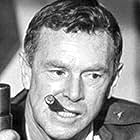
Terror in a Texas Town (1958)A Swedish whaler is out for revenge when he finds out that a greedy oil man murdered his father for their land. Director:Joseph H. Lewis |
|
| 0Share... |
Terror in a Texas Town (1958)A Swedish whaler is out for revenge when he finds out that a greedy oil man murdered his father for their land. Director:Joseph H. Lewis |
|
| 0Share... |
| Complete credited cast: | |||
| Sterling Hayden | ... |
George Hansen
|
|
| Sebastian Cabot | ... |
Ed McNeil
|
|
|
|
Carol Kelly | ... |
Molly
|
|
|
Eugene Mazzola | ... |
Pepe Mirada
(as Eugene Martin)
|
|
|
Nedrick Young | ... |
Johnny Crale
(as Ned Young)
|
|
|
Victor Millan | ... |
Jose Mirada
|
|
|
Frank Ferguson | ... |
Deacon Matt Holmes
|
|
|
Marilee Earle | ... |
Mona Stacey
|
Sven Hanson is one of a number of farmers whom Ed McNeil wants to run off their land (because he knows there's oil on it). When Hanson is murdered by McNeil's gunman, Johnny Crale, Hanson's friend Pepe Mirada hides his knowledge of the murderer's identity in order to protect his family. When Hanson's son George arrives and takes up his father's cause, not only Mirada but also Johnny Crale begin to reevaluate their attitudes. Written by Jim Beaver <jumblejim@prodigy.net>
In most respects, this is a completely unremarkable low-budget western. Greedy rich guy hires evil gunfighter to terrorize local farmers. Upstanding good guy arrives and it's just a matter of time before the final showdown. It's competently executed most of the time. Some of it is imaginative and some of it is predictably cliché. Contrary to what some other reviewers have written, the final showdown did not surprise me in the least. Die-hard western fans and followers of Sterling Hayden will want to view this, but I don't know about anyone else.
Except that it is successfully filmed in an interesting and unique style, as if it were a 1950's comic book or pulp-fiction novel brought to the screen. This is immediately apparent in the opening credits, with its teaser glimpse of the final scene and including the alliterative hyperbole of the title, and continues consistently throughout the film. Perhaps many little known low budget 1950s film accomplished this feat, but this is the only one I'm aware of that does it so well.