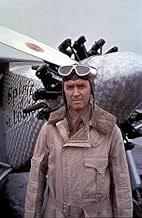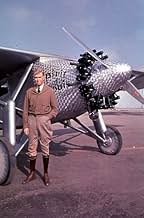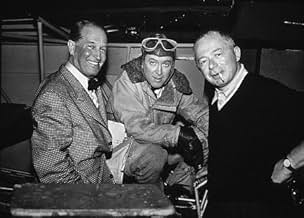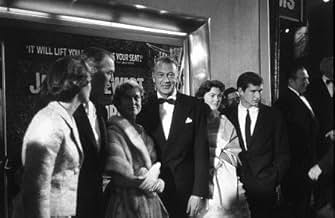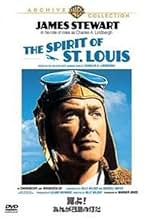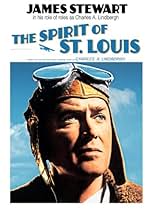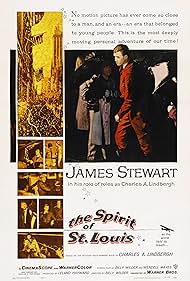
Charles 'Slim' Lindbergh struggles to finance and design an airplane that will make his New York to Paris flight the first solo transatlantic crossing.
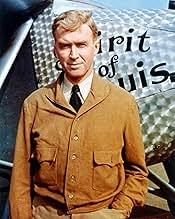
Keep track of everything you watch; tell your friends.
If your account is linked with Facebook and you have turned on sharing, this will show up in your activity feed. If not, you can turn on sharing
here
.
Fletcher Christian successfully leads a revolt against the ruthless Captain Bligh on the HMS Bounty. However, Bligh returns one year later, hell bent on avenging his captors.
Director:
Frank Lloyd
Stars:
Charles Laughton,
Clark Gable,
Franchot Tone
A Victorian surgeon rescues a heavily disfigured man who is mistreated while scraping a living as a side-show freak. Behind his monstrous facade, there is revealed a person of intelligence and sensitivity.
Biography of Mohandas K. Gandhi, the lawyer who became the famed leader of the Indian revolts against the British rule through his philosophy of nonviolent protest.
Cultural mistrust and false accusations doom a friendship in British colonial India between an Indian doctor, an Englishwoman engaged to marry a city magistrate, and an English educator.
Director:
David Lean
Stars:
Judy Davis,
Victor Banerjee,
Peggy Ashcroft
An English king comes to terms with his affection for his close friend and confidant, who finds his true honor by observing God's divine will rather than the king's.
Director:
Peter Glenville
Stars:
Richard Burton,
Peter O'Toole,
John Gielgud
Biography of Charles Lindburgh from his days of precarious mail runs in aviation's infancy to his design of a small transatlantic plane and the vicissitudes of its takeoff and epochal flight from New York to Paris in 1927. Written by
Paul Emmons <pemmons@wcupa.edu>
Lindbergh bought his first plan in Georgia, but the terrain appears to be too dry for Georgia. See more »
Quotes
[first lines]
Reporter:
[checking his copy]
Here at the Garden City Hotel, less than a mile from Roosevelt Field... less than three-quarters of a mile from Roosevelt Field... everyone is waiting, as they have been now for seven days and nights, waiting for the rain to stop...
See more »
Someone once said to me that there are only four basic movie plots: the first, boy meets girl: the second, man against apparently insuperable odds: the others.....I can't remember. Although I am not by nature agoraphobic, I guess when it comes to cinema I prefer the cosily domestic to wide open spaces. Every so often, however, I find myself responding to man battling it out against the elements, particularly if the point is being made that, without the sheer determination of an individual to grapple with prejudice and ignorance, civilization would not gain a pace or two forward. Billy Wilder's epic of human endeavour, "The Spirit of St. Louis", is just such an instance. It is heaps better than most in this category mainly through the excellent central performance by James Stewart as Charles Lindbergh, the first successful transatlantic flyer. True, Stewart was twice the age of the man he was portraying but he brilliantly manages the demeanour of a much younger person and has the advantage of being one of the very few actors able to convey the determined obsessive fanaticism that Lindbergh must have possessed. One can admire Wilder's skill in sustaining audience interest throughout what is essentially a one character and a one scene film but he achieves it through interspersing the present from the night before the takeoff, with flashbacks that retell the background to the mission, each a little story in itself, some quite tense such as Lindbergh's adventurous flight during a blizzard when he was a flying mail courier and others rather droll such as giving a flying lesson to a priest who is the most incompetent would-be aviator ever. The main journey once it gets going is mainly smooth and something of a leisurely travelogue with nice views over Nova Scotia and Newfoundland on the way. Far more dramatic is the takeoff during foul weather from a rain drenched runway in which Stewart grapples with his tiny aircraft narrowly clearing pylons and a clump of trees. The miracle that so flimsy a machine could make it not only for a few miles but across a vast ocean is reinforced by the hazardous implications of this wonderfully atmospheric sequence in a way that make the journey and the arrival in Paris quite uplifting.
12 of 18 people found this review helpful.
Was this review helpful to you?
Someone once said to me that there are only four basic movie plots: the first, boy meets girl: the second, man against apparently insuperable odds: the others.....I can't remember. Although I am not by nature agoraphobic, I guess when it comes to cinema I prefer the cosily domestic to wide open spaces. Every so often, however, I find myself responding to man battling it out against the elements, particularly if the point is being made that, without the sheer determination of an individual to grapple with prejudice and ignorance, civilization would not gain a pace or two forward. Billy Wilder's epic of human endeavour, "The Spirit of St. Louis", is just such an instance. It is heaps better than most in this category mainly through the excellent central performance by James Stewart as Charles Lindbergh, the first successful transatlantic flyer. True, Stewart was twice the age of the man he was portraying but he brilliantly manages the demeanour of a much younger person and has the advantage of being one of the very few actors able to convey the determined obsessive fanaticism that Lindbergh must have possessed. One can admire Wilder's skill in sustaining audience interest throughout what is essentially a one character and a one scene film but he achieves it through interspersing the present from the night before the takeoff, with flashbacks that retell the background to the mission, each a little story in itself, some quite tense such as Lindbergh's adventurous flight during a blizzard when he was a flying mail courier and others rather droll such as giving a flying lesson to a priest who is the most incompetent would-be aviator ever. The main journey once it gets going is mainly smooth and something of a leisurely travelogue with nice views over Nova Scotia and Newfoundland on the way. Far more dramatic is the takeoff during foul weather from a rain drenched runway in which Stewart grapples with his tiny aircraft narrowly clearing pylons and a clump of trees. The miracle that so flimsy a machine could make it not only for a few miles but across a vast ocean is reinforced by the hazardous implications of this wonderfully atmospheric sequence in a way that make the journey and the arrival in Paris quite uplifting.