IMDb >
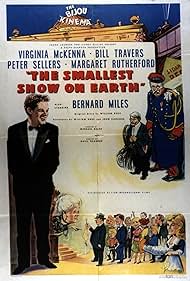
The Smallest Show on Earth (1957)
Watch It
Discuss in Boards More at IMDb Pro Add to My Movies Update Data
at Internet Archive

BETA
Discuss in Boards More at IMDb Pro Add to My Movies Update Data
Quicklinks
Top Links
trailers and videosfull cast and crewtriviaofficial sitesmemorable quotesOverview
main detailscombined detailsfull cast and crewcompany creditstv scheduleAwards & Reviews
user commentsexternal reviewsnewsgroup reviewsawardsuser ratingsparents guiderecommendationsmessage boardPlot & Quotes
plot summaryplot synopsisplot keywordsAmazon.com summarymemorable quotesFun Stuff
triviagoofssoundtrack listingcrazy creditsalternate versionsmovie connectionsFAQOther Info
merchandising linksbox office/businessrelease datesfilming locationstechnical specslaserdisc detailsDVD detailsliterature listingsNewsDeskPromotional
taglines trailers and videos posters photo galleryExternal Links
showtimesofficial sitesmiscellaneousphotographssound clipsvideo clipsThe Smallest Show on Earth (1957) More at IMDbPro »
| Photos (see all 15 | slideshow) | Videos |
Overview
User Rating:
Release Date:
16 March 1962 (Finland) morePlot:
A young couple inherits a debt-ridden old movie theater, appropriately nicknamed "The Flea Pit," and the three eccentric senior citizens who work there. full summary | add synopsisAwards:
Nominated for BAFTA Film Award. moreUser Comments:
Charming, and a wonderful for lovers of theatres. moreCast
(Complete credited cast)| Virginia McKenna | ... | Jean Spenser | |
| Bill Travers | ... | Matt Spenser | |
| Margaret Rutherford | ... | Mrs. Fazackalee | |
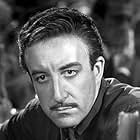
| Peter Sellers | ... | Leslie Quill | |
| Bernard Miles | ... | Old Tom | |
| Francis De Wolff | ... | Albert Hardcastle | |
| Leslie Phillips | ... | Robin Carter | |
| June Cunningham | ... | Marlene Hogg | |
| Sid James | ... | Mr. Hogg (as Sidney James) | |
| George Cross | ... | Commissionaire | |
| George Cormack | ... | Bell | |
| Stringer Davis | ... | Emmett | |
| Michael Corcoran | ... | Taxi Driver |
Additional Details
Parents Guide:
Add content advisory for parentsRuntime:
80 minCountry:
UKLanguage:
EnglishColor:
Black and WhiteAspect Ratio:
1.37 : 1 moreSound Mix:
Mono (Westrex Recording System)Certification:
Finland:SFun Stuff
Trivia:
The films shown at the Bijou (all fictional and presumably filmed just for this movie) are: - Killer Riders of Wyoming - The Mystery of Hell Valley - Comin' Thro' the Rye (Silent Movie) - Devil Riders of Parched Point moreGoofs:
Errors in geography: When the young couple arrive in "Sloughborough", in the north of England, they climb out of the taxi in front of Hammersmith underground station in London. moreQuotes:
Jean: [Reacting to seeing the inside of the theater and its employees for the first time] Flea pit? More like "The Snake Pit!" moreFAQ
This FAQ is empty. Add the first question.more
Message Boards
Discuss this movie with other users on IMDb message board for The Smallest Show on Earth (1957)| Recent Posts (updated daily) | User |
|---|---|
| remake?... | adamknox |
| Goofs ? | Greenman58 |
| Bill Travers | jeremy3 |
| Did the couple come from north Wales? | jeremy3 |
| Check out the DVD | mam13143 |
| feeling the inspiration | Ultimate007 |
Recommendations
If you enjoyed this title, our database also recommends:
Show more recommendations
|
|
|
|
|
| The Majestic | Away We Go | The Muppets Take Manhattan | Nuovo cinema Paradiso | Mrs Henderson Presents |
|
IMDb User Rating:
|
IMDb User Rating:
|
IMDb User Rating:
|
IMDb User Rating:
|
IMDb User Rating:
|
Related Links
| Full cast and crew | Company credits | External reviews |
| IMDb Comedy section | IMDb UK section | Add this title to MyMovies |


'THE SMALLEST SHOW ON EARTH' may not have been exactly that since there were certainly smaller, but it was a case of a fictional small "electric theatre" (the once British way of differentiating a movie theatre from a legitimate theatre or 'music hall,' as they designated their version of the American vaudeville). This delightful British film is as heart warming and sometimes hilarious as the other reviewers here describe, but it is the wonderful interaction between the story, the sets, and the actors that balance the film and make it a classic. This 19th century 'kinema' was styled in the manner of the traditional British 'music hall' of live performers, but held early projection equipment (hence the double entendre about projectionist Peter Sellers' 'equipment.') Such asides will be over the heads of the kiddies, but the pleasant pacing and careful dialogue of the actors will please the adults for whom this comedy is intended.
The story of a young couple inheriting a cinema and finding that it is not quite the money-maker they imagined would have been prosaic were it not for the clever settings and the three fossils who maintained the old "Bijou" (French for 'jewel'). If it were ever a jewel, it had lost its luster as the years passed and patrons flocked to the newer nearby movie palace, the "Grand." Desperate to keep their jobs, the 'fossils' (veteran scene-stealers: Peter Sellers, Margaret Rutherford, and Bernard Miles) took pains to refresh the old place to please new owner Bill Travers, a too seldom used actor of mild presence but uniquely suited to this role. The character of the Bijou's "commissionaire" (doorman, janitor, and boiler keeper) Miles in the end tries too hard and creates the only jarring note in the film, which is otherwise tender and memorable. The device of having latter day elevated trains roar past the cinema was inspired and created some memorable scenes, as when the building shakes to the slow start up of the train, or when Bill Travers' character is almost rattled off the ladder as he attempts to relight the old roof sign. There are many wonderful sight gags and other fine bits that one will long remember.
For those who also like old theatres, it may be of interest to know that the exterior of the Bijou was actually a set created at the meeting of two existing elevated train bridges on Christchurch Ave. at the Kilburn LT station in London. The interior was also a set, but so well done that you would swear that you were in a real 19th century 'opera house.' The design is thought to be derived from the real Palace of Varieties at Camberwell. The movie palace with the pipe organ - "the Grand" - was actually the Gaumont Palace (later the Odeon, now Apollo) in Hammersmith, London. And the use of the fictional name of "Sloughborough" for the town is another little joke since it means 'low place or mire.' These details can be confirmed in the journal of the British "Cinema Theatre Association's" magazine "PICTURE HOUSE," No. 19, Winter 93-94, pages 37 and 38, (where there are photos in this and the previous issue) furnished to this reviewer courtesy of Mr. Brian J. Hall of England.
One reviewer said that the only flaw was that the story was too short and I must concur in that, and that is the only real flaw I can find in the film as well. There is a difficulty, however, in appreciating the quality of the film from the most common versions of the VHS-NTSC format videos now available. IMDB/Amazon lists two ASIN numbers of versions made by the same French Canadian firm, Madacy, which produced them in EP speed, rather than the usual SP speed that allows for quality. Since Amazon never indicates the speed of a tape, I cannot tell if their third variation produced by 'VCI Classics (American Prudential)' is also in this slow speed of poor quality. Not only is the image poor, but the sound is downright difficult to understand! Amazon's sister company, The Internet Movie Data Base, now lists two CD versions about to be released, and we can but hope that they were made from restored masters and are the pleasure that the original film is.
P.S.: Two years before the movie "Majestic" (starring Jim Carrey) debuted, the director wrote on the THEATRE HISTORICAL SOCIETY'S web site that he was searching for information about historic theatres for his forthcoming unnamed movie. This reviewer responded with information and said that the description of it he gave sounded something like "The Smallest Show on Earth." He responded that he was amazed that anyone remembered the 1956 British film, but that it was indeed an inspiration for his movie. Look closely at the lobby in "Majestic" and you will see it clearly resembles that in the 'Bijou,' even if the facades were much different. These films turned out very differently, but at least the architecture rewards lovers of theatres