IMDb >
Tôkyô monogatari (1953)
Watch It
Buy it at Amazon
Rent it at blockbuster.com
Discuss in Boards More at IMDb Pro Add to My Movies Update Data
BETA
Discuss in Boards More at IMDb Pro Add to My Movies Update Data
Quicklinks
Top Links
trailers and videosfull cast and crewtriviaofficial sitesmemorable quotesOverview
main detailscombined detailsfull cast and crewcompany creditstv scheduleAwards & Reviews
user commentsexternal reviewsnewsgroup reviewsawardsuser ratingsparents guiderecommendationsmessage boardPlot & Quotes
plot summaryplot synopsisplot keywordsAmazon.com summarymemorable quotesFun Stuff
triviagoofssoundtrack listingcrazy creditsalternate versionsmovie connectionsFAQOther Info
merchandising linksbox office/businessrelease datesfilming locationstechnical specslaserdisc detailsDVD detailsliterature listingsNewsDeskPromotional
taglines trailers and videos posters photo galleryExternal Links
showtimesofficial sitesmiscellaneousphotographssound clipsvideo clipsTôkyô monogatari (1953) More at IMDbPro »
| Photos (see all 9 | slideshow) |
Overview
User Rating:
Release Date:
13 March 1972 (USA) morePlot:
An old couple visit their children and grandchildren in the city; but the children have little time for them. full summary | add synopsisAwards:
2 wins moreUser Comments:
Ozu's Quietly Brilliant Masterpiece Deserves Your Attention moreCast
(Cast overview, first billed only)| Chishu Ryu | ... | Shukishi Hirayama | |
| Chieko Higashiyama | ... | Tomi Hirayama | |
| Setsuko Hara | ... | Noriko Hirayama | |
| Haruko Sugimura | ... | Shige Kaneko | |
| Sô Yamamura | ... | Koichi Hirayama | |
| Kuniko Miyake | ... | Fumiko Hirayama - his wife | |
| Kyôko Kagawa | ... | Kyoko Hirayama | |
| Eijirô Tôno | ... | Sanpei Numata | |
| Nobuo Nakamura | ... | Kurazo Kaneko | |
| Shirô Osaka | ... | Keiso Hirayama | |
| Hisao Toake | ... | Osamu Hattori | |
| Teruko Nagaoka | ... | Yone Hattori | |
| Mutsuko Sakura | ... | Patron of the Oden Restaurant | |
| Toyo Takahashi | ... | Shukichi Hirayama's Neighbor (as Toyoko Takahashi) | |
| Toru Abe | ... | Train employee |
Additional Details
Parents Guide:
Add content advisory for parentsRuntime:
136 minCountry:
JapanLanguage:
JapaneseColor:
Black and WhiteAspect Ratio:
1.37 : 1 moreSound Mix:
MonoCertification:
Brazil:18 | Hong Kong:I | Sweden:Btl | Portugal:M/12 | Finland:S | UK:U | Spain:T | Singapore:PGFun Stuff
Trivia:
The original negative was lost soon after the film was completed, due to a fire at the vault of the lab in Yokohama city. The film had to be released using prints made from a dupe protective negative. moreGoofs:
Revealing mistakes: The "dead" mother is visibly breathing. moreFAQ
This FAQ is empty. Add the first question.more
Message Boards
Discuss this movie with other users on IMDb message board for Tôkyô monogatari (1953) moreRecommendations
If you enjoyed this title, our database also recommends:
Show more recommendations
|
|
|
|
|
| Yi yi | Songcatcher | The Prize Winner of Defiance, Ohio | Giant | Madadayo |
|
IMDb User Rating:
|
IMDb User Rating:
|
IMDb User Rating:
|
IMDb User Rating:
|
IMDb User Rating:
|
Related Links
| Full cast and crew | Company credits | External reviews |
| News articles | IMDb Drama section | IMDb Japan section |
| Add this title to MyMovies |


I think this movie is amazing for reasons I was not expecting. I had heard of Yasujiro Ozu's "Tokyo Story" for several years but never had an opportunity to see it until Criterion resuscitated it as part of their DVD collection. Over fifty years old, this wondrous 1953 film resonates just as deeply today. Those outside Japan rarely get to see a Japanese film classic that doesn't involve samurai warriors in medieval battles. This one, however, is a subtly observed family drama set in post-WWII Japan, and it is the quietude and lack of pretense of Ozu's film-making style that makes this among the most moving of films.
The plot centers on Shukishi and Tomi, an elderly couple, who traverse the country from their southern fishing village of Onomichi to visit their adult children, daughter Shige and son Koichi, in Tokyo. Leading their own busy lives, the children realize their obligation to entertain them and pack them off to Atami, a nearby resort targeted to weekend revelers. Returning to Tokyo unexpectedly, Tomi visits their kindly daughter-in-law, Noriko, the widow of second son Shoji, while Shukishi gets drunk with some old companions. The old couple realizes they have become a burden to their children and decide to return to Onomichi. They also have a younger daughter Kyoko, a schoolteacher who lives with them, and younger son Keizo works for the train company in Osaka. By now the children, except for Kyoko and the dutiful Noriko, have given up on their parents, even when Tomi takes ill in Osaka on the way back home. From this seemingly convoluted, trivial-sounding storyline, fraught with soap opera possibilities, Ozu has fashioned a heartfelt and ultimately ironic film that focuses on the details in people's lives rather than a single dramatic situation.
What fascinates me about Ozu's idiosyncratic style is how he relies on insinuation to carry his story forward. In fact, some of the more critical events happen off-camera because Ozu's simple, penetrating observations of these characters' lives remain powerfully insightful without being contrived. Ozu scholar David Desser, who provides insightful commentary on the alternate audio track, explains this concept as "narrative ellipses", Ozu's singularly effective means of providing emotional continuity to a story without providing all the predictable detail in between. Ozu also positions his camera low throughout his film to replicate the perspective of someone sitting on a tatami mat. It adds significantly to the humanity he evokes. There are no melodramatic confrontations among the characters, no masochistic showboating, and the dialogue is deceptively casual, as even the most off-hand remark bears weight into the story. The film condemns no one and its sense of inevitability carries with it only certain resigned sadness. What amazes me most is how the ending is so cathartic because the characters feel so real to me, not because there are manipulative plot developments, even death, which force me to feel for them.
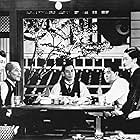
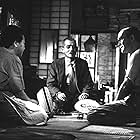
I just love the performances, as they have a neo-realism that makes them all the more affecting. Chishu Ryu and Chieko Higashiyama are wonderfully authentic as Shukishi and Tomi, perfectly conveying the resignation they feel about their lives and their children without slipping into cheap sentimentality. Higashiyama effortlessly displays the sunny demeanor of a grandmother, so when sadness does take over in her life, it becomes all the more haunting. In particular, she has a beautiful scene where Tomi looks forlornly at her grandchild wondering what he will be when he grows up and whether she will live to see what happens. Even more heartbreaking is the scene where Shukishi and Tomi sit in Ueno Park realizing their children have no time for them and are resigned to the fact that they need to find a place to sleep for the night. The closest the film has to a villain is Shige, portrayed fearlessly by Haruko Sugimura, who is able to show respect, pettiness and conniving in a realistically mercurial fashion. Watch her as she complains about the expensive cakes her husband bought for her parents (as she selfishly eats them herself) or how she finagles Koichi to co-finance the trip to Atami or how she shows her frustration when her parents come home early from the spa. So Yamamura (familiar to later Western audiences as Admiral Yamamoto in "Tora! Tora! Tora!") displays the right amount of indifference as Koichi, and Kyoko Kagawa has a few sharp lines toward the end of the film as the disappointed Kyoko.
But the best performance comes from the legendary Setsuko Hara, a luminous actress whose beauty and sensitivity remind me of Olivia de Havilland during the same era. As Noriko, she is breathtaking in showing her character's modesty, her unforced generosity in spite of her downscale status and her constant smile as a mask for her pain. She has a number of deeply affecting moments, for instance, when Noriko explains to Shukishi and Tomi how she misses her husband, even though it is implied he was a brutalizing alcoholic; or the touching goodbye to Kyoko; or her pained embarrassment over the high esteem that Shukishi holds for her kindness. Don't expect fireworks or any shocking moments, just a powerfully emotional film in spite of its seemingly modest approach. The two-disc DVD set has the commentary from Desser on the first disc, as well as the trailer. On the second disc, there are two excellent documentaries. One is a comprehensive 1983, two-hour feature focused on Ozu's life and career, and the second is a 40-minute tribute from several international movie directors.