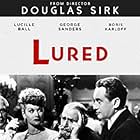
A serial killer in London is murdering young women whom he meets through the personal columns of newspapers; he announces each of his murders to the police by sending them a cryptic poem. ... See full summary »
Keep track of everything you watch; tell your friends.
If your account is linked with Facebook and you have turned on sharing, this will show up in your activity feed. If not, you can turn on sharing
here
.
A serial killer in London is murdering young women whom he meets through the personal columns of newspapers; he announces each of his murders to the police by sending them a cryptic poem. After a dancer disappears, the police enlist an American friend of hers, Sandra Carpenter, to answer advertisements in the personal columns and so lure the killer. Written by
David Levene <D.S.Levene@durham.ac.uk>
The title was changed to "Personal Column" midway through the original U.S. theatrical release because staff at the Production Code Administration thought the word "lured" sounded too much like "lurid". Director Douglas Sirk felt the title change confused potential audiences and led to the film's box-office failure. See more »
Goofs
When Sandra goes to visit Julian towards the end of the movie, they have a conversation, and when Julian says, "That's why he chose death," you can see that Sandra is saying something we don't hear. See more »
Crazy Credits
Opening credits - a flashlight pans along the side of a building, and the credits are written on the side of the wall. See more »
For a serial killer film, this one must rank as the most reserved and dignified ever made. No blood nor gore, just urbane and sophisticated dialogue throughout, and especially from the killer, plus a bit of very enjoyable George Sanders-Lucille Ball romantic wit. Perhaps all victims die without bleeding/suffering/discomfort in meddy old England? "In England, we musn't dirty our hands while killing, musn't we?" But, that was typical of the bloodless killings of crime movies of that time.
George Sanders as a good guy was a total waste here. He is at his best as a witty, sarcastic and selfish cad, which he was somewhat at the start but then soon lost his lust and fell hard for Ms Ball, at which time he lost my interest as he became just another central casting rich guy in love. Unfortunate decision by the studio, as he would have been much better using more of his well known crackling wit.
As a result, Charles Coburn and Cedric Hardwicke were the best things in this film, after the radiant and gorgeous Lucille Ball. Coburn had most of the best dialogue, and came off as a brilliant mix of the philosophical and practical. The methodical way he discovered the killer was a bit long in coming, but interestingly effective overall.
The film needed editing and story tightening to eliminate a lot of the too-long and languid story development dragginess that held it back from being one of the better mystery flicks I've seen over the years. I still give it a 7 out of 10, mainly for quality of dialogue and acting.
22 of 31 people found this review helpful.
Was this review helpful to you?
For a serial killer film, this one must rank as the most reserved and dignified ever made. No blood nor gore, just urbane and sophisticated dialogue throughout, and especially from the killer, plus a bit of very enjoyable George Sanders-Lucille Ball romantic wit. Perhaps all victims die without bleeding/suffering/discomfort in meddy old England? "In England, we musn't dirty our hands while killing, musn't we?" But, that was typical of the bloodless killings of crime movies of that time.
George Sanders as a good guy was a total waste here. He is at his best as a witty, sarcastic and selfish cad, which he was somewhat at the start but then soon lost his lust and fell hard for Ms Ball, at which time he lost my interest as he became just another central casting rich guy in love. Unfortunate decision by the studio, as he would have been much better using more of his well known crackling wit.
As a result, Charles Coburn and Cedric Hardwicke were the best things in this film, after the radiant and gorgeous Lucille Ball. Coburn had most of the best dialogue, and came off as a brilliant mix of the philosophical and practical. The methodical way he discovered the killer was a bit long in coming, but interestingly effective overall.
The film needed editing and story tightening to eliminate a lot of the too-long and languid story development dragginess that held it back from being one of the better mystery flicks I've seen over the years. I still give it a 7 out of 10, mainly for quality of dialogue and acting.