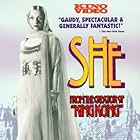
Leo Vincey, told by his dying uncle of a lost land visited 500 years ago by his ancestor, heads out with family friend Horace Holly to try to discover the land and its secret of immortality... See full summary »
Keep track of everything you watch; tell your friends.
If your account is linked with Facebook and you have turned on sharing, this will show up in your activity feed. If not, you can turn on sharing
here
.
Leo Vincey, told by his dying uncle of a lost land visited 500 years ago by his ancestor, heads out with family friend Horace Holly to try to discover the land and its secret of immortality, said to be contained within a mystic fire. Picking up Tanya, a guide's daughter, in the frozen Russian arctic, they stumble upon Kor, revealed to be a hidden civilization ruled over by an immortal queen, called She, who believes Vincey is her long-lost lover John Vincey, Leo's ancestor. Written by
Doug Sederberg <vornoff@sonic.net>
From H. Rider Haggard's weird, wondrous story of the beautiful woman who bathed in flame and lived 500 years .. at last to find her first love at this very hour!
According to the book The RKO Story, this film cost $180,000 more than it grossed in its original release, but finally broke even with the box office from a 1949 re-release, paired with The Last Days of Pompeii. See more »
Goofs
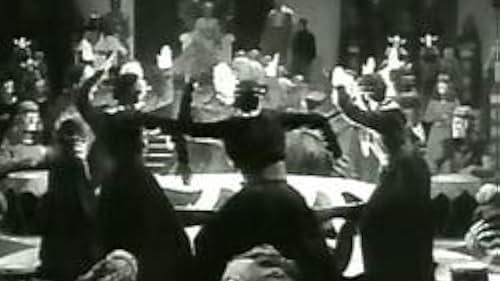
During the Sacrifice sequence, the priest holds a burning globe that has been anointed with fire. Two files of acolytes pass by him, pushing their globes near his to ignite them. The first acolyte, at screen right, pushes her globe near his but it doesn't light. She then quickly pushes it again towards his, but moves on when it doesn't ignite the second time. See more »
I have very happy memories of this movie, which I finally saw in a revival house in New York City in the early Nineties, after many years of its unavailability due to the Hammer remake. This much more idiosyncratic version from the Thirties owes a lot of its atmosphere and stylish elan to the extraordinary Bauhaus-inspired sets, the Max Steiner score, and Helen Gahagan's majestically mannered performance as She Who MUST Be Obeyed. It's a film very much of its time yet there is also a timeless, haunting quality to certain sequences. It has very little to do with Rider Haggard's novel (which is a great favorite of mine) but once I realized this was going to be a different story altogether I didn't care.
The theatre that showed this was packed for a mid afternoon screening, and the audience reacted with tremendous enthusiasm to this classic film. If you have a taste for such great 1930s epics as King Kong, Gunga Din, and King Solomon's Mines, you will enjoy it as well. The 1965 version with Ursula Andress, Peter Cushing and Christopher Lee is fun as well but has even less to do with the themes of Haggard's original novel. It does however have a more up to date feel for those who care about glossy production values.
20 of 20 people found this review helpful.
Was this review helpful to you?
I have very happy memories of this movie, which I finally saw in a revival house in New York City in the early Nineties, after many years of its unavailability due to the Hammer remake. This much more idiosyncratic version from the Thirties owes a lot of its atmosphere and stylish elan to the extraordinary Bauhaus-inspired sets, the Max Steiner score, and Helen Gahagan's majestically mannered performance as She Who MUST Be Obeyed. It's a film very much of its time yet there is also a timeless, haunting quality to certain sequences. It has very little to do with Rider Haggard's novel (which is a great favorite of mine) but once I realized this was going to be a different story altogether I didn't care.
The theatre that showed this was packed for a mid afternoon screening, and the audience reacted with tremendous enthusiasm to this classic film. If you have a taste for such great 1930s epics as King Kong, Gunga Din, and King Solomon's Mines, you will enjoy it as well. The 1965 version with Ursula Andress, Peter Cushing and Christopher Lee is fun as well but has even less to do with the themes of Haggard's original novel. It does however have a more up to date feel for those who care about glossy production values.