In 19th Century Paris, the maniacal Dr. Mirakle abducts young women and injects them with ape blood in an attempt to prove ape-human kinship. He constantly meets failure as the abducted ... See full summary »
Keep track of everything you watch; tell your friends.
If your account is linked with Facebook and you have turned on sharing, this will show up in your activity feed. If not, you can turn on sharing
here
.
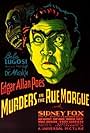
In 19th Century Paris, the maniacal Dr. Mirakle abducts young women and injects them with ape blood in an attempt to prove ape-human kinship. He constantly meets failure as the abducted women die. Medical student Pierre Dupin discovers what Mirakle is doing too late to prevent the abduction of his girlfriend Camille. Now he desperately tries to enlist the help of the police to get her back. Written by
Gary Jackson <garyjack5@cogeco.ca>
Part of the original SHOCK THEATER package of 52 Universal titles released to television in 1957, followed a year later by SON OF SHOCK, which added 21 more features. See more »
Goofs
The movie is set in 1845 and mentions "evolution" of humans from apes. The concept was not absolutely original with Darwin, who published it in 1859, but the words "evolve" and "evolution" were not applied to it before then. See more »
Quotes
Dr. Mirakle:
[Responding to an audience member who has accused him of heresy]
Heresy? Do they still burn men for heresy? Then burn me monsieur, light the fire! Do you think your little candle will outshine the flame of truth?
See more »
A crazed scientist commits vile MURDERS IN THE RUE MORGUE to promote his theories concerning the relationship between human & ape biology.
Bela Lugosi dominates this rather fascinating little foray into terror, his mad mesmerizing eyes & theatrical gestures a natural complement to the film's Grand Guignol qualities. Listening to the world of weariness in his voice as he delivers a line like `Will my search never end?' makes only more poignant this fine actor's eventual descent into drug addicted obscurity.
Pert, pretty little Sidney Fox -she actually receives top billing over Lugosi - gives a pleasing performance as the unfortunate choice of the ape's interest (the plot is never really clear as to what, exactly, Lugosi is attempting to accomplish with his gruesome experiments). Leon Waycoff is hopeless as a romantic lead, but with an eventual name change to Leon Ames, he was to become one of Hollywood's most durable character actors.
The supporting cast is quite good: plump Bert Roach as a nervous medical student; sepulchral D'Arcy Corrigan as a sardonic morgue keeper; Arlene Francis, who has the dubious honor of featuring in one of Universal's most horrific murder scenes; and Noble Johnson, important Black actor & silent film star, here performing in whiteface (as he often did) as Lugosi's mute henchman.
Movie mavens will spot some familiar faces in unbilled roles: Harry Holman as Miss Fox's silly, obese landlord; Herman Bing, Torben Meyer & Agostino Borgato as three ear-witnesses to one of the murders; Tempe Pigott as an old crone with very bad teeth; and Charlotte Henry as a lovely young lady.
Based somewhat loosely on the classic detective story by Edgar Allan Poe, the film also owes much in plot to Leroux' The Phantom of the Opera and in style to Wiene's THE CABINET OF DR. CALIGARI. Karl Freund's cinematography is first rate, as is the expressionistic set design by Herman Rosse, with buildings tilted or leaning at crazed angles. The contribution of master makeup artist Jack Pierce is also evident.
17 of 18 people found this review helpful.
Was this review helpful to you?
A crazed scientist commits vile MURDERS IN THE RUE MORGUE to promote his theories concerning the relationship between human & ape biology.
Bela Lugosi dominates this rather fascinating little foray into terror, his mad mesmerizing eyes & theatrical gestures a natural complement to the film's Grand Guignol qualities. Listening to the world of weariness in his voice as he delivers a line like `Will my search never end?' makes only more poignant this fine actor's eventual descent into drug addicted obscurity.
Pert, pretty little Sidney Fox -she actually receives top billing over Lugosi - gives a pleasing performance as the unfortunate choice of the ape's interest (the plot is never really clear as to what, exactly, Lugosi is attempting to accomplish with his gruesome experiments). Leon Waycoff is hopeless as a romantic lead, but with an eventual name change to Leon Ames, he was to become one of Hollywood's most durable character actors.
The supporting cast is quite good: plump Bert Roach as a nervous medical student; sepulchral D'Arcy Corrigan as a sardonic morgue keeper; Arlene Francis, who has the dubious honor of featuring in one of Universal's most horrific murder scenes; and Noble Johnson, important Black actor & silent film star, here performing in whiteface (as he often did) as Lugosi's mute henchman.
Movie mavens will spot some familiar faces in unbilled roles: Harry Holman as Miss Fox's silly, obese landlord; Herman Bing, Torben Meyer & Agostino Borgato as three ear-witnesses to one of the murders; Tempe Pigott as an old crone with very bad teeth; and Charlotte Henry as a lovely young lady.
Based somewhat loosely on the classic detective story by Edgar Allan Poe, the film also owes much in plot to Leroux' The Phantom of the Opera and in style to Wiene's THE CABINET OF DR. CALIGARI. Karl Freund's cinematography is first rate, as is the expressionistic set design by Herman Rosse, with buildings tilted or leaning at crazed angles. The contribution of master makeup artist Jack Pierce is also evident.