Keep track of everything you watch; tell your friends.
If your account is linked with Facebook and you have turned on sharing, this will show up in your activity feed. If not, you can turn on sharing
here
.
Using every known means of transportation, several savants from the Geographic Society undertake a journey through the Alps to the Sun which finishes under the sea.
In a dream-like sequence, a woman's eye is slit open--juxtaposed with a similarly shaped cloud obsucuring the moon moving in the same direction as the knife through the eye--to grab the ... See full summary »
Director:
Luis Buñuel
Stars:
Simone Mareuil,
Pierre Batcheff,
Luis Buñuel
One of the greatest of black art pictures. The conjurer appears before the audience, with his head in its proper place. He then removes his head, and throwing it in the air, it appears on ... See full summary »
A solitary flower on a long driveway, a key falling, a door unlocked, a knife in a loaf of bread, a phone off the hook: discordant images a woman sees as she comes home. She naps and, ... See full summary »
Luke Skywalker, a spirited farm boy, joins rebel forces to save Princess Leia from the evil Darth Vader, and the galaxy from the Empire's planet-destroying Death Star.
After rescuing Han Solo from the palace of Jabba the Hutt, the Rebels attempt to destroy the Second Death Star, while Luke Skywalker tries to bring his father back to the Light Side of the Force.
Scientists from all over the world are meeting to discuss the best way to reach the North Pole. Professor Maboul demonstrates for them the innovative equipment that he has designed for the ... See full summary »
A group of men travel to the moon by being shot in a capsule from a giant cannon. They are captured by moon-men, escape, and return to the earth. Written by
John Oswalt <jao@jao.com>
After finishing work on the film, Georges Méliès intended to release it in America and thereby make lots of money. Unfortunately, Thomas A. Edison's film technicians had already secretly made copies of the film, which was showed across the USA within weeks. Melies never made any money from the film's American showings, and went broke several years later (while Edison made a fortune on the film.) See more »
Goofs
The President knocks his own hat off when he walks behind the desk. See more »
A group of astronomers hold a meeting where they discuss how to travel to the Moon. The head astronomer proposes that they build something like a huge gun or cannon and fire themselves at the lunar face. After some argument, this is agreed upon, and we see the construction of the cannon and its bullet-like capsule. Once on the moon, the astronomers discover the strange civilization of the Selenites.
A Trip to the Moon (aka Le Voyage dans la lune, Voyage to the Moon, and even A Trip to Mars, curiously enough) is usually considered the first token sci-fi film. "Token" is important there, as this surely isn't the first film we could call sci-fi--even Trip to the Moon director/writer/producer/star/production designer/etc. George Méliès' own The Astronomer's Dream, or The Man on the Moon (Le Rêve d'un astronome, 1898) predates this by four years. But this is the first widely known and accepted sci-fi film, with a significant length, and it has the important distinction of a pithy, well-told story, which Méliès based on Jules Verne's De la Terre à la Lune (From the Earth to the Moon), first published in 1865, and parts of H.G. Wells' The First Men in the Moon, first published in 1901. The fact that it was intended as something of a parody is often overlooked, and recontextualizes its sci-fi progenitor status quite a bit, but in a positive way. Like horror, sci-fi frequently walks a fine line between camp and seriousness, so it is appropriate for the token seminal film to have parodic elements.
Far more important than A Trip to the Moon's relation to sci-fi, however, is its significance as a film, without genre qualification. Unlike most of the other early film pioneers, Méliès had a background in show business. He was a skilled magician/illusionist who took over a famed Paris venue, the Théâtre Robert-Houdin. Méliès embraced the theatricality of film, always searching for ways to make the new medium approximate the ideals (well, or at least the ideals of the fantasy and spectacle side) of the theater. Thus, he made rapid advances in production design, literary content, special effects and further developed an early form of editing, providing a bridge between the early shorts, which were purely mise-en-scène, to a more modern form of montage.
A Trip to the Moon's scenes, with their elaborate production design, complete with backdrops painted by Méliès, are still constructed in a way similar to Thomas Edison's The Barbershop (1894), or the Lumière Brothers' Baignade en mer (1895)--that is, with complex, layered, contrapuntal motion playing out before a static camera, which represents the audience's point of view as they watch the action unfold on a "stage". The difference is that whereas Edison and Lumière tended to shoot for a feigned naturalism (in some cases--but far fewer than the conventional wisdom has it--actually capturing a "natural" event), Méliès tries to see how far he can push the fantastical. The result is a film that is as much an example of surrealism as anything else. If you have a taste for those genres--as well as for sci-fi, the absurd, and so on--as I do, and you are acclimated to silent films, you are sure to love A Trip to the Moon.
The sets are amazing. The painted backdrops merge seamlessly with the constructed portions and props, creating locations with great "depth", in worlds that seem to surreal exist and have a long history. There are a number of ingenious techniques used to further the illusions, such as the smoke pouring out of the Parisian factories (probably a satirical depiction of some of the negative results of the Industrial Revolution) as the astronomers, who are initially amusingly dressed like wizards/alchemists in long flowing robes and large pointed hats, mount the building to begin their journey. Although some of the special effects and illusions are fairly transparent--such as the descending portions of scenery to enhance the effect of the "Earthrise", most are surprisingly sophisticated. Visually, Méliès is as impressive as even many modern instantiations of special effects, matte paintings and such. He certainly trumps much low-budget science fiction--even through the 1960s and 1970s--in this department, plus the surrealistic touches give him an edge that I would like to see more in modern films.
Just as important, the story is very entertaining. The pacing and narrative construction sustains your interest and manages to make a short that is less than 15-minutes long seem as substantial as a 90-minute feature. Although I've seen versions in the past without it, I now have a version with the intended voice-over narration included (in Kino's "The Movies Begin" box set). This greatly enhances the film, especially as it is frequently but dryly funny.
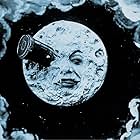
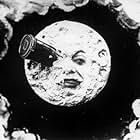
Much has been said, and maybe not just by Freudians, of the sexual subtexts of A Trip to the Moon. For example, the astronomers are assisted by Parisian showgirls, or "manservants", in sexy clothing (they now seem somewhat prescient of the costumed and uniformly choreographed showgirls to come in Hollywood musicals). They build a large gun to shoot themselves to the Moon, and they land with a "spurt" in the Moon's eye. Whether or not any of that was intended (although Freudians, at least, would say it doesn't matter if it was intended), there are more than enough comical and satirical takes on astronomers, space travel/the nature of space, and the "reality" of the Moon and its surprising inhabitants to keep anyone entertained. This is truly one of the earliest masterpieces of cinema.
41 of 46 people found this review helpful.
Was this review helpful to you?
A group of astronomers hold a meeting where they discuss how to travel to the Moon. The head astronomer proposes that they build something like a huge gun or cannon and fire themselves at the lunar face. After some argument, this is agreed upon, and we see the construction of the cannon and its bullet-like capsule. Once on the moon, the astronomers discover the strange civilization of the Selenites.
A Trip to the Moon (aka Le Voyage dans la lune, Voyage to the Moon, and even A Trip to Mars, curiously enough) is usually considered the first token sci-fi film. "Token" is important there, as this surely isn't the first film we could call sci-fi--even Trip to the Moon director/writer/producer/star/production designer/etc. George Méliès' own The Astronomer's Dream, or The Man on the Moon (Le Rêve d'un astronome, 1898) predates this by four years. But this is the first widely known and accepted sci-fi film, with a significant length, and it has the important distinction of a pithy, well-told story, which Méliès based on Jules Verne's De la Terre à la Lune (From the Earth to the Moon), first published in 1865, and parts of H.G. Wells' The First Men in the Moon, first published in 1901. The fact that it was intended as something of a parody is often overlooked, and recontextualizes its sci-fi progenitor status quite a bit, but in a positive way. Like horror, sci-fi frequently walks a fine line between camp and seriousness, so it is appropriate for the token seminal film to have parodic elements.
Far more important than A Trip to the Moon's relation to sci-fi, however, is its significance as a film, without genre qualification. Unlike most of the other early film pioneers, Méliès had a background in show business. He was a skilled magician/illusionist who took over a famed Paris venue, the Théâtre Robert-Houdin. Méliès embraced the theatricality of film, always searching for ways to make the new medium approximate the ideals (well, or at least the ideals of the fantasy and spectacle side) of the theater. Thus, he made rapid advances in production design, literary content, special effects and further developed an early form of editing, providing a bridge between the early shorts, which were purely mise-en-scène, to a more modern form of montage.
A Trip to the Moon's scenes, with their elaborate production design, complete with backdrops painted by Méliès, are still constructed in a way similar to Thomas Edison's The Barbershop (1894), or the Lumière Brothers' Baignade en mer (1895)--that is, with complex, layered, contrapuntal motion playing out before a static camera, which represents the audience's point of view as they watch the action unfold on a "stage". The difference is that whereas Edison and Lumière tended to shoot for a feigned naturalism (in some cases--but far fewer than the conventional wisdom has it--actually capturing a "natural" event), Méliès tries to see how far he can push the fantastical. The result is a film that is as much an example of surrealism as anything else. If you have a taste for those genres--as well as for sci-fi, the absurd, and so on--as I do, and you are acclimated to silent films, you are sure to love A Trip to the Moon.
The sets are amazing. The painted backdrops merge seamlessly with the constructed portions and props, creating locations with great "depth", in worlds that seem to surreal exist and have a long history. There are a number of ingenious techniques used to further the illusions, such as the smoke pouring out of the Parisian factories (probably a satirical depiction of some of the negative results of the Industrial Revolution) as the astronomers, who are initially amusingly dressed like wizards/alchemists in long flowing robes and large pointed hats, mount the building to begin their journey. Although some of the special effects and illusions are fairly transparent--such as the descending portions of scenery to enhance the effect of the "Earthrise", most are surprisingly sophisticated. Visually, Méliès is as impressive as even many modern instantiations of special effects, matte paintings and such. He certainly trumps much low-budget science fiction--even through the 1960s and 1970s--in this department, plus the surrealistic touches give him an edge that I would like to see more in modern films.
Just as important, the story is very entertaining. The pacing and narrative construction sustains your interest and manages to make a short that is less than 15-minutes long seem as substantial as a 90-minute feature. Although I've seen versions in the past without it, I now have a version with the intended voice-over narration included (in Kino's "The Movies Begin" box set). This greatly enhances the film, especially as it is frequently but dryly funny.
Much has been said, and maybe not just by Freudians, of the sexual subtexts of A Trip to the Moon. For example, the astronomers are assisted by Parisian showgirls, or "manservants", in sexy clothing (they now seem somewhat prescient of the costumed and uniformly choreographed showgirls to come in Hollywood musicals). They build a large gun to shoot themselves to the Moon, and they land with a "spurt" in the Moon's eye. Whether or not any of that was intended (although Freudians, at least, would say it doesn't matter if it was intended), there are more than enough comical and satirical takes on astronomers, space travel/the nature of space, and the "reality" of the Moon and its surprising inhabitants to keep anyone entertained. This is truly one of the earliest masterpieces of cinema.